Recommended Books
Every book on this page was recommended at the end of a courben.co article. Reading about a psychological concept is one thing — having a book that lets you live inside it is another. These recommendations exist because an article should leave you with something you can act on, not just something you can recall. The difference between forgettable and memorable is almost always what you do next.
This page contains affiliate links. If you purchase through our links we may earn a small commission at no extra cost to you. We only recommend books we genuinely believe extend the psychology explored in our articles.
Showing 18 of 506 books

The Art of Possibility
Article #511
How social networks shape what founders believe is possible and the invisible ceiling of environmental normalisation
The Art of Possibility by Rosamund Stone Zander and Benjamin Zander is one of the more unusual books in this area: co-authored by a conductor and a therapist, it builds its argument around the idea that the frameworks people inhabit determine what they can perceive as possible, and that expanding what is possible for an individual or an organisation requires changing the framework rather than trying harder within the existing one. The Zanders' central insight, developed through a series of interlocking practices and illustrated with cases from music, therapy, and business, is that most people are playing inside a set of rules they have absorbed from their environment without examining whether those rules are the ones they would choose. For a founder, the most immediately applicable section is their treatment of what they call "giving an A" and the framework of "contribution" as a replacement for the framework of "achievement calibrated against peers." The book is not a social network science text, and it does not engage with the Christakis and Fowler literature. Its contribution is different: it offers a phenomenological account of what the invisible ceiling actually feels like from the inside, and what it requires to notice it as a framework rather than as reality. For the entrepreneur who has absorbed the descriptive norm research and recognises its operation in their own professional context, the Zanders provide the experiential vocabulary for what the ceiling feels like and what its loosening requires.

Choke
Article #510
The influence of audience on performance and why people work differently when they believe they are being observed
Choke by Sian Beilock is the most comprehensive available account of what happens to performance under pressure and observation, covering the specific cognitive and neurological mechanisms through which evaluation apprehension, self-consciousness, and working memory disruption produce the performance failures that the social facilitation and choking literatures document. Beilock is a cognitive scientist who has spent her career studying performance breakdown in high-stakes contexts, from elite athletes to university students in high-pressure examinations, and her account moves between the laboratory research and the real-world performance contexts where the mechanisms operate with unusual clarity and specificity. Her treatment of the automaticity disruption mechanism, and the specific conditions under which directing attention toward process rather than outcome degrades expert performance, is the most detailed and accessible available account of what Duval and Wicklund's self-awareness theory predicts at the level of actual performance in actual high-stakes situations. For the entrepreneur or team leader who wants to understand not just that observation changes performance but the precise conditions under which it helps versus hurts, and what can be done at the individual and organisational level to manage the mechanisms involved, Beilock provides the most practically grounded available treatment of a literature that is usually confined to sports psychology and cognitive science journals.
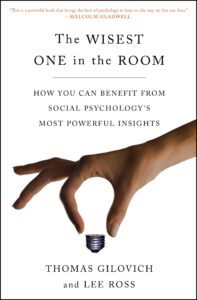
The Wisest One in the Room
Article #509
Conformity and independence in team decision-making + when consensus reflects genuine agreement and when it reflects social pressure
The Wisest One in the Room by Thomas Gilovich and Lee Ross draws on decades of social psychological research to examine why groups and individuals so consistently fail to make the most of their own collective intelligence, covering the specific cognitive and social mechanisms through which good judgment gets overridden by conformity pressure, motivated reasoning, and the structural features of group decision-making that allow social influence to do more work than independent assessment. Gilovich and Ross are two of the most distinguished social psychologists of their generation, and this book represents an unusually accessible account of research that is usually confined to academic journals. Their specific treatment of the conditions under which group discussion improves versus degrades decision quality maps directly onto the Asch and Lorenz findings this article describes, and their practical account of what it takes to create the conditions for genuine independent judgment in group settings gives the entrepreneur or team leader a concrete framework rather than a list of abstract principles. For anyone responsible for a team that makes consequential decisions, this is the most practically grounded available account of the psychology behind why those decisions so often reflect the room's social dynamics more than its members' actual views.

Cultures and Organizations: Software of the Mind
Article #508
Cultural psychology and global business: How deep cultural assumptions shape negotiation communication and commercial expectation
Cultures and Organizations: Software of the Mind by Geert Hofstede, Gert Jan Hofstede and Michael Minkov. The foundational empirical account of how cultural dimensions were identified, measured, and validated across more than fifty countries gives the Meyer framework its statistical foundations, and reading Hofstede alongside Meyer means the reader understands not just what the dimensions are but how they were derived and why they hold. The third edition's update by Minkov extends the original research into new cultural contexts and adds the long-term orientation and indulgence dimensions that the original Hofstede model did not include. For the reader who wants to understand why cultural assumptions vary systematically rather than just how to navigate the variation, Hofstede provides the research base that Meyer's more applied account necessarily compresses. The two books together give the entrepreneur both the map and the underlying geography it was drawn from, which is considerably more useful than either alone for someone who will encounter cultural variation that no single case study anticipated.
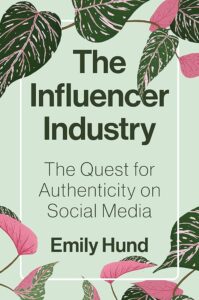
The Influencer Industry
Article #507
Parasocial relationships in business and how audiences build one-sided emotional attachments to founders brands and public figures
The Influencer Industry by Emily Hund examines the infrastructure behind the parasocial economy, covering how the creator industry built its commercial model on the systematic cultivation of audience emotional attachment and what this reveals about the psychology of parasocial connection at scale. Hund's account moves between the business mechanics and the psychological reality of what audiences are experiencing, making it the most directly applicable available treatment of the parasocial relationship as a commercial structure rather than an individual phenomenon. Her analysis of how authenticity is produced and packaged, and where the boundary between genuine and performed self-disclosure lies in practice, is the most practically useful available treatment of the ethical question this article raises. For the entrepreneur who wants to understand not just that parasocial bonds drive loyalty but how the industry around that mechanism actually operates, and what the honest version of participating in it looks like, Hund provides the account the research literature alone does not.

Talking from 9 to 5
Article #506
Status dynamics in professional relationships and how hierarchical perception shapes every interaction before a word is spoken
Talking from 9 to 5 by Deborah Tannen. Tannen's account of how status and hierarchy are negotiated through the specific linguistic patterns of professional conversation, covering the ways in which speaking style, interruption, credit attribution, and conversational framing both reflect and actively construct the status hierarchies that the Berger expectation states theory predicts, provides the most practically specific available complement to the expectation states mechanism and the meeting anchor dynamic this article describes. Her account of the specific conversational behaviours through which status is claimed, reinforced, and challenged in professional settings maps directly onto the authority heuristic and conformity mechanisms this article identifies as the primary channels through which status shapes professional outcomes, and gives the reader a vocabulary for observing these mechanisms in their own professional interactions with a specificity that the abstract research framework alone does not provide.

Belonging
Article #505
Group identity in commercial relationships and how in-group and out-group dynamics shape trust recommendation and loyalty
Belonging by Owen Eastwood is the most directly applicable available account of how genuine group identity and belonging are built in competitive and commercial contexts, covering the specific cultural practices, identity-defining rituals, and leadership behaviours that create the in-group conditions the Tajfel-Turner research predicts will generate automatic trust extension, advocacy, and loyalty. Eastwood's work draws on his experience building team culture in elite sporting and commercial organisations and is grounded in the social identity research this article describes. His specific account of what genuine belonging requires, as distinct from the cosmetic community features that loyalty programmes provide without producing the identity conditions that genuine loyalty depends on, is the most practically actionable available treatment of the commercial in-group building problem this article identifies.
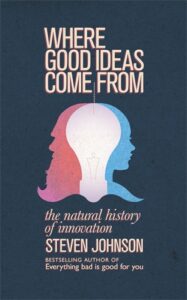
Where Good Ideas Come From
Article #504
Building a culture where genuinely new ideas survive long enough to be evaluated + what kills them what protects them
Where Good Ideas Come From by Steven Johnson is the most research-grounded available account of the specific environmental, social, and structural conditions that allow genuinely novel ideas to survive and develop rather than being killed by the default social dynamics of evaluation. Johnson draws on the history of innovation across science, technology, and culture to identify the recurring conditions that distinguish environments where ideas flourish from those where they are consistently suppressed, covering the slow hunch, the adjacent possible, and the specific network and collision conditions that allow ideas that are not yet fully formed to be protected long enough to develop their genuine value. For the entrepreneur or leader who wants to understand not just what kills ideas but what the specific conditions look like that allow them to survive, Johnson provides the most historically grounded and conceptually rich available treatment of the idea survival problem this article describes.
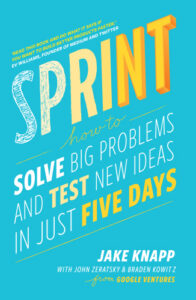
Sprint
Article #503
Constraints + creativity and why limitation often produces better creative output than complete freedom
Sprint by Jake Knapp, John Zeratsky, and Braden Kowitz. Knapp, Zeratsky, and Kowitz's account of the five-day design sprint methodology is the most widely adopted commercial implementation of time constraint as a creative driver, providing a specific structured process that uses temporal and scope constraints to produce in five days the product and strategy decisions that unconstrained deliberation consistently fails to generate. Their account of why the time constraint produces better creative output than extended deliberation maps directly onto the Moreau-Dahl resource constraint research and the Stokes generative constraint mechanism. The sprint methodology is also the most directly implementable available structure for any entrepreneur or product team that wants to use constraint deliberately as a creative tool rather than experiencing it as an obstacle, and its specific design reflects many of the principles that the constraint-creativity research documents as most generative.
Rest
Article #502
Incubation + the unconscious processing of problems and why the best ideas often arrive when you stop trying to have them
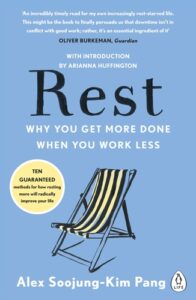
Rest by Alex Soojung-Kim Pang is the most comprehensive available account of how the most consistently creative and productive workers across history structured deliberate rest and low-demand activity into their working days, and what the research on unconscious processing, attention restoration, and creative incubation establishes about why this structure produces more creative output than sustained continuous effort. Pang covers the historical biographical evidence, the neuroscience and cognitive psychology research, and the specific practical implications for how creative work should be structured in the contemporary professional context. His account of Darwin's walking practice, Einstein's violin playing, and the consistent four to five hour concentrated work period that characterises the most productive creative workers across domains is the most thoroughly researched and practically applicable available treatment of incubation as a deliberate work structure rather than a lucky accident.
The Difference
Article #501
The role of diverse perspective in creative output and what happens cognitively when a room has genuinely different knowledge maps
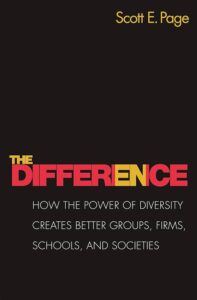
The Difference by Scott Page. Page's mathematical and empirical account of the diversity prediction theorem provides the most rigorous available foundation for the claims that Syed documents through case studies and narrative. Page demonstrates with precision under what conditions diverse groups outperform homogeneous groups of higher ability, what the specific mechanisms are that produce this result, and where the conditions do and do not apply. His account is more technically demanding than Syed's but provides the mathematical underpinning that makes the diversity-creativity relationship not just empirically documented but theoretically grounded. For the entrepreneur who wants to understand not just that cognitive diversity matters but why it matters at the level of the mechanism, Page provides the most rigorous available treatment of the research that this article draws on.

The Fearless Organization
Article #500
Psychological safety and creative risk + why people only propose genuinely original ideas when failure feels survivable
The Fearless Organization by Amy Edmondson is the most research-grounded available account of psychological safety as a team-level condition, covering the empirical evidence from Edmondson's hospital teams and subsequent commercial research, the specific leader behaviours that create and destroy it, the structural interventions that support it, and the specific mechanisms through which it predicts creative and learning outcomes. Edmondson's account moves from the foundational research through the commercial applications with the precision that comes from being the primary researcher in the field, and her specific account of what the leader who wants to build psychological safety actually needs to do differently, rather than merely commit to in principle, is the most directly actionable available treatment of the conditions this article identifies as the prerequisite for creative risk.
Creativity
Article #499
The conditions that produce original thinking and what the research shows about environment constraint and cognitive state
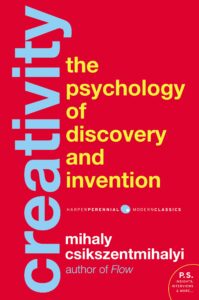
Creativity by Mihaly Csikszentmihalyi is the most comprehensive available research-based account of the conditions that generate original creative output across domains. Based on interviews with 91 highly creative individuals spanning science, art, business, and scholarship, Csikszentmihalyi's account documents the specific environmental conditions, motivational states, and cognitive habits that characterise sustained creative productivity, covering the solitude requirement, the intrinsic motivation condition, the role of domain knowledge and the periods of disengagement that allow it to recombine into novel configurations, and the specific daily structures that creative individuals deliberately build and protect. For the entrepreneur or leader who wants to understand not just that creative conditions matter but what they specifically look like and how to build them into a professional life, this is the most directly applicable available treatment of the empirical evidence.

Range
Article #498
Why expertise can block creative thinking and the psychology of knowing too much
Range by David Epstein is the most research-grounded available account of how breadth of experience across structurally different domains builds the cross-domain transfer capability that counteracts cognitive entrenchment. Epstein covers the research on why the specialists who excel at the highest levels of creative achievement in their domains are disproportionately likely to have extensive experience outside them, why the early specialisation that produces deep domain expertise also produces the entrenchment that limits creative range, and what the specific mechanisms of cross-domain analogical transfer look like in practice. For the entrepreneur or leader who is trying to understand not just why their best domain expert is producing conventional solutions but what kind of experience and team composition produces the genuinely novel ones, Range is the most directly applicable available treatment of the problem this article describes.

The Eureka Factor
Article #497
How insight actually works and the neuroscience of the moment when a solution appears in the mind
The Eureka Factor by John Kounios and Mark Beeman is the most directly applicable available account of the insight neuroscience research this article draws on, written by the two primary researchers who documented the gamma burst, alpha blink, and prepared mind findings. Kounios and Beeman's account covers what the research establishes about how insight solutions differ neurologically from analytical solutions, what cognitive and environmental conditions make insight more likely to occur, and why the professional environments most commonly designed to generate creative breakthroughs are, by the neuroscience's criteria, almost perfectly designed to prevent them. Their specific account of the prepared mind, the incubation sequence, and the right hemisphere associative processing that the alpha suppression enables gives the reader not only the research but the practical design principles for cultivating the cognitive state that insight requires. For the entrepreneur or leader who needs to understand not just that insight exists but how to structure their work and environment to make it more accessible, this is the most research-grounded available treatment.
Weapons of Math Destruction
Article #496
The ethics of nudging and where the line sits between helping people make better decisions and exploiting their cognitive limitations
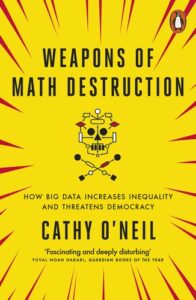
Weapons of Math Destruction by Cathy O'Neil. O'Neil's account of how algorithmic systems and commercial design choices systematically exploit cognitive limitations and power asymmetries against the interests of the people they affect provides the most structurally grounded available complement to the dark patterns and autonomy preservation mechanisms. Her specific account of the conditions under which commercially motivated design becomes exploitative, and what structural transparency and accountability requirements would look like, maps directly onto the Sunstein transparency criterion and the exploitation versus enablement distinction this article identifies as the primary ethical tests.
The Tipping Point
Article #495
Social proof at scale and the psychology behind why what other people are doing is the most powerful behavioural signal available
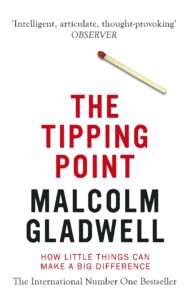
The Tipping Point by Malcolm Gladwell. Gladwell's account of how social behaviours spread through populations, including the specific role of social proof in tipping a behaviour from minority to majority adoption, provides the most narratively accessible available complement to the Sherif informational social influence and Cialdini activation conditions research. His specific account of how the visibility of early adopters' behaviour provides the descriptive norm signal that activates mainstream adoption maps directly onto the Lorenz early tipping and Cialdini number condition mechanisms this article describes.
Give and Take
Article #493
How reciprocity works as a behavioural economics mechanism and why giving something first is the most reliable way to receive something back
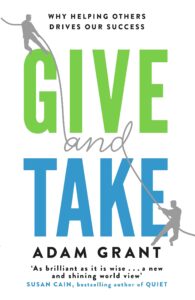
Give and Take by Adam Grant is the most research-grounded available account of how giving-first strategies produce superior long-term outcomes in professional and commercial contexts, covering Grant's research on the relationship between giving behaviour and long-term success across occupational groups. Grant's specific account of why givers outperform takers and matchers in the long run, and what distinguishes the giving that produces reciprocity from the giving that produces exploitation, maps directly onto the Gouldner norm and Cialdini uninvited gift mechanisms this article describes.
No books found matching your search.