What's New
Every week we publish new articles and add books to the library. Here's everything that landed this week.
How the "pioneer paradox" means the person who builds a business is rarely the person who should run it at scale
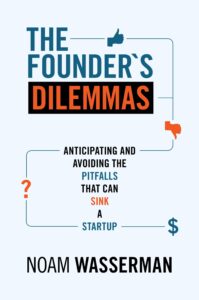
The data most entrepreneurs don't know Noam Wasserman studied 212 American startups and found that within three years of founding, half of all founders were no longer CEO. Four out of five had been removed…
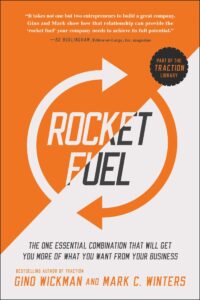
Rocket Fuel
Gino Wickman and Mark Winters
Rocket Fuel by Gino Wickman and Mark Winters is the most practical treatment of the visionary/integrator split as a structural resolution to the pioneer paradox. Their documentation of real company cases where founders retained genuine influence through a redefined role — while an integrator handled operational execution — offers the most concrete available account of what the resolution looks like in practice rather than in theory.
How the "pioneer paradox" means the person who builds a business is rarely the person who should run it at scale
Why the capabilities that get a company from zero to one are structurally different from those required to take it further
How scaling your business changes relationships you have with others in predictable psychological ways
Why the relational cost of growth follows patterns that can be understood rather than treated as personal misfortune
The neuroscience of growing a business — why your brain physically adapts (and resists) each stage of scale
The chronic stress of building a company is not just psychologically exhausting — it is restructuring your brain…
How entrepreneurial attachment to early decisions creates 'strategic debt' that compounds over time
Why the decisions made under maximum uncertainty become the constraints that are hardest to escape
How the psychology of organisational inertia means fast-growing companies become rigid at exactly the wrong time
Why the properties that produced your growth are the same properties that will make adaptation hardest
Why companies that grow fastest psychologically are the ones that slow down on purpose at specific milestone
The research on why reflection outperforms practice — and what it means for how you architect growth
Why the concept of 'choice architecture' means whoever designs the decision environment controls the outcome
Why the structure of a decision environment determines what gets chosen — regardless of what the options actually are
This page contains affiliate links. If you purchase through our links we may earn a small commission at no extra cost to you. We only recommend books we genuinely believe extend the psychology explored in our articles.