What's New
Every week we publish new articles and add books to the library. Here's everything that landed this week.
The psychology of opportunity cost — why saying yes to one thing means saying no to ten others
Most entrepreneurs are good at evaluating whether an opportunity is worth taking. Almost none of them are naturally good at evaluating what taking it costs them. The foundational finding Frederick and colleagues' 2009 research at…
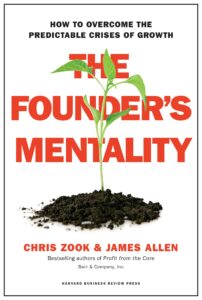
The Founder's Mentality
Chris Zook and James Allen
The Founder's Mentality by Chris Zook and James Allen is the most rigorous available study of the decision patterns that distinguish founders who scale their businesses successfully from those who do not. Zook and Allen's research, conducted across hundreds of companies over more than a decade, identifies three specific attributes — the insurgent's clear sense of mission, the founder's personal ownership of the front line, and the bias toward action rather than process — and documents what happens to each as organisations grow and the founder's relationship to the business changes. Their account of the founder trap, where the founder's own capabilities and decision patterns become the primary constraint on the business they created, is the most empirically grounded available treatment of exactly the self-knowledge problem this article addresses. For the entrepreneur who wants to understand not just the general case for self-awareness but the specific ways in which the founder's self-model shapes organisational capability and limits, Zook and Allen provide the commercial data that the psychological research predicts but does not itself document.
The psychology of opportunity cost — why saying yes to one thing means saying no to ten others
How the human brain systematically ignores what it gives up when it commits to something
The psychology of good "enough decisions" versus "perfect ones"
What the pursuit of perfectionism costs.
The bandwagon effect — how seeing competitors do something makes you think it's the right strategy
Why imitating what everyone else is doing is rarely the competitive advantage it feels like
Why your emotional state at 9am shapes every decision you make that day
How morning mood gets misattributed as information about everything you evaluate afterwards
The endowment effect — why you overvalue what you own and how it's killing your ability to pivot
How ownership inflates value, distorts decisions, and makes entrepreneurs take escalating risks to avoid letting go
Why sleeping on an important decision genuinely improves the outcome
The neuroscience behind why your brain makes better decisions the morning after
The psychology behind why committees make worse decisions than individuals
Three documented mechanisms that explain why group deliberation often degrades rather than improves decision quality