Recommended Books
Every book on this page was recommended at the end of a courben.co article. Reading about a psychological concept is one thing — having a book that lets you live inside it is another. These recommendations exist because an article should leave you with something you can act on, not just something you can recall. The difference between forgettable and memorable is almost always what you do next.
This page contains affiliate links. If you purchase through our links we may earn a small commission at no extra cost to you. We only recommend books we genuinely believe extend the psychology explored in our articles.
Showing 18 of 506 books
Willpower
Article #492
Present bias and why people consistently prefer smaller immediate rewards over larger future ones and what it means for product and pricing design
Willpower by Roy Baumeister and John Tierney. Baumeister and Tierney's account of self-regulatory capacity and its depletion under demand provides the most practically grounded available complement to the O'Donoghue-Rabin present bias research. Their specific account of how commitment devices, environmental design, and immediate reward structures reduce the dependence on depleted self-regulatory capacity maps directly onto the intention-action gap and commitment device mechanisms this article identifies as the primary design responses to present bias.
Misbehaving
Article #491
Mental accounting and how people categorise money in ways that are psychologically coherent but economically irrational
Misbehaving by Richard Thaler is the most accessible available account of the mental accounting research Thaler developed across his career, covering the specific experimental evidence, the theoretical framework, and the commercial and policy implications. Thaler's account of how mental accounting rules explain consumer behaviour that conventional economic models cannot predict provides the most complete available treatment of the mechanisms this article describes.

The Art of Choosing
Article #490
The default effect and why most people accept the option they are given and what that means for how choices should be designed
The Art of Choosing by Sheena Iyengar provides the most research-grounded available account of how humans actually make choices, as distinct from how rational choice theory predicts they should, covering the specific conditions under which defaults, framing, and choice architecture interventions produce their largest effects and the research on what genuine choice satisfaction requires. Iyengar's account of how the design of the choice environment shapes what people select, more than their underlying preferences, maps directly onto the status quo bias and implied endorsement mechanisms this article describes.

Scarcity: Why Having Too Little Means So Much
Article #489
How scarcity changes the way people think and why limited availability activates a fundamentally different cognitive mode
Scarcity: Why Having Too Little Means So Much by Sendhil Mullainathan and Eldar Shafir is the most research-grounded available account of how resource scarcity reconfigures cognitive capacity, covering the specific attentional tunnelling, present-bias amplification, and decision-quality impairment that scarcity produces across all resource domains. Mullainathan and Shafir's account of the scarcity mindset as a cognitive mode rather than merely a motivational state maps directly onto the Cialdini heuristic retreat and the attentional tunnelling mechanisms this article describes, and their specific account of how the scarcity trap compounds across time is the most complete available treatment of the phenomenon this article introduces.
The Good Life
Article #33
The psychology of entrepreneurial relationships — why building a business comes at a cost
The Good Life by Robert Waldinger and Marc Schulz is the most directly relevant starting point. Waldinger directs the longest-running study of human flourishing in existence, and the book translates 80 years of longitudinal data into a readable account of what actually determines health and happiness across a life. His finding that close relationship quality is the most powerful predictor of later wellbeing — more than wealth, fame, or professional achievement — is the most important empirical counterweight to the trade-offs that founding asks people to make without naming them.

Maybe You Should Talk to Someone
Article #58
Why you can feel lonely in a room full of people who love you (the psychology of emotional isolation)
Maybe You Should Talk to Someone by Lori Gottlieb is the most directly relevant starting point. Gottlieb is a therapist who becomes a therapy patient — and the central discovery of the book is that even she, despite deep professional understanding of human connection, was living behind a constructed self that was preventing genuine intimacy. For any entrepreneur who finds themselves surrounded by people who care about them and still feels unseen, her account is the most honest and most applicable treatment of the authenticity gap available in any format.
The Stress-Proof Brain
Article #488
Why entrepreneurs who have burned out once are significantly more vulnerable to burning out again and what changes in recovery
The Stress-Proof Brain by Melanie Greenberg is the most directly applicable available account of how to genuinely modify the stress response patterns that burnout leaves recalibrated, covering the specific neuroplasticity-based practices that restore HPA and autonomic regulatory capacity rather than merely managing symptoms on the surface of an unchanged system. Greenberg's account of what the stress system requires to genuinely recalibrate, as distinct from what produces temporary subjective improvement, maps directly onto the McEwen sensitisation and Porges polyvagal restoration mechanisms this article describes.
Four Thousand Weeks
Article #487
How the relationship between the entrepreneur and time changes as burnout develops and what that shift actually indicates
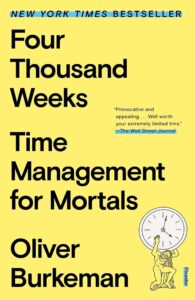
Four Thousand Weeks by Oliver Burkeman is the most directly applicable available account of the relationship between how humans experience time and the specific temporal distortions that the driven, high-achieving, overcommitted professional creates. Burkeman's account of how the drive to be maximally productive colonises all available time, making genuine presence in non-work experience progressively unavailable, maps directly onto the Sonnentag detachment failure and the Bellezza busyness-as-status mechanisms this article describes.
Your Brain at Work
Article #486
The cognitive early warning signs of burnout and how thinking changes before exhaustion becomes visible
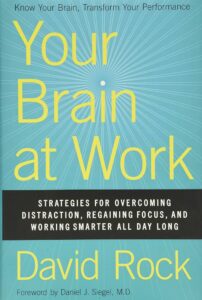
Your Brain at Work by David Rock. Rock's account of how prefrontal-dependent cognitive functions are disrupted under conditions of sustained threat and cognitive load, drawing on the same neuropsychological research base that Savic's neuroimaging and the Deligkaris systematic review draw on, provides the most practically accessible available complement to the cognitive early warning mechanisms this article describes. His specific account of how the early signs of prefrontal depletion appear in decision-making and creative thinking quality before mood or energy changes become visible maps directly onto the timeline this article identifies as the burnout cognitive early warning sequence.

When the Body Says No
Article #485
Why the body signals burnout months before the mind acknowledges it and the physical early warning signs that get rationalised away
When the Body Says No by Gabor Mate is the most directly applicable available account of how the body signals accumulated distress long before the conscious mind acknowledges it, drawing on Mate's clinical account of how chronic stress produces specific physical illnesses across his patient population and his research-grounded account of the psychological mechanisms through which the body's signals are systematically overridden. Mate's specific account of how the same developmental conditioning that produces high professional functioning also produces the somatic awareness deficit that prevents the body's early warnings from being attended to maps directly onto the van der Kolk mechanism this article describes.
Together
Article #483
The social environment of burnout and how isolation loneliness and the absence of genuine peer support accelerate collapse
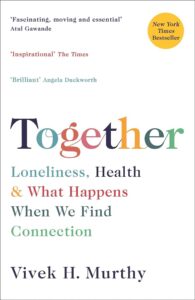
Together by Vivek Murthy. Murthy's account of the loneliness epidemic and its specific health consequences, written from his experience as US Surgeon General and grounded in the same social isolation research this article draws on, provides the most practically and personally grounded available complement to the biological mechanisms. His specific account of what genuine connection requires, as distinct from the professional networking that produces social presence without the co-regulatory benefit of genuine relatedness, maps directly onto the social baseline theory and the community dimension of the Maslach burnout framework.
It Didn’t Start With You
Article #483
How childhood patterns around worth and effort install the operating system that burnout runs on
It Didn't Start With You by Mark Wolynn is the most directly applicable available account of how patterns installed through early developmental experience, and sometimes through multigenerational transmission, operate in adult life as the automatic cognitive and physiological defaults that produce chronic difficulties including burnout vulnerability. Wolynn's account of how to identify the original installation and begin the process of modifying it at the level where the pattern actually lives maps directly onto the Bowlby internal working model and van der Kolk somatic storage mechanisms this article describes.

The Second Mountain
Article #482
The role of meaning loss in burnout and why disconnecting from purpose accelerates exhaustion faster than overwork alone
The Second Mountain by David Brooks is the most reflective available account of how the first career trajectory, oriented toward achievement and external success, frequently produces the meaning loss this article identifies as the burnout accelerant, and what the reorientation toward genuine purpose that the research supports as the meaning-restoring intervention looks like in practice. Brooks's account of the relationship between achievement, meaning, and the depletion that achievement without genuine purpose produces maps directly onto the SDT controlled motivation and Hill-Turiano purpose-as-resource mechanisms.
The Achievement Habit
Article #481
Why high performers are disproportionately at risk and the psychological profile that predicts collapse
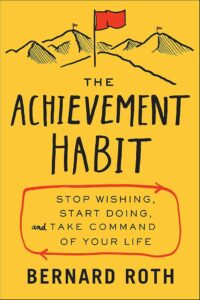
The Achievement Habit by Bernard Roth is the most directly applicable available account of how the compulsive relationship with achievement that this article identifies as the primary high-performer burnout mechanism can be understood and modified, covering the specific ways in which achievement becomes identity-constitutive rather than merely professionally meaningful, and what the relationship with achievement that does not produce the compulsive engagement looks like in practice.
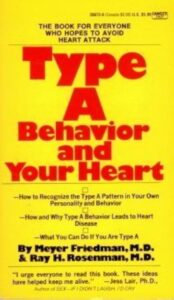
Type A Behavior and Your Heart
Article #480
The personality traits that make certain people structurally more vulnerable to burnout regardless of workload
Type A Behavior and Your Heart by Meyer Friedman and Ray Rosenman. Friedman and Rosenman's original account of the Type A personality and its physiological consequences provides the most historically grounded available complement to the time urgency and hostility mechanisms this article identifies as burnout risk amplifiers. Their specific account of how the urgency-hostility profile sustains the physiological activation that makes recovery structurally difficult maps directly onto the allostatic load accumulation mechanism and the HPA reactivity research this article describes.
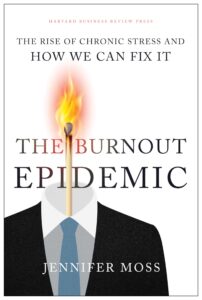
The Burnout Epidemic
Article #479
Why burnout is almost never caused by a miniature change and the cumulative architecture that actually builds it
The Burnout Epidemic by Jennifer Moss is the most structurally grounded available account of why burnout is almost never a personal failing and almost always the product of accumulated organisational, cultural, and psychological conditions that combine over time. Moss's account of the six factors that precede burnout — workload, lack of control, insufficient rewards, poor community, absence of fairness, and values mismatch — maps directly onto the cumulative risk, effort-reward imbalance, and SDT needs-frustration mechanisms this article describes.
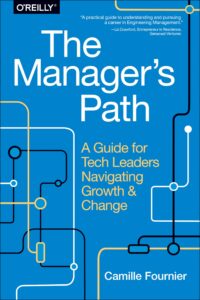
The Manager’s Path
Article #478
What leaders can actually control about culture and the significant amount they cannot
The Manager's Path by Camille Fournier. Fournier's account of the specific responsibilities, decisions, and limits of authority that leaders at different organisational levels actually have — drawn from software engineering but applicable across contexts — provides the most practically grounded available complement to the Hackman composition research and the Schneider ASA structural momentum mechanism. Her specific account of which cultural interventions are within a leader's actual authority at each level, and which require organisational-level decisions they cannot make alone, maps directly onto the control boundary this article identifies as the most important honest mapping in leadership development.
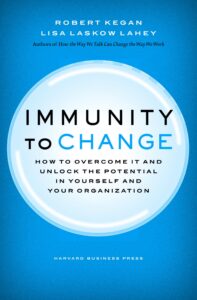
Immunity to Change
Article #477
Why culture change is difficult and the psychological forces that make organisations resist transformation even when they are clearly not working
Immunity to Change by Robert Kegan and Lisa Laskow Lahey. Kegan and Lahey's account of the hidden competing commitments that prevent individuals and organisations from changing despite genuine intention provides the most psychologically precise available complement to the Schein assumption layer and Wood-Rünger habit mechanisms. Their specific account of how to surface and work with the competing commitments that sustain dysfunctional culture patterns maps directly onto the change resistance phenomenon this article identifies as primarily psychological rather than technical.
No books found matching your search.