Recommended Books
Every book on this page was recommended at the end of a courben.co article. Reading about a psychological concept is one thing — having a book that lets you live inside it is another. These recommendations exist because an article should leave you with something you can act on, not just something you can recall. The difference between forgettable and memorable is almost always what you do next.
This page contains affiliate links. If you purchase through our links we may earn a small commission at no extra cost to you. We only recommend books we genuinely believe extend the psychology explored in our articles.
Showing 18 of 506 books
The First 90 Days
Article #476
What happens to a new hire's beliefs and behaviours when they spend the first 3 months within an organisation's culture
The First 90 Days by Michael Watkins is the most directly applicable available account of the entry period as a decisive window for establishing the mental models, relationships, and cultural understanding that determine long-term performance and engagement. Watkins's account of what the new hire needs to learn, from whom, and in what sequence during the first 90 days maps directly onto the Van Maanen-Schein socialisation and Rousseau psychological contract formation mechanisms this article describes.

The Power of Ritual
Article #475
Why organisations with strong rituals outperform those that rely on communication and basic standards
The Power of Ritual by Casper ter Kuile is the most directly applicable available account of how intentional ritual practice — designed and implemented deliberately rather than inherited — produces the cohesion, meaning, and commitment that this article identifies as the primary performance advantage of ritual-based cultures. Ter Kuile's account of what makes rituals meaningful rather than merely habitual, and how to design practices that carry genuine function rather than empty form, maps directly onto the Islam-Zyphur nine-function model and the Stanford deliberate design framework.

Snakes in Suits
Article #474
Why toxic culture persists and the psychological mechanisms that maintain dysfunctional environments long after they are recognised as such
Snakes in Suits by Paul Babiak and Robert Hare. Babiak and Hare's account of how specific personality profiles — particularly those characterised by the charm, manipulation, and absence of empathy that produce the most reliably toxic leadership cultures — install the assumption-layer conditions this article describes, and how organisations fail to detect and address them, provides the most psychologically specific available account of how toxic cultures are installed and why they persist despite recognition. Their account of the self-preservation mechanisms that these profiles deploy against corrective intervention maps directly onto the Detert-Edmondson voice suppression and Cialdini descriptive norm cascade mechanisms.
First, Break All the Rules
Article #473
The psychological contract and the unwritten expectations that shape employee engagement more than any formal agreement
First, Break All the Rules by Marcus Buckingham and Curt Coffman. Buckingham and Coffman's account of the Gallup research on what distinguishes the most engaged workplaces from the least engaged — specifically their finding that the immediate manager relationship is the primary determinant of psychological contract experience — provides the most empirically substantial available complement to the Rousseau contract formation and Robinson-Rousseau violation consequences. Their specific account of what employees actually need to feel that the implicit agreement is being honoured maps directly onto the discretionary effort and commitment consequences this article identifies as the primary commercial stakes of psychological contract management.

Corporate Culture and Performance
Article #472
How organisational culture forms and the psychological mechanism through which shared norms emerge from founder behaviour
Corporate Culture and Performance by John Kotter and James Heskett is the most research-grounded available account of the relationship between culture formation and commercial outcomes — covering the specific mechanisms through which founder-installed assumptions translate into sustained organisational performance differences, and the conditions under which culture change is and is not possible. Kotter and Heskett's longitudinal research on the performance consequences of different culture types provides the most empirically substantial available complement to the Schein formation mechanism this article describes.
Negotiation Genius
Article #471
How to raise prices without losing customers and the psychological factors that determine whether increases land as fair or as exploitation
Negotiation Genius by Deepak Malhotra and Max Bazerman. Malhotra and Bazerman's account of negotiation psychology — specifically how anchoring, fairness perception, and the communication of legitimacy determine whether a price position is accepted or resisted — provides the most directly applicable available complement to the Kahneman fairness and reference price mechanisms. Their specific account of how to communicate the basis for a price position in ways that shift the fairness evaluation from exploitation to legitimate entitlement maps directly onto the attribution and proportionality factors this article identifies as the primary fairness determinants.
Building a StoryBrand
Article #470
Price as communication and what your pricing architecture says about the business before anyone reads a single word
Building a StoryBrand by Donald Miller is the most directly applicable available account of how businesses communicate positioning before product description — covering the specific signals that tell customers what kind of business this is and whether they are the intended customer. Miller's account of how every visible element of a business's presentation functions as positioning communication before any explicit messaging begins maps directly onto the coherent arbitrariness and quality-signal mechanisms this article describes. His specific account of what clarity in positioning architecture communicates versus what ambiguity communicates is the most practically applicable available treatment of the pricing architecture as communication problem.

Payoff
Article #469
The pain of paying and how different payment mechanisms and framings change the psychological experience of spending money
Payoff by Dan Ariely is the most directly applicable available account of the hidden psychology of motivation and reward — specifically covering what makes spending feel worthwhile versus painful, and the specific conditions under which the experience of a transaction feels like investment rather than loss. Ariely's account of how meaning, decoupling, and the framing of what money buys change the psychological experience of parting with it maps directly onto the Prelec-Loewenstein coupling mechanism and the Knutson insula research this article describes.

Contagious: Why Things Catch On
Article #468
Charm pricing and the cognitive arithmetic of .99; why irrational numbers outperform round ones and when they should not be used
Contagious: Why Things Catch On by Jonah Berger. Berger's account of the social currency and identity signalling mechanisms that determine what customers communicate through their purchasing choices provides the most practically applicable available complement to the Stiving-Winer quality signal backfire mechanism. His specific account of how products signal identity and social position to the buyer's reference groups maps directly onto the positioning damage that charm pricing produces in premium and identity-expressive categories. by Jonah Berger. Berger's account of the social currency and identity signalling mechanisms that determine what customers communicate through their purchasing choices provides the most practically applicable available complement to the Stiving-Winer quality signal backfire mechanism. His specific account of how products signal identity and social position to the buyer's reference groups maps directly onto the positioning damage that charm pricing produces in premium and identity-expressive categories.
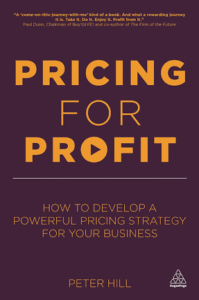
Pricing for Profit
Article #467
The psychology of a discount and what it communicates about the product the seller and the relationship
Pricing for Profit by Peter Hill is the most practically structured available account of how pricing decisions translate into long-term commercial positioning — covering the specific mechanisms through which discounting degrades both reference prices and quality perceptions, and what the pricing architecture that protects margin and positioning looks like in practice. Hill's account of how to design the pricing strategy that avoids the reference price degradation trap this article describes maps directly onto the Monroe and Rao-Monroe mechanisms.

The Price Advantage
Article #466
How price functions as a quality signal and the counterintuitive research on what higher prices communicate to buyers
The Price Advantage by Michael Baker, Michael Marn, and Craig Zawada is the most research-grounded available account of how pricing decisions translate into commercial performance — covering the specific mechanisms through which price changes produce margin, volume, and perception effects, and what the systematic analysis of pricing leverage looks like in practice. Baker, Marn, and Zawada's account of how to identify where pricing power exists and what determines whether a price increase produces the quality signal effect or the demand reduction effect maps directly onto the Rao-Monroe acceptable price range and the Plassmann experience-quality mechanisms this article describes.

PricelessPriceless
Article #465
How customers interpret a price before they evaluate it and the first three seconds of a pricing encounter
Priceless by William Poundstone is the most accessible available account of the psychological and neural mechanisms that determine how prices are perceived, evaluated, and responded to — covering the anchoring, framing, and presentation variables that determine whether a price feels right or triggers the aversion that prevents purchase. Poundstone's account of the specific pricing presentation decisions that change the customer's evaluation maps directly onto the N400, price primacy, and insula activation mechanisms this article describes.
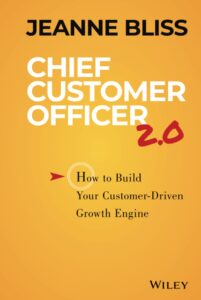
Chief Customer Officer 2.0
Article #464
Understanding customer loss and the psychology of why people stop buying + what predicts it before it happens
Chief Customer Officer 2.0 by Jeanne Bliss. Bliss's account of how organisations build the operational systems that detect, respond to, and prevent the disengagement trajectory this article describes — covering the specific metrics, feedback loops, and response architectures that allow customer health to be monitored at the individual relationship level rather than only at aggregate — provides the most operationally specific available complement to the Reichheld engagement indicator and Rousseau contract violation mechanisms. Her specific account of what the early warning system for customer loss looks like when it is functioning effectively maps directly onto the leading indicator detection challenge this article identifies as the primary retention investment.

Unconscious Branding
Article #463
How customers construct the narrative of their purchasing decisions
Unconscious Branding by Douglas Van Praet. Van Praet's account of how purchase decisions are driven by unconscious processes that customers have no direct introspective access to — and what marketing and product design that reaches those processes rather than the conscious rationalisation layer looks like — provides the most practically structured available complement to the McAdams narrative construction and Festinger dissonance-reduction mechanisms. His specific account of why marketing that asks customers what they want and then delivers it so often fails maps directly onto the introspective gap this article identifies as the foundational problem.

Lovemarks
Article #462
The role of emotion in brand loyalty and why customers stay loyal even when a competitor is objectively better
Lovemarks by Kevin Roberts is the most directly applicable available account of the emotional architecture of brand loyalty — covering the specific distinction between brands that are respected (high love, high respect), loved (high love, low respect), respected but not loved, and commodities, and what the investment in love rather than merely respect produces in loyalty architecture. Roberts's account of how brands achieve the identification-based trust stage that Lewicki-Bunker predicts maps directly onto the Tajfel-Turner identity mechanism and the endowment deepening this article describes.

The Theory of the Leisure Class
Article #461
Status and luxury psychology and how and why people use price and brand as signals of social standing
The Theory of the Leisure Class by Thorstein Veblen. Reading the primary source is worth recommending for an audience that will produce commercial strategy from it — Veblen's original account of conspicuous consumption contains observations about the social psychology of status that subsequent formal models have confirmed and formalised but not superseded. His specific account of why the signal requires costliness, visibility, and wastefulness to function as a social position communication maps directly onto the Bagwell-Bernheim formal model and the Plassmann price-experience research this article draws on.
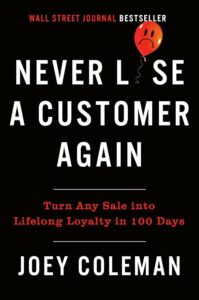
Never Lose a Customer Again
Article #460
Buyer's remorse + the psychology of post-purchase regret and how businesses can reduce it through communication design
Never Lose a Customer Again by Joey Coleman. Coleman's account of the first hundred days of a customer relationship — the period in which the buyer's remorse mechanism is most active and in which the post-purchase communication investment has the highest return — provides the most practically structured available complement to the cognitive dissonance and peak-end rule frameworks. His specific account of what customers need to hear, when, and through which channels during the post-purchase vulnerability window maps directly onto the Festinger consonant cognition additions and the recency-anchoring mechanism this article describes.

Friction
Article #459
The psychology of the first purchase and why first-time buyers need more than a good product to say yes
Friction by Roger Dooley is the most directly applicable available account of how reducing psychological, cognitive, and procedural resistance to purchase decisions produces first-purchase conversion improvements — covering the specific resistance sources this article identifies and the design interventions that address each. Dooley's account of what creates and eliminates the multiple friction points that prevent first-time buyers from completing the purchase they have partially decided to make maps directly onto the perceived risk, calculus-based trust, and novelty-threat mechanisms.
No books found matching your search.