Recommended Books
Every book on this page was recommended at the end of a courben.co article. Reading about a psychological concept is one thing — having a book that lets you live inside it is another. These recommendations exist because an article should leave you with something you can act on, not just something you can recall. The difference between forgettable and memorable is almost always what you do next.
This page contains affiliate links. If you purchase through our links we may earn a small commission at no extra cost to you. We only recommend books we genuinely believe extend the psychology explored in our articles.
Showing 18 of 506 books

Spent
Article #458
Identity and purchasing and how what people buy signals who they are and who they aspire to become
Spent by Geoffrey Miller. Miller's account of the evolutionary psychology of consumer behaviour — specifically his account of how purchasing decisions function as fitness signalling, identity display, and social communication in ways that evolutionary psychology predicts and that rational consumer models cannot explain — provides the most intellectually foundational available complement to the McCracken cultural meanings and Berger-Heath visibility mechanisms. His specific account of why certain product categories carry disproportionate identity weight maps directly onto the aspirational self and social identity theory mechanisms this article draws on.
The Buying Brain
Article #457
Why people rarely buy the product and what they're actually purchasing when they hand over money
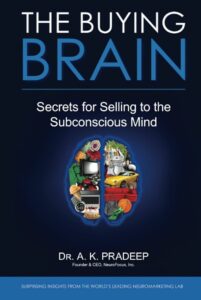
The Buying Brain by A.K. Pradeep. Pradeep's account of the neuroscience of consumer decision-making — covering the specific neural systems that drive purchase decisions, the emotional and sensory triggers that activate purchase motivation, and what the neuromarketing research reveals about how the brain responds to products, packaging, and communication — provides the most directly neurological available complement to the Zaltman and Damasio mechanisms this article describes. His account of how the brain's rapid emotional assessment precedes and determines the rational evaluation maps directly onto the somatic marker and three-second preference mechanisms this article identifies as the primary purchase drivers.
Why Motivating People Doesn’t Work and What Does
Article #456
Designing for team psychological health and what leaders can actually control vs what they cannot
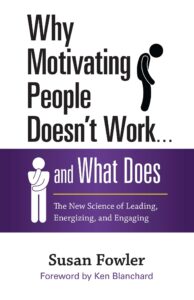
Why Motivating People Doesn't Work and What Does by Susan Fowler. Fowler's account of why leader attempts to motivate team members through recognition programmes, incentives, and culture initiatives frequently produce the opposite of the intended effect — and what the SDT-based optimal motivation approach looks like in practice — provides the most practically applicable available complement to the Hackman structural priority finding and the Edmondson psychological safety influence-versus-control distinction. Her specific account of what is and is not within the leader's authority to change in team members' motivation quality maps directly onto the control boundary this article identifies as the most important honest mapping in leadership development.
Bringing Out the Best in People
Article #455
Recognition and the psychology of feeling seen + what people actually need beyond compensation to remain engaged
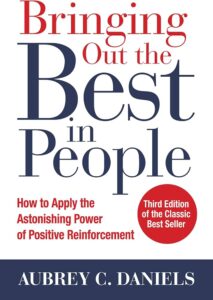
Bringing Out the Best in People by Aubrey Daniels. Daniels's account of the behavioural science of positive reinforcement in professional contexts — covering the specific timing, specificity, and delivery conditions that determine whether positive recognition produces lasting behaviour change or temporary performance compliance — provides the most practically structured available complement to the Lepper overjustification and Stajkovic-Luthans effectiveness research. His specific account of why recognition loses its effectiveness when it becomes predictable, scheduled, or metric-contingent maps directly onto the overjustification and relatedness-versus-evaluation distinctions this article identifies.
What Got You Here Won’t Get You There
Article #454
The loneliness of leadership and why the higher you sit the less honest information you receive
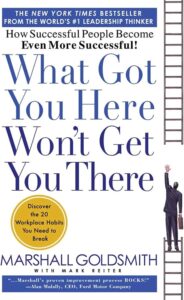
What Got You Here Won't Get You There by Marshall Goldsmith. Goldsmith's account of the specific leadership behaviours that seniority installs and that progressively reduce the honest feedback and information that would correct them — and his specific account of what the structural feedback mechanisms that bypass the hierarchy's filtering look like in practice — provides the most directly applicable available complement to the loneliness, rumination, and controlled noise mechanisms this article identifies. His specific account of why the leader who was most open to feedback before becoming senior often becomes the leader most insulated from it after provides the most practically grounded available treatment of the plateau-and-isolation cycle.
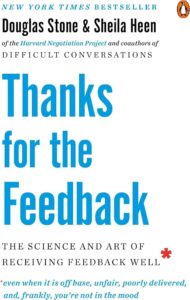
Thanks for the Feedback
Article #453
The feedback dynamic and why most leaders believe they give useful feedback and most employees believe they do not
Thanks for the Feedback by Douglas Stone and Sheila Heen is the most research-grounded available account of why feedback is hard to receive and what makes it more likely to land — covering the specific psychological mechanisms through which evaluation feedback, relationship feedback, and identity feedback activate different threat responses, and the specific conditions that allow each type to be received as developmental rather than threatening. Stone and Heen's account of why the receiver's mechanisms matter as much as the giver's skill maps directly onto the Dickerson-Kemeny and Kluger-DeNisi mechanisms this article describes.
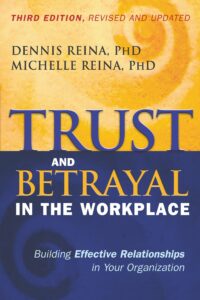
Trust and Betrayal in the Workplace
Article #452
How trust forms between people in workplace environments and the psychological mechanisms that build it + the asymmetry that destroys it
Trust and Betrayal in the Workplace by Dennis and Michelle Reina is the most directly applicable available research-grounded account of how trust develops and is damaged in organisational contexts — covering the specific trust-building behaviours that accumulate ability, benevolence, and integrity trust in professional relationships, the specific violation types that most severely damage each component, and the specific recovery conditions that the research supports as effective rather than merely apologetic. The Reinas' account of the trust-building and trust-rebuilding practices that actually change team trust levels maps directly onto the Mayer-Davis-Schoorman model and the Kim et al. violation asymmetry this article describes.
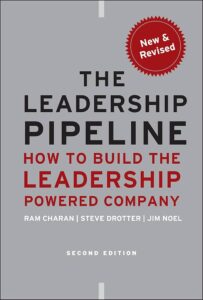
The Leadership Pipeline
Article #451
How leaders actually develop and what the research says about leaders who keep improving from those who plateau
The Leadership Pipeline by Ram Charan, Stephen Drotter, and James Noel. Charan, Drotter, and Noel's account of the specific capability transitions that leadership development requires at each organisational level — from managing oneself to managing others, from managing others to managing managers, from functional leader to business leader — provides the most practically structured available complement to the Ericsson deliberate practice framework. Their specific account of what stops developing at each transition, and what the deliberate practice conditions that restart development look like at each stage, maps directly onto the plateau mechanism and feedback-learning orientation interaction this article describes.

Seeking Wisdom: From Darwin to Munger
Article #450
Building a personal decision-making system and what the research supports as durable rather than aspirational
Seeking Wisdom: From Darwin to Munger by Peter Bevelin. Bevelin's synthesis of the mental models, decision principles, and structural habits that the most consistently good decision-makers — across science, business, and investing — have actually used provides the most practically grounded available complement to the empirical framework this article describes. His specific account of how durable decision quality improvement is built through the accumulation of structural habits rather than through periodic motivational commitment maps directly onto the decision journal, accountability partner, and implementation intention mechanisms this article identifies as the most research-supported durable elements.
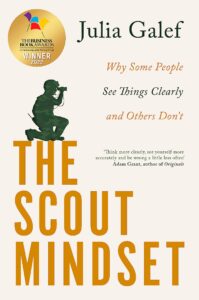
The Scout Mindset
Article #449
Pre-mortems + the psychology of protective pessimism and how imagining failure improves the decisions that precede it
The Scout Mindset by Julia Galef is the most directly applicable available account of the psychological orientation that makes the pre-mortem possible — the commitment to seeing clearly rather than to validating existing commitments — covering the specific mechanisms through which motivated reasoning, confirmation bias, and identity protection prevent honest failure analysis, and what the specific practices that overcome them look like. Galef's account of the scout mindset versus the soldier mindset maps directly onto the distinction between the pre-mortem's disconfirmatory search and the planning process's confirmatory search that this article describes.

The 24-Hour Mind
Article #448
The role of sleep in decision quality and what the research shows about when cognitive performance is genuinely compromised
The 24-Hour Mind by Rosalind Cartwright. Cartwright's research-grounded account of how sleep — specifically REM sleep — processes the emotional content of waking experience and prepares the brain for the next day's emotional and cognitive functioning provides the most directly applicable available complement to the van der Helm and Walker REM processing research this article draws on. Her specific account of how sleep deprivation leaves the emotional residue of prior experiences unprocessed and available to contaminate subsequent judgment maps directly onto the decision quality implications this article describes.
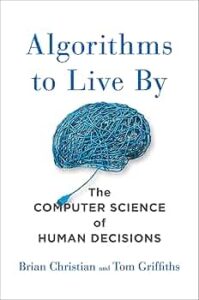
Algorithms to Live by
Article #447
Decision reversibility and how knowing whether a choice can be undone should change how much time you spend on it
Algorithms to Live by Brian Christian and Tom Griffiths. Christian and Griffiths's account of the optimal stopping, exploration-exploitation, and decision-under-uncertainty algorithms from computer science applied to human decision-making provides the most intellectually rigorous available complement to the reversibility calibration framework — specifically their account of when to commit to a current option and when to continue exploring, which maps directly onto the reversible versus irreversible decision distinction and the deliberation investment question this article addresses.
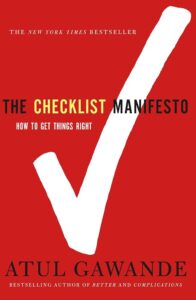
The Checklist Manifesto
Article #446
Sunk cost escalation and why the more you've invested in a wrong direction the harder it becomes to leave it
The Checklist Manifesto by Atul Gawande is the most practically applicable available account of how pre-committed structural procedures — established before the pressure of the specific situation creates the cognitive distortions this article describes — produce better decisions than in-the-moment judgment under equivalent conditions. Gawande's account of how pre-commitment to specific decision criteria protects against the self-justification and confirmation bias mechanisms that high-stakes in-the-moment decisions generate maps directly onto the kill criterion structural correction this article identifies as the most research-supported escalation prevention tool.
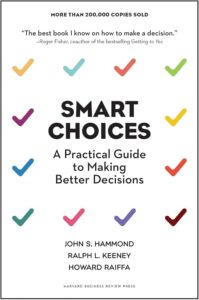
Smart Choices
Article #445
How emotional intensity corrupts the framing of options and why high-stakes decisions feel more binary than they are
Smart Choices by John Hammond, Ralph Keeney, and Howard Raiffa. Hammond, Keeney, and Raiffa's structured decision analysis framework — specifically their account of how to deliberately generate alternatives before evaluating them, and why the premature collapse to a small option set is the primary source of poor decisions — provides the most practically structured available complement to the Staw threat-rigidity and Kross self-distancing mechanisms this article draws on. Their specific account of the "even swaps" technique for evaluating options across multiple criteria maps directly onto the multi-option framing that emotional intensity prevents.
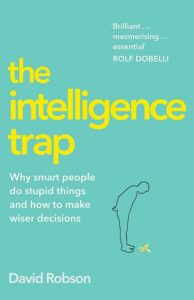
The Intelligence Trap
Article #444
The time pressure illusion and why urgent decisions rarely require the speed they appear to demand
The Intelligence Trap by David Robson is the most directly applicable available account of how intelligent, experienced people make systematically worse decisions than the evidence warrants — through the specific mechanisms of motivated reasoning, inside-view overconfidence, and the urgency that expertise generates when situations pattern-match to prior experience. Robson's account of why high-functioning decision-makers specifically resist the outside view that would correct their urgency overestimation maps directly onto the Kahneman inside view and threat-rigidity mechanisms this article describes.

Being Mortal
Article #443
What stress hormones actually do to decision-making and the neuroscience of judgment under pressure
Being Mortal by Atul Gawande. Gawande's account of decision-making under conditions of high stakes, emotional pressure, and genuine uncertainty — drawn from clinical medicine but with direct structural parallels to the entrepreneurial decision environment — provides the most practically grounded available complement to the neuroscience framework this article draws on. His specific account of how experienced decision-makers navigate the pressure to make confident decisions from incomplete information, and what structural conditions improve or impair that navigation, maps directly onto the cortisol-timing and PFC-vulnerability mechanisms this article describes.

The Good Enough Life
Article #442
The relationship between sacrifice and meaning and when giving things up stops feeling like investment and starts feeling like loss
The Good Enough Life by Avram Alpert. Alpert's philosophical account of the relationship between sacrifice, ambition, and the meaning that sustains each — specifically his argument that the meaning frame that makes sacrifice feel worthwhile frequently requires a reorientation of what the sacrifice is for — provides the most philosophically grounded available complement to the Vallerand passion distinction and the Frankl purpose-requirement mechanisms this article draws on. His specific account of when the striving that sacrifice serves stops being the right striving maps directly onto the harmonious-to-obsessive passion conversion and the arrival fallacy mechanisms this article identifies as the primary routes from investment to loss.
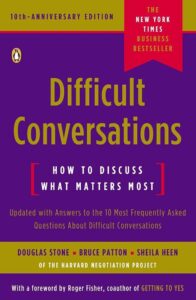
Difficult Conversations
Article #441
Entrepreneurial guilt and the specific psychological burden of being responsible for other people's livelihoods
Difficult Conversations by Douglas Stone, Bruce Patton, and Sheila Heen. Stone, Patton, and Heen's account of how the guilt and self-criticism that difficult conversations activate — specifically conversations in which the speaker's decisions have had or will have consequences for the other person's situation — distorts the conversation in ways that serve the speaker's guilt management rather than the other person's actual need provides the most practically applicable available complement to the ACT values-responsibility distinction this article identifies as the resolution to founder livelihood guilt.
No books found matching your search.