Recommended Books
Every book on this page was recommended at the end of a courben.co article. Reading about a psychological concept is one thing — having a book that lets you live inside it is another. These recommendations exist because an article should leave you with something you can act on, not just something you can recall. The difference between forgettable and memorable is almost always what you do next.
This page contains affiliate links. If you purchase through our links we may earn a small commission at no extra cost to you. We only recommend books we genuinely believe extend the psychology explored in our articles.
Showing 18 of 506 books
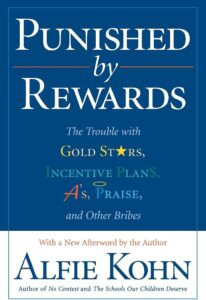
Punished by Rewards
Article #422
Intrinsic versus extrinsic motivation and why external rewards undermine internal drive over time
Punished by Rewards by Alfie Kohn is the most thorough available popular account of the overjustification effect and its institutional implications — covering the experimental evidence across education, business, and parenting, the specific conditions under which rewards undermine rather than enhance the behaviours they are intended to produce, and the institutional habits that persist despite this evidence because they feel intuitively correct. Kohn's account of why the belief that more reward produces more motivation is so resistant to the evidence against it, and his specific account of what the evidence supports as an alternative approach to motivation design, makes this the most comprehensive available popular treatment of the Lepper and Deci research programmes for an audience concerned with practical application.
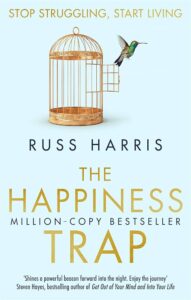
The Happiness Trap
Article #421
What the research says about functioning well in the presence of fear rather than waiting for it to resolve
The Happiness Trap by Russ Harris is the most directly applicable available popular account of ACT committed action in the presence of fear — covering the specific defusion, acceptance, and values-based action practices that enable functioning despite fear, with the entrepreneurial and professional contexts that make Harris's account the most directly relevant available for the audience this article addresses. His specific account of why the control agenda — the attempt to reduce or eliminate fear before acting — is the mechanism that maintains both the fear and the avoidance, and why acceptance of fear combined with values-based action is the alternative that the ACT research supports, provides the most practically structured available guide to what this article describes.

The Anxiety and Phobia
Article #420
The anxiety-avoidance cycle and how short-term relief produces long-term amplification
The Anxiety and Phobia Workbook by Edmund Bourne is the most comprehensive available clinical account of anxiety-avoidance cycle interruption — covering the specific graduated exposure protocols for the full range of anxiety presentations, the cognitive restructuring approaches for the pre-cycle intervention point, and the relaxation and physiological regulation practices that address the somatic dimension of the cycle. Bourne's integration of CBT, exposure-based therapy, and physiological regulation techniques makes this the most practically structured available guide to systematic cycle interruption for the entrepreneur who has identified the specific avoided situations this article describes and wants the most evidence-based available protocol for addressing them.
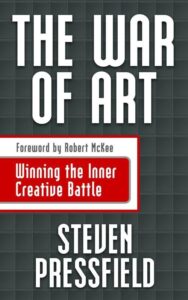
The War of Art
Article #419
Avoidance disguised as productivity and how entrepreneurs avoid the important thing by doing the urgent one
The War of Art by Steven Pressfield is the most direct available account of the resistance mechanism that keeps the important work deferred — Pressfield's concept of Resistance as the specific force that produces the avoidance of the most meaningful work through the disguise of legitimate alternative activities. His account of how Resistance is most powerfully activated by the work that matters most, and how it consistently presents itself as reasonable justification for deferral rather than as avoidance, provides the most personally honest available complement to the Hayes experiential avoidance and Covey urgent-important frameworks this article describes. His specific account of the professional turning-toward practice that interrupts the Resistance cycle maps directly onto the graduated approach and implementation intention interventions the research supports.

First, We Make the Beast Beautiful
Article #418
How avoidance compounds and why the thing avoided becomes progressively more difficult to approach
First, We Make the Beast Beautiful by Sarah Wilson is the most personally honest available popular account of how avoidance compounds — specifically through her own documented experience of how the things most feared grow progressively larger the longer they are avoided, and what the gradual turning-toward process looks and feels like from inside. Wilson's integration of neuroscience, clinical psychology, and personal testimony provides the most emotionally precise available complement to the Mowrer and Wegner mechanisms this article describes, covering both the compounding mechanism and the specific quality of the turning-toward experience that reverses it.
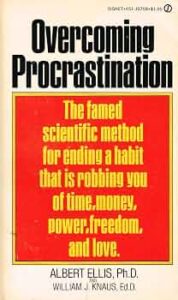
Overcoming Procrastination
Article #417
What avoidance actually is psychologically and the full range of behaviours that qualify + the mechanism beneath them
Overcoming Procrastination by Albert Ellis and William Knaus. Ellis and Knaus's foundational clinical account of procrastination as avoidance — drawing on rational emotive behaviour therapy to identify the specific irrational beliefs and low frustration tolerance that drive the most common forms of avoidance behaviour — provides the most historically grounded available complement to the Hayes experiential avoidance framework. Their specific account of how the immediate discomfort reduction of avoidance is reinforced at the expense of the long-term cost maps directly onto the Mowrer two-factor theory and the immediacy-delay asymmetry this article identifies as the primary persistence mechanism.
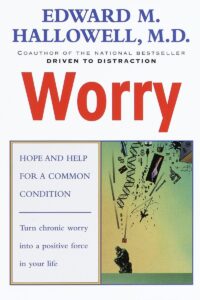
Worry: Hope and Help for a Common Condition
Article #416
Anticipatory anxiety and the psychology of worrying about things that haven't happened + its cognitive cost
Worry: Hope and Help for a Common Condition by Edward Hallowell is the most clinically comprehensive available popular account of worry as a specific psychological phenomenon — covering its neurological basis, its psychological function, its relationship to both anxiety disorders and high-achieving professional performance, and the specific interventions that the clinical research supports for reducing its chronic, unproductive form while maintaining the genuine forward-planning function that worry can serve. Hallowell's integration of clinical psychiatry, neuroscience, and practical intervention makes this the most accessible available source for the entrepreneur who wants to understand what worry is actually doing and what genuinely addresses it at the mechanism level rather than managing its symptoms.
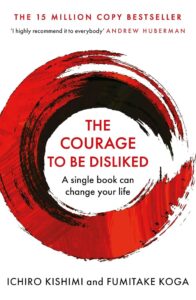
Ichiro Kishimi and Fumitake Koga
Article #415
The specific fears unique to entrepreneurship; judgement, visibility, commitment and growth
The Courage to Be Disliked by Ichiro Kishimi and Fumitake Koga is the most directly applicable available account of what genuinely releasing the sociometer's grip on decision-making requires — drawing on Adlerian psychology to develop the argument that the freedom from public judgement is not achieved through becoming indifferent to others but through the specific psychological development of separating one's own tasks from others' evaluations of them. Their account of the specific psychological work that separating self-worth from social evaluation requires maps directly onto the fear of public judgement and sociometer mechanisms this article describes.
The Big Leap
Article #414
Fear of failure versus fear of success and the two directions anxiety pulls and how to know which is operating
The Big Leap by Gay Hendricks is the most directly applicable available popular account of the fear of success mechanism — specifically his upper limiting concept, the pattern through which people self-sabotage when their success approaches the level that their self-concept has not yet accommodated. Hendricks covers the specific unconscious beliefs about what success would cost, demand, or expose that drive the avoidance behaviour this article describes, and the specific inquiry practices that identify and address them. His account of the four hidden barriers to success — including the fear that success would require becoming a different person and the fear that success would betray important relationships — maps the fear of success construct onto the specific avoidance patterns this article identifies.
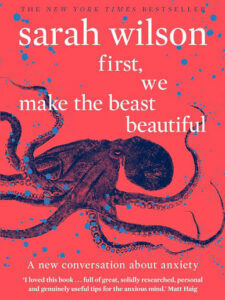
First, We Make the Beast Beautiful
Article #413
What fear is neurologically and why the entrepreneurial environment activates it chronically
First, We Make the Beast Beautiful by Sarah Wilson. Wilson's account of living with chronic anxiety — written from the perspective of someone who has investigated the neuroscience, the psychology, and the personal practice of working with rather than against a chronically activated fear system — provides the most personally honest available popular complement to the LeDoux research. Her specific account of how the chronic low-level activation that the BST research describes is experienced from the inside, and what genuinely helps versus what the cultural script about anxiety management suggests, maps directly onto the entrepreneurial fear experience this article frames.
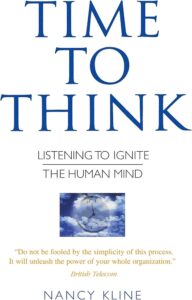
Time to Think
Article #412
Building a thinking environment and the external conditions that produce your best cognitive output
Time to Think by Nancy Kline is the most directly applicable available account of how the social conditions of the thinking environment determine the quality of thinking that occurs within it — covering the ten conditions of the Thinking Environment, the specific practices that establish each, and the commercial and personal evidence for their impact. Kline's framework provides the most practically structured available complement to the Kaplan and Newport research by addressing the social and relational dimensions of the thinking environment that purely physical and temporal accounts of cognitive performance leave unaddressed. For the entrepreneur who manages a team and wants to understand how to design the meeting, advisory, and conversation environments that produce the best available thinking from everyone in them, Kline provides the most directly applicable available source.

A Mind for Numbers
Article #411
Cognitive flexibility and the thinking skill that most reliably predicts entrepreneurial adaptation
A Mind for Numbers by Barbara Oakley is the most accessible available account of how to develop the cross-domain thinking and mental flexibility that the Miyake executive function research and the Epstein range findings identify as the substrate of cognitive flexibility — covering the specific learning strategies (interleaving, spaced retrieval, analogical reasoning across domains) that develop mental set-switching rather than deepening the expertise within a single existing schema. Oakley draws on cognitive science, neuroscience, and her own domain-crossing experience to produce the most practically structured available guide to the learning practices that build the cognitive flexibility this article describes.
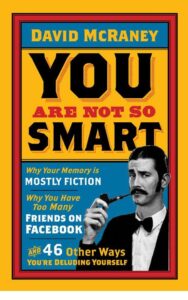
You Are Not So Smart
Article #410
How confirmation bias narrows thinking at exactly the moments that require breadth
You Are Not So Smart by David McRaney is the most accessible available popular account of confirmation bias and related self-deception mechanisms — covering how the confirmation bias operates across everyday thinking, the specific social and cognitive conditions that intensify it, and the ways that awareness of the bias changes the relationship with it without eliminating it. McRaney's account of why smart people show the bias at least as strongly as less sophisticated thinkers — and often more so, because intelligence produces more sophisticated rationalisations of confirmation-biased conclusions — maps directly onto the Kunda motivated reasoning and Nickerson expertise-confirmation findings this article describes.

Four Thousand Weeks
Article #409
The cognitive load problem and why trying to hold too much in working memory degrades the quality of everything you do
Four Thousand Weeks by Oliver Burkeman. Burkeman's account of the finitude of attention and time — and specifically his argument that the productivity strategies designed to do more are frequently adding to the cognitive load problem rather than solving it, because they increase the volume of open commitments rather than reducing the ones that are already open — provides the most philosophically grounded available complement to the Sweller and Zeigarnik research. His specific account of why the entrepreneurial impulse to optimise attention and time frequently produces more cognitive load rather than less maps directly onto the distinction between genuine and apparent load reduction this article describes.
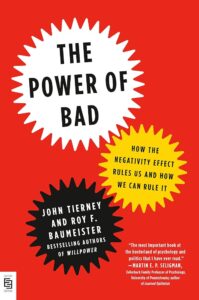
The Power of Bad
Article #408
Negativity bias and why the brain weights negative information more heavily and what that means for evaluating progress
The Power of Bad by John Tierney and Roy Baumeister. Baumeister's own popular synthesis of the negativity bias research — co-written with journalist John Tierney — provides the most accessible available account of how the bad-is-stronger-than-good asymmetry operates across relationships, organisations, decision-making, and performance evaluation. Their specific account of how the 5:1 ratio applies across commercial and relational contexts, and their practical account of what correcting for the asymmetry looks like in practice, makes this the most directly applicable available popular complement to the foundational research this article draws on.
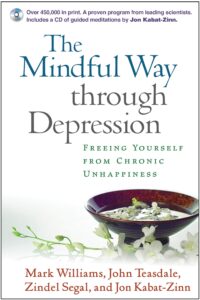
The Mindful Way Through Depression
Article #407
Rumination and the psychology of repetitive negative thinking and its specific cognitive cost on performance
The Mindful Way Through Depression by Mark Williams, John Teasdale, Zindel Segal and Jon Kabat-Zinn is the most directly applicable available account of the mindfulness-based cognitive therapy approach that specifically targets the rumination-depression cycle for high-functioning individuals — covering the specific practices that develop the metacognitive awareness of ruminative thinking as a process rather than as accurate content, and the attentional training that interrupts the narrow self-focus that rumination requires. The approach is the most evidence-based available intervention for the working memory depletion and compounding cost mechanisms this article describes, and has been validated in clinical trials across multiple populations.
The Middle Way
Article #406
Black and white thinking and why all-or-nothing cognition produces poor commercial decisions
The Middle Way by Lou Marinoff draws on philosophy — specifically the Aristotelian golden mean and Buddhist middle path — to provide the most intellectually grounded available account of why extreme positions in evaluation and decision-making produce systematically worse outcomes than the moderate, nuanced assessment that binary thinking cannot access. Marinoff integrates ancient philosophical frameworks with contemporary psychology to produce the most accessible available treatment of what non-binary evaluation looks like in practice across personal, professional, and commercial domains. For the entrepreneur who wants the deepest available philosophical complement to the Beck cognitive distortion and Dweck entity theory frameworks this article describes, Marinoff provides the most intellectually satisfying available account.
The Anxiety and Worry Workbook
Article #405
Catastrophising and the psychology of worst-case thinking and when it becomes a liability rather than a planning tool
The Anxiety and Worry Workbook by Aaron Beck and Clark is the most research-grounded available practical treatment of catastrophising in the context of anxious cognition — covering the specific CBT interventions for outcome severity overestimation, the evidence-examination and alternative-generation techniques, and the behavioural experiments that test catastrophic predictions against actual outcomes. Beck's integration of his own cognitive therapy framework with the specific anxiety and worry literature makes this the most directly applicable available source for the entrepreneur who wants the most evidence-based available practical guide to identifying and interrupting the catastrophising pattern this article describes.
No books found matching your search.