Recommended Books
Every book on this page was recommended at the end of a courben.co article. Reading about a psychological concept is one thing — having a book that lets you live inside it is another. These recommendations exist because an article should leave you with something you can act on, not just something you can recall. The difference between forgettable and memorable is almost always what you do next.
This page contains affiliate links. If you purchase through our links we may earn a small commission at no extra cost to you. We only recommend books we genuinely believe extend the psychology explored in our articles.
Showing 18 of 506 books

Man’s Search for Meaning
Article #404
Who you are beyond what you build and the research on entrepreneurial identity after exit after failure and after success
Man's Search for Meaning by Viktor Frankl is the most foundational available account of how meaning and identity are constructed and reconstructed following the loss of the structures through which they were previously expressed — the specific psychological work of finding what remains when the primary organising structure is gone. Frankl's account of logotherapy — the discovery of meaning through suffering, work, and love — provides the deepest available philosophical and clinical complement to the McAdams narrative and Nielsen persistence mechanisms this article describes. His specific account of how meaning is not found in the continuation of the previous structure but in what the person chooses to do with what remains is the most applicable available treatment of the post-exit identity reconstruction challenge.

The Road Back to You
Article #403
Separating self-worth from business performance and the psychological work involved
The Road Back to You by Ian Morgan Cron and Suzanne Stabile is the most practically accessible available account of the Enneagram as a framework for understanding the specific fear-based belief systems — about worth, approval, and adequacy — that produce the self-worth entanglement patterns this article describes, and the specific developmental work that each type's pattern requires. Cron and Stabile cover not just the descriptive taxonomy but the psychological origins and the growth directions for each pattern, making this the most personally illuminating available complement to the Crocker, Neff, and Bowen frameworks for the entrepreneur who wants to understand where their specific entanglement pattern came from and what its resolution involves.
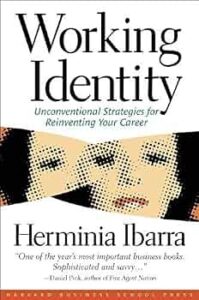
Working Identity
Article #402
The identity crisis of scaling and who the business requires you to become and what that asks of who you are
Working Identity by Herminia Ibarra is the most directly applicable available account of how professional identity transitions actually occur — through action and experimentation rather than through introspection and planning. Ibarra's research across executives, professionals, and leaders navigating career transitions documents the specific patterns of successful and failed identity transitions, the provisional self mechanism that makes acting-before-knowing psychologically survivable, and the outside-in change direction that successful transitions require. For the entrepreneur navigating the builder-to-leader transition this article describes, Ibarra provides the most operationally specific and research-grounded available guide to what the transition actually requires, what makes it most difficult, and what the most successful transitions have in common. Essential reading for anyone who recognises the identity dimension of their scaling challenge.
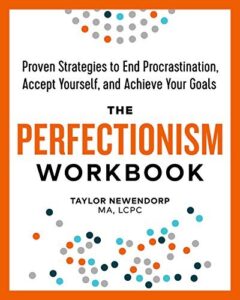
The Perfectionism Workbook
Article #401
What perfectionism actually is psychologically and the research on the critical distinction between adaptive and maladaptive forms
The Perfectionism Workbook by Taylor Newendorp is the most directly applicable available practical account of how to identify which specific perfectionism dimensions are operating and what evidence-based interventions address each — covering the cognitive restructuring approaches for concern over mistakes, the behavioural experiments that interrupt procrastination, and the self-compassion practices that decouple performance from self-worth. Newendorp integrates CBT, ACT, and self-compassion research to provide the most practically structured available guide for the entrepreneur who has identified the specific perfectionism pattern this article describes and wants the most directly applicable available development resource.
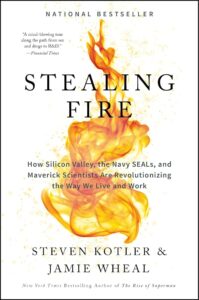
Stealing Fire
Article #400
Social comparison in the age of social media and why entrepreneurial comparison is uniquely destructive
Stealing Fire by Steven Kotler and Jamie Wheal is the most directly applicable available account of what genuinely exceptional performance requires — and specifically what it requires in terms of protecting the internal state that the social media comparison environment systematically destroys. Kotler and Wheal's account of the flow states and altered consciousness that produce peak creative and strategic performance, and their specific analysis of how external validation-seeking is antithetical to the intrinsic engagement that those states require, provides the most practically grounded available case for why managing the comparison environment is a performance question, not merely a wellbeing one.

Enough
Article #399
How self-worth becomes tied to revenue and external validation and the psychological cost over time
Enough by John Naish. Naish's account of the hedonic treadmill — the mechanism through which each achieved standard immediately becomes the new baseline, producing the temporary relief and immediate reset that the contingent self-worth article describes — provides the most accessible available treatment of why more commercial success does not produce more lasting satisfaction when the self-worth is contingent on the outcome. His specific account of how the "more" orientation produces the exhaustion and dissatisfaction that the enough orientation resolves maps directly onto the reset mechanism this article identifies as the primary long-term cost of contingent self-worth.
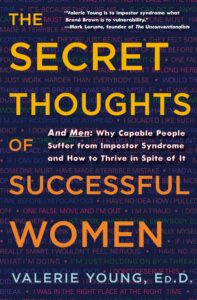
The Secret Thoughts of Successful Women
Article #398
Impostor syndrome and why it affects high performers disproportionately and gets worse with success
The Secret Thoughts of Successful Women by Valerie Young is the most research-grounded available popular account of impostor syndrome across high-achieving populations — covering the five specific competence types that Young's research identified as generating distinct impostor presentations, the specific behaviours each type produces, and the research-based approaches that address each. Young draws directly on the Clance and Imes research programme and extends it through her own extensive work with high-achieving populations. For the entrepreneur who wants the most practically structured available account of how impostor syndrome specifically operates in their context and what the research supports as genuinely effective responses, Young provides the most comprehensive and directly applicable available source.
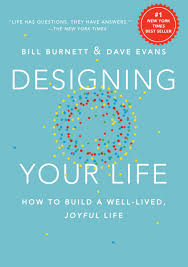
Designing Your Life
Article #397
How entrepreneurship uniquely destabilises identity in a way no other career path replicates
Designing Your Life by Bill Burnett and Dave Evans. Burnett and Evans's account of applying design thinking to the challenge of professional identity — specifically the practices of prototyping identity positions, holding identity questions lightly enough to experiment with them, and building toward coherence through iteration rather than through the fixed self-concept that employment's scaffolding would provide — is the most practically structured available complement to the scaffolding removal mechanism this article describes. Their specific account of how to navigate the identity groundlessness that role definition's absence creates maps directly onto the adaptive career shift mechanism.

Search Inside Yourself
Article #396
Practical regulation strategies and what the evidence supports for real-time emotional management under entrepreneurial pressure
Search Inside Yourself by Chade-Meng Tan is the most practically structured available account of mindfulness-based emotional regulation for professional and leadership contexts — developed at Google as an evidence-based training programme and covering attention training, self-knowledge, and the specific regulation techniques that mindfulness research supports for real-time use. Tan integrates the Kabat-Zinn mindfulness research, the Gross reappraisal evidence, and neuroscience of emotion regulation into a programme designed specifically for high-demand professional environments. His account of how attention training — the foundational practice underlying both early reappraisal deployment and self-distancing — can be developed through brief, consistent daily practice makes this the most accessible available evidence-based regulation development guide for the entrepreneur.
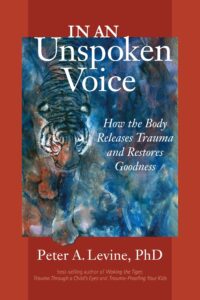
In an Unspoken Voice
Article #395
Triggers and their origins and the psychological archaeology of understanding why specific situations produce specific reactions
In an Unspoken Voice by Peter Levine. Levine's account of how the body completes the activation cycles that triggers reactivate — through the specific somatic discharge processes that trauma therapy has documented as the completion mechanism — provides the most directly applicable available complement to the archaeological understanding of trigger origins. His specific account of how the body's activation pattern can be traced, completed, and integrated without requiring cognitive reconstruction of the original formative experience maps directly onto the somatic archaeology practice this article describes.
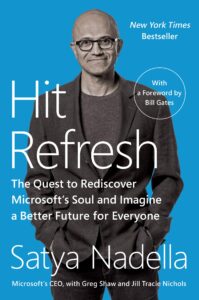
Hit Refresh
Article #394
Empathy in leadership and how the capacity to model another person's experience changes every interaction with your team
Hit Refresh by Satya Nadella. Nadella's account of how the experience of parenting a child with severe disabilities developed his capacity for genuine empathy — and how he subsequently applied that capacity to transform Microsoft's culture from internal competition to a learning orientation — is the most widely cited corporate case study of empathy as a leadership transformation mechanism. His specific account of what it required to genuinely model the experience of users, employees, and partners who were not like him provides the most personally grounded available complement to the Ickes and Davis research frameworks.
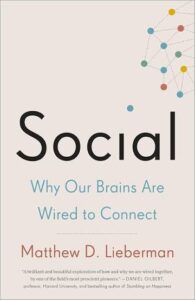
Social: Why Our Brains Are Wired to Connect
Article #393
Emotional contagion in teams and how your unregulated emotional state becomes your team's psychological environment
Social: Why Our Brains Are Wired to Connect by Matthew Lieberman. Lieberman's account of the social brain research — covering the specific neural systems dedicated to reading others' mental and emotional states, the default mode network's role in social cognition, and the metabolic priority the brain assigns to social connection and threat — provides the most accessible available neuroscience complement to the Hatfield and Porges mechanisms this article describes. His specific account of why the brain treats social pain and social reward with the same neural systems as physical pain and reward illuminates why the emotional climate the founder creates has the specific magnitude of effect on team functioning that the Barsade and Sy research documents.
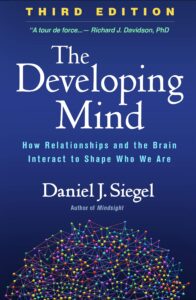
The Developing Mind
Article #392
The window of tolerance and the neurological concept that explains why you can handle stress up to a point and then cannot
The Developing Mind by Daniel Siegel is the foundational text that introduced the window of tolerance concept — covering the neurobiological basis of the optimal arousal zone, the developmental origins of window width, the impact of relational experience on autonomic calibration, and the specific mechanisms through which the window can be widened through both therapeutic processing and deliberate regulation practice. Siegel integrates developmental neuroscience, attachment research, and clinical observation to produce the most authoritative available account of the concept this article describes. For the entrepreneur who wants the most rigorous available foundation for understanding why their capacity under stress has the specific architecture it does, this is the primary source.
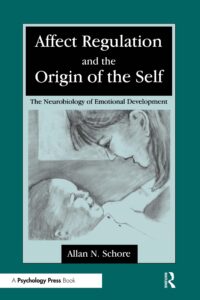
Affect Regulation and the Origin of the Self
Article #391
Emotional regulation and the difference between suppressing emotion + processing it and why the distinction matters
Affect Regulation and the Origin of the Self by Allan Schore is the most scientifically comprehensive available account of how emotion regulation capacities develop, how they operate at the neurobiological level, and what distinguishes effective from ineffective regulation across the full lifespan. Schore's integration of developmental neuroscience, attachment theory, and clinical psychology provides the most rigorous available foundation for understanding why suppression and processing produce such different long-term outcomes — grounding the Gross research programme in the neurobiological substrate that determines how regulation strategies interact with the autonomic nervous system. Not light reading, but the most authoritative available source for the serious reader.
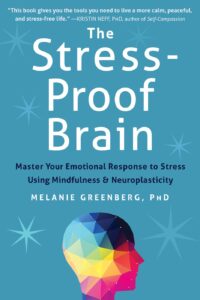
The Stress-Proof Brain
Article #390
How unprocessed stress accumulates and expresses itself through disproportionate responses
The Stress-Proof Brain by Melanie Greenberg. Greenberg's account of how to work with the stress accumulation mechanisms this article describes through the specific practices of mindfulness, self-compassion, and evidence-based cognitive reappraisal — and her specific treatment of how to complete the stress cycle through deliberate recovery practices rather than waiting for the accumulation to express through disproportionate responses — provides the most practically structured available complement to the Nagoski, McEwen, and Porges research. Greenberg integrates neuroscience and clinical psychology to produce the most directly applicable available guide to stress accumulation prevention and completion for the professional working in high-demand conditions.
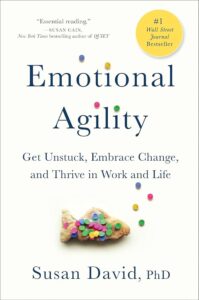
Emotional Agility
Article #389
The displacement mechanism and why emotional reactions are almost never entirely about the thing that triggered them
Emotional Agility by Susan David is the most directly applicable available account of how to work productively with displaced and disproportionate emotional reactions — covering the specific practices of showing up, stepping out, walking your why, and moving on that translate the displacement mechanism into a practical self-awareness and emotional processing framework. David's specific account of how to hold difficult emotions with curiosity rather than treating them as verdicts about the situation that triggered them, and how to distinguish the informational content of an emotional reaction from the accuracy of the interpretation it generates, is the most practically structured available complement to the Freud, Porges, and van der Kolk mechanisms this article describes. Written for a general professional audience with rigorous research underpinning throughout.
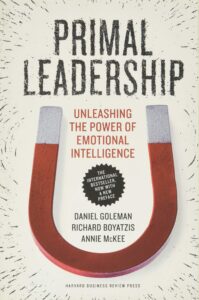
Primal Leadership
Article #388
How self-awareness operates as the foundation of emotional intelligence and why high achievers often have lower self-awareness than they believe
Primal Leadership by Daniel Goleman, Richard Boyatzis, and Annie McKee is the most directly applicable available account of how self-awareness operates as the foundational EI component in leadership contexts — covering the specific ways that leaders' emotional states spread through teams through emotional contagion, why leaders are systematically the last to know how their emotional climate is experienced, and what the specific practices for developing the external self-awareness that 360 feedback alone cannot sustain look like in daily leadership practice. Written for a professional leadership audience with direct connection to the Goleman EI research programme, it provides the most comprehensive available treatment of the self-awareness-EI hierarchy in the organisational contexts that entrepreneurial leadership most resembles.
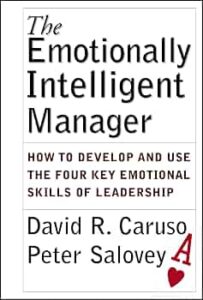
The Emotionally Intelligent Manager
Article #387
What emotional intelligence actually is beyond the popular conception and the research definition + its components
The Emotionally Intelligent Manager by David Caruso and Peter Salovey is the most practically structured available account of the ability model applied to professional leadership — written by the researchers who developed it, covering each of the four branches with specific behavioural indicators and development practices, and providing the most direct available translation of the scientific model into the operational leadership decisions that entrepreneurs face daily. For the reader who wants the actual Mayer-Salovey model rather than the Goleman popularisation, and who wants to understand specifically what developing each branch looks like in practice, Caruso and Salovey provide the most authoritative available source. The book specifically addresses the contexts — negotiation, team management, decision-making under pressure — where ability model EI predicts commercially significant outcomes.
No books found matching your search.