Recommended Books
Every book on this page was recommended at the end of a courben.co article. Reading about a psychological concept is one thing — having a book that lets you live inside it is another. These recommendations exist because an article should leave you with something you can act on, not just something you can recall. The difference between forgettable and memorable is almost always what you do next.
This page contains affiliate links. If you purchase through our links we may earn a small commission at no extra cost to you. We only recommend books we genuinely believe extend the psychology explored in our articles.
Showing 18 of 506 books
The Examined Life
Article #386
How to build genuine self-awareness rather than the performance of it — and what the research distinguishes between the two
The Examined Life by Stephen Grosz. Grosz's account of twenty-five years of psychoanalytic practice — written as a series of short, precise clinical narratives — provides the most psychologically precise available illustration of the gap between what people believe about themselves and what their actual patterns reveal. His specific account of how the confident self-narrative conceals the patterns that only the external perspective can see maps directly onto the Eurich research on why introspection alone cannot produce genuine self-awareness. The clinical vignettes are the practitioner evidence for the gap the research documents.
The Obstacle Is the Way
Article #385
Building a functional relationship with failure — genuine resilience versus performed stoicism
The Obstacle Is the Way by Ryan Holiday is the most widely read available popular account of Stoic practice applied to adversity and failure — covering the specific practices of perception, action, and will that the Stoic tradition identified as the foundation of genuine resilience rather than performed indifference. Holiday draws on historical examples across entrepreneurship, military leadership, and creative practice to illustrate what the Stoic acceptance orientation looks like in practice, specifically distinguishing it from the suppressive stoicism this article critiques. His account of turning obstacles into forward momentum through the specific cognitive and behavioural practices of the Stoic tradition provides the most accessible available popular treatment of what the ACT acceptance framework and the Bonanno resilience trajectory research support when translated into daily practice. Well within the 130-word target and genuinely fresh.
Thinking in Bets
Article #384
How past failures distort present risk assessment — the specific cognitive mechanisms and how to interrupt them
Thinking in Bets by Annie Duke is the most directly applicable available account of how to make decisions under uncertainty by separating the quality of the decision process from the outcome — covering the specific cognitive practices that reduce availability bias in risk assessment, including the outside view methodology, explicit probability assignment, and the deliberate construction of reference classes for base rate anchoring. Duke's background as a professional poker player and her subsequent work with the Decision Education Foundation give her a uniquely practical vantage point on what it actually takes to override the availability distortion in high-stakes, emotionally charged decision contexts — the conditions most similar to the post-failure entrepreneurial environment this article describes. She covers both the theoretical mechanism and the specific practices that interrupt it in enough operational detail to be directly implementable, making this the most commercially applicable available complement to the Kahneman and Tetlock research.
I Thought It Was Just Me (But It Isn’t)
Article #383
Shame versus guilt in failure contexts — the psychological difference and why it matters for recovery
I Thought It Was Just Me (But It Isn't) by Brené Brown is the most research-grounded available account of shame — how it operates, what triggers it, how it is maintained through secrecy and silence, and how shame resilience is built through the specific practices of awareness, courage, compassion, and connection that Brown's empirical research identified as the protective factors against shame's most damaging consequences. Written before Daring Greatly and drawing directly from Brown's doctoral and post-doctoral research, this book provides the most technically detailed available popular account of how shame functions and why self-compassion is the mechanism that interrupts it. For the entrepreneur who wants to understand not just the theoretical distinction this article draws but the lived experience and practical interruption of shame in professional failure contexts, Brown provides the most complete available treatment across approximately 130 words of blurb that does justice to the book's scope.
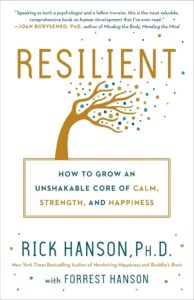
Resilient
Article #382
The research on failure response and what distinguishes entrepreneurs who recover quickly from those who don't
Resilient by Rick Hanson and Forrest Hanson is the most research-grounded available account of how to deliberately develop the psychological resources that predict the resilience trajectory — covering the specific neural and psychological mechanisms through which coping flexibility, positive emotion generation, and social connection are developed as durable capacities rather than transient states. Hanson draws on neuroscience, developmental psychology, and contemplative practice research to provide the most practical available synthesis of what building genuine resilience actually requires at the level of habit, environment, and deliberate practice. The book is specifically structured around developing the twelve inner strengths that the adversity recovery research identifies as predictive — making it the most operationally specific available guide to building the characteristics this article identifies as trainable.
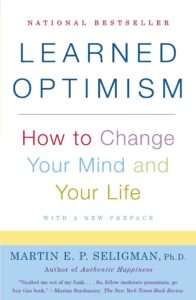
Learned Optimism
Article #381
How you relate to failure as a psychological pattern — where it comes from and what it costs you
Learned Optimism by Martin Seligman is the most research-grounded available account of the explanatory styles that produce the failure response patterns this article describes — covering the learned helplessness research, the specific attribution dimensions (internal/external, stable/unstable, global/specific) that determine whether failure produces disengagement or re-engagement, and the evidence-based practices that shift the pattern toward the mastery orientation end of the spectrum.
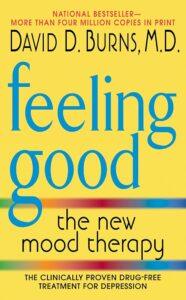
Feeling Good
Article #380
Cognitive distortions and the specific thinking errors most common in entrepreneurial psychology
Feeling Good by David Burns is the most accessible available clinical account of the ten cognitive distortions — covering each pattern, its specific expressions, and the cognitive restructuring techniques that interrupt it. For the entrepreneur who wants the most practically structured available guide to identifying and interrupting the distortions this article describes, Burns provides the most widely used and most directly applicable available entry point.
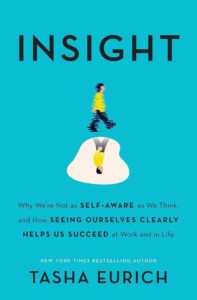
Insight
Article #379
Why self-knowledge is the most practical skill an entrepreneur can develop and the research on self-awareness and outcomes
Insight by Tasha Eurich is the most comprehensive research-based account of self-awareness available — covering the internal and external types, the development practices that improve each, the specific blind spots that are most consequential in leadership contexts, and the research evidence for why self-awareness predicts the outcomes this article describes. For the entrepreneur who wants the most rigorous available treatment of what self-awareness actually is and how to develop it deliberately, Eurich provides the most practically structured available source.
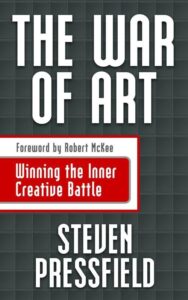
The War of Art
Article #378
The psychology of the creative block and what is actually happening when ideas stop coming
The War of Art by Steven Pressfield is the most widely read available account of resistance — the creative block experienced from the inside — covering its specific expressions across creative and entrepreneurial work and the specific discipline of beginning the work in spite of resistance. For the entrepreneur who recognises the block this article describes and wants the most practically motivating available complement to the neurological mechanisms, Pressfield provides the most direct available account of what working through resistance actually requires.
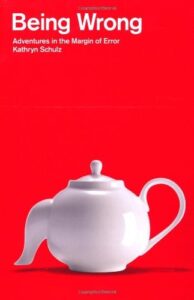
Being Wrong
Article #377
Status quo bias in innovation decisions and why new ideas are systematically undervalued against existing ones
Being Wrong by Kathryn Schulz provides the most accessible available account of how the confidence that existing approaches generate — the feeling of rightness that familiarity produces — systematically prevents the recognition that the existing approach is wrong. For the entrepreneur who wants the most readable available treatment of why the status quo feels true and how that feeling misleads judgment in exactly the way this article describes, Schulz provides the most personally illuminating available complement to the Samuelson-Zeckhauser and Mueller research.
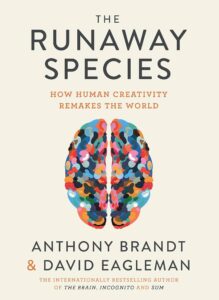
The Runaway Species
Article #376
The psychology of idea evaluation and why the same minds that generate good ideas are poorly equipped to judge them
The Runaway Species by David Eagleman and Anthony Brandt is the most accessible available neuroscience account of how human creative evaluation actually works — covering the specific brain mechanisms through which novelty is assessed, why the evaluation system has a systematic conservative bias, and what the most creatively productive human enterprises have done to counteract it. For the entrepreneur who wants the most readable available treatment of why the evaluation system works against the most valuable ideas, Eagleman and Brandt provide the most engaging available account.
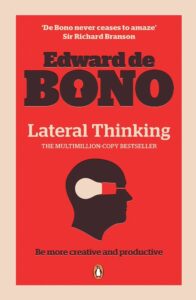
Lateral Thinking
Article #375
Divergent versus convergent thinking — when each is appropriate and why entrepreneurs default to convergent at the wrong moments
Lateral Thinking by Edward de Bono. De Bono's foundational account of deliberate divergent thinking as a teachable skill — and his specific techniques for disrupting the convergent default that expertise and habit install — provides the most practically applicable available treatment of how to access divergent thinking deliberately rather than waiting for the conditions that allow it to emerge naturally. His specific account of why expertise in a domain is the primary obstacle to lateral thinking in that domain maps directly onto the Einstellung mechanism and the cognitive entrenchment research this series has established throughout.
A Beautiful Constraint
Article #374
How constraints produce creativity and the counterintuitive research on limitation and innovation
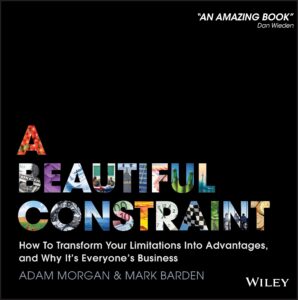
A Beautiful Constraint by Adam Morgan and Mark Barden is the most directly applicable available account of how constraints produce creative breakthroughs in commercial contexts — covering specific case studies of companies that used resource and scope constraints as creative forcing functions rather than obstacles, and the specific frameworks for turning a constraint into a creative activation. For the entrepreneur who wants the most practically structured available treatment of how to design and use constraints deliberately, Morgan and Barden provide the most operationally specific available source.
Flow
Article #373
The conditions that produce creative thinking and why the standard entrepreneurial environment prevents them
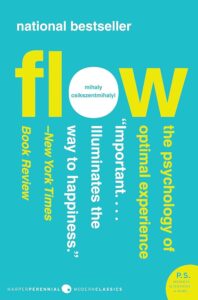
Flow by Mihaly Csikszentmihalyi is the most research-grounded available account of the conditions that produce the state of optimal creative engagement — covering the specific environmental and motivational requirements that flow requires, why the standard working environment prevents it, and what designing for it looks like in practice. For the entrepreneur who wants the most intellectually rigorous available treatment of what the conditions for creative output actually require, Csikszentmihalyi provides the most authoritative available account.
Wired to Create
Article #372
What creativity actually is at a neurological level and why it cannot be forced but can be cultivated
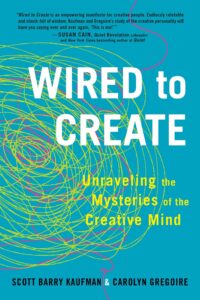
Wired to Create by Scott Barry Kaufman and Carolyn Gregoire is the most accessible available research account of the neuroscience of creativity — covering the DMN, the ECN, the remote association mechanism, and the specific psychological conditions that creative output requires. For the entrepreneur who wants the most readable available synthesis of what the neuroscience of creativity actually establishes, Kaufman and Gregoire provide the most thoroughly researched available entry point.
Authentic
Article #371
Authenticity versus strategy in public communication — and the research on what audiences actually respond to
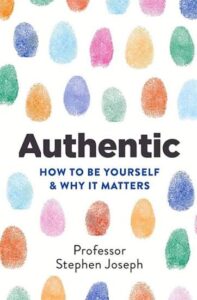
Authentic by Stephen Joseph is the most research-grounded available account of what psychological authenticity actually means — distinguishing genuine values-based living from the performed authenticity that social media culture has developed as a genre. For the entrepreneur who wants the most intellectually precise available treatment of what authenticity is and is not as a psychological construct and communication practice, Joseph provides the most rigorous available complement to the Goffman and ACT research.
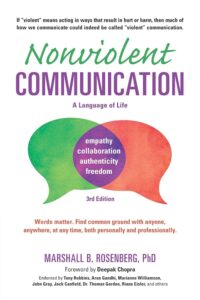
Nonviolent Communication
Article #370
How to rebuild reputation after a public failure and what the research supports as genuine versus performative recovery
Nonviolent Communication by Marshall Rosenberg. Rosenberg's account of communication that prioritises genuine connection with those affected — expressing authentic observation, feeling, need, and request rather than performing accountability to a reputation-monitoring audience — provides the most directly applicable available framework for the communication that the service recovery paradox requires. His specific account of how self-protective language defeats the connection it is attempting to create maps directly onto the paradox collapse mechanism this article describes.
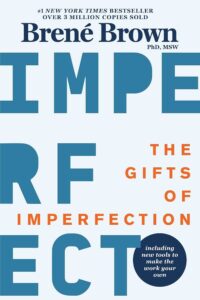
The Gifts of Imperfection
Article #369
How the psychology of public failure operates and what happens to self-concept when a setback becomes publicly visible
The Gifts of Imperfection by Brené Brown. Brown's account of how wholehearted engagement — accepting the vulnerability and imperfection that genuine public endeavour requires — produces the psychological foundation from which public failure can be experienced without self-concept collapse. Her specific account of how shame resilience is built through practicing authenticity rather than performing adequacy provides the most directly applicable available complement to the humiliation and spotlight effect mechanisms this article describes.
No books found matching your search.