Recommended Books
Every book on this page was recommended at the end of a courben.co article. Reading about a psychological concept is one thing — having a book that lets you live inside it is another. These recommendations exist because an article should leave you with something you can act on, not just something you can recall. The difference between forgettable and memorable is almost always what you do next.
This page contains affiliate links. If you purchase through our links we may earn a small commission at no extra cost to you. We only recommend books we genuinely believe extend the psychology explored in our articles.
Showing 18 of 506 books

Digital Minimalism
Article #368
The psychological cost of performing entrepreneurship publicly and the entrepreneur's relationship with social media
Digital Minimalism by Cal Newport is the most research-grounded available account of what sustained social media engagement costs psychologically and what the structural alternatives look like — covering the attention fragmentation, comparison distortion, and identity cost mechanisms through which social media platform engagement produces the psychological consequences the research documents. For the entrepreneur who wants the most practically structured available account of how to redesign their relationship with public digital presence, Newport provides the most operationally specific available complement to the Gross and Goffman research.

The Presentation of Self in Everyday Life
Article #367
The psychology of reputation and how public perception operates differently from private perception
The Presentation of Self in Everyday Life by Erving Goffman is the foundational available account of how impression management works — covering the mechanisms through which front-stage performance produces the reputational constructs that audiences hold independently of backstage reality. For the entrepreneur who wants the most intellectually precise available framework for understanding why reputation behaves differently from actual quality and what the performance of reputation requires, Goffman's original sociological account provides the most rigorous available foundation.
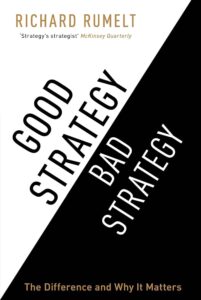
Good Strategy Bad Strategy
Article #366
Social comparison and its effect on strategic decisions — when watching competitors helps and when it misleads
Good Strategy Bad Strategy by Richard Rumelt is the most research-grounded available account of the distinction between genuine strategic thinking and the reactive competitor mimicry that social comparison produces — covering the specific cognitive patterns that distinguish strategy from strategic-sounding activity, and why the most costly strategic errors are those that look like strategic responses while being driven by competitive anxiety. For the entrepreneur who wants the most intellectually rigorous available framework for evaluating whether their competitive responses are genuinely strategic or comparison-distorted, Rumelt provides the most direct available tool.
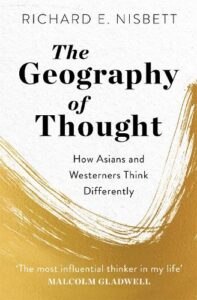
The Geography of Thought
Article #365
How cultural background shapes entrepreneurial psychology — the research on risk, authority, and failure across cultures
The Geography of Thought by Richard Nisbett is the most accessible available research account of how cultural context shapes fundamental cognitive differences — in how people perceive, categorise, reason, and make decisions — that are invisible from within the culture that produces them. For the entrepreneur who wants the most directly documented available evidence that their cognitive defaults are culturally contingent rather than universally rational, Nisbett's cross-cultural cognitive research provides the most intellectually challenging available entry point.

The Achievement Society
Article #364
Status and entrepreneurship — the role social hierarchy plays in motivation and the businesses people choose to build
The Achievement Society by Byung-Chul Han offers the most philosophically penetrating available account of how the imperative to perform and achieve — as a status display rather than as intrinsic satisfaction — distorts the working life and the self-concept of the high-achieving professional and entrepreneur. For the entrepreneur who wants the most intellectually serious available treatment of what status-motivated performance costs and what its alternative would require, Han's account provides the most challenging available complement to the research framework.
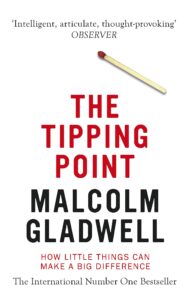
The Tipping Point
Article #363
The psychology of networks and why who you spend time with shapes your beliefs and risk tolerance more than you recognise
The Tipping Point by Malcolm Gladwell is the most accessible available account of the specific social network mechanisms — connectors, mavens, salesmen, and the power of context — through which beliefs and behaviours spread through populations. For the entrepreneur who wants the most readable available treatment of how network structure determines what spreads through it and what does not, Gladwell provides the most practically engaging available complement to the Christakis and Fowler research.
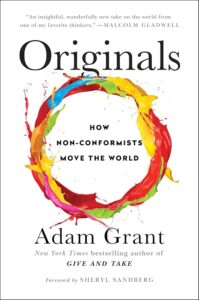
Originals
Article #362
Conformity and independence in entrepreneurial decision-making — when social influence is useful versus when it distorts
Originals by Adam Grant. Grant's account of how the most consequential entrepreneurial and institutional innovators maintain independent positions against majority consensus — covering the specific psychological and strategic practices that sustain independent judgment under social pressure — provides the most practically applicable available popular treatment of what Moscovici's minority influence research looks like in the entrepreneurial context. His specific account of how the entrepreneur who holds an independent position can present it to maximise its chance of converting rather than alienating the audience is the most actionable available complement to the neural cost and minority influence findings this article describes.

An Unquiet Mind
Article #360
Surviving the scaling phase psychologically — what the entrepreneurs who make it through have in common
An Unquiet Mind by Kay Redfield Jamison. Jamison's first-person account of navigating sustained professional performance through profound psychological difficulty — written by one of the world's foremost psychiatric researchers about her own experience of bipolar disorder — is the most emotionally precise available account of what the psychological work of sustained high-level functioning actually requires from the inside. For the entrepreneur who wants the most honest available treatment of what it costs to keep performing through genuine psychological difficulty, and what makes it survivable, Jamison's account provides the most emotionally truthful available complement to the research frameworks this article describes.

Working Identity
Article #359
The role of identity in plateau dynamics — why you can't grow the business past the point your self-concept permits
Working Identity by Herminia Ibarra is the most directly applicable available account of how professional identity transitions actually occur — through action and experimentation rather than through introspection and planning — and what the provisional self mechanism looks like in practice across career and leadership transitions. For the entrepreneur who recognises the identity ceiling but cannot identify a route through it, Ibarra's specific account of how to try on alternative identities before committing to them is the most practically structured available guidance.

Range
Article #358
How the success that produced the plateau creates the cognitive rigidity that maintains it
Range by David Epstein is the most directly applicable available account of why breadth of framework across multiple domains is the specific cognitive antidote to the Einstellung mechanism and the hedgehog structure — and why the entrepreneurs most likely to navigate past success-induced plateaus are those who have developed multiple explanatory frameworks rather than deep expertise in a single one. For the entrepreneur who wants the most intellectually grounded available challenge to their own success framework, Epstein's account of how the most adaptable thinkers use diverse analogies and frameworks to see past their current schemas provides the most practically useful available complement to the plateau maintenance mechanisms this article describes.

Antifragile
Article #357
The comfort trap — why entrepreneurs stop taking risks at the exact moment their resource base makes risk most manageable
Antifragile by Nassim Nicholas Taleb is the most intellectually rigorous available account of why optionality-preserving risk-taking at scale — specifically the strategy of making many small bets that preserve the option to scale successes — is fundamentally different from the concentrated risk-taking that the startup phase requires, and why the comfort trap's risk reduction is not a rational response to accumulated resources but a systematic forfeit of the upside that those resources make most affordable. For the entrepreneur who wants the most challenging available intellectual framework for why their current risk aversion is costing them more than risk-taking would, Taleb provides the most rigorous available counter-position.

The Big Leap
Article #356
Why growth plateaus are as much psychological as strategic
The Big Leap by Gay Hendricks. Hendricks's account of the upper limiting mechanism — the specific pattern through which people self-sabotage when their success approaches a level that their self-concept has not yet accommodated — provides the most accessible available popular treatment of the identity-growth ceiling mechanism. His specific account of how the upper limit is expressed through the manufactured obstacles, anxiety, and strategic rationalisation that consistently appear at the boundary of the comfort zone maps directly onto the psychological plateau mechanisms this article describes.
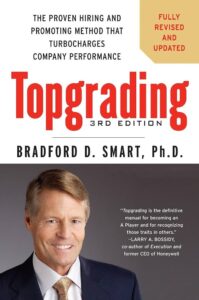
Topgrading
Article #355
The psychology of bringing in people who are better than you — what it requires at a self-concept level
Topgrading by Bradford Smart is the most rigorously evidenced available account of how hiring quality determines team performance — including the specific patterns through which founders consistently underhire and the systematic costs this imposes across scaling companies. For the entrepreneur who wants the commercial case for why the above-yourself hiring discipline is worth the psychological effort it requires, Smart's data on the relationship between talent ceiling and growth ceiling is the most directly applicable available source.

Quit: The Power of Knowing When to Walk Away
Article #354
How successful entrepreneurs unconsciously sabotage scaling — the psychological mechanisms behind stagnation at inflection points
Quit: The Power of Knowing When to Walk Away by Annie Duke is the most directly applicable available account of how to build pre-commitment mechanisms that prevent the escalation of commitment from overriding rational decision-making at inflection points. Duke's specific treatment of how to design quitting criteria in advance — before the sunk cost and escalation mechanisms are operating — provides the most practically structured available preventive tool for the self-sabotage mechanisms this article describes.
Working Identity
Article #353
The loss of control that accompanies scaling and the identity threat it creates
Working Identity by Herminia Ibarra. Ibarra's account of professional identity transitions — and the provisional self mechanism through which identity change becomes possible without requiring the catastrophic self-dissolution that identity fusion predicts — is the most directly applicable available treatment of how the control-relinquishment transition can be navigated at the identity level rather than merely at the organisational level. Her specific account of experimenting with new identity positions while maintaining enough distance from them to allow failure without identity catastrophe maps directly onto what the differentiation mechanism requires in the scaling context.

The Ethical Algorithm
Article #352
Applying behavioural economics ethically — the line between architecture and manipulation
The Ethical Algorithm by Michael Kearns and Aaron Roth is the most rigorous available account of how computational and algorithmic design choices — including the choice architecture decisions that are increasingly made by machine learning systems rather than human designers — can systematically exploit the same cognitive biases that dark patterns exploit, at scale and often without the designer's explicit intent. For the entrepreneur whose products involve algorithmic recommendation, personalisation, or optimisation systems, Kearns and Roth's account of how to build fairness, privacy, and welfare constraints into algorithmic systems is the most directly applicable available complement to the choice architecture ethics framework.
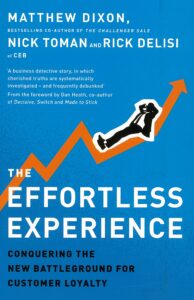
The Effortless Experience
Article #351
Friction — why adding small obstacles to unwanted behaviours and removing them from wanted ones is the most powerful lever available
The Effortless Experience by Matthew Dixon, Nick Toman and Rick DeLisi is the most directly applicable available account of friction in the customer service and retention context — documenting through large-scale research that reducing customer effort is a stronger predictor of loyalty than exceeding expectations, and providing the most operationally specific available treatment of where friction accumulates in customer journeys and what removing it produces. For the entrepreneur who wants the most practically structured available account of how friction operates in the post-purchase customer experience, Dixon, Toman and DeLisi's research provides the most directly applicable available complement to the choice architecture framework.

Good Habits, Bad Habits
Article #350
Habit formation — what it means for customer onboarding and product stickiness
Good Habits, Bad Habits by Wendy Wood is the most research-grounded available popular synthesis of the habit formation evidence base — written by the researcher whose work constitutes the majority of what the field knows about how habits form, are maintained, and are changed. For the entrepreneur who wants the most intellectually honest available account of what the research actually supports about habit formation and what it means for product design, Wood's own treatment is the primary source rather than the secondary synthesis.
No books found matching your search.