Recommended Books
Every book on this page was recommended at the end of a courben.co article. Reading about a psychological concept is one thing — having a book that lets you live inside it is another. These recommendations exist because an article should leave you with something you can act on, not just something you can recall. The difference between forgettable and memorable is almost always what you do next.
This page contains affiliate links. If you purchase through our links we may earn a small commission at no extra cost to you. We only recommend books we genuinely believe extend the psychology explored in our articles.
Showing 18 of 506 books
Thanks for the Feedback
Article #330
Recognition psychology — how and why acknowledgement works and the specific mistakes that make it backfire
Thanks for the Feedback by Douglas Stone and Sheila Heen is the most directly applicable available account of what makes recognition land and what prevents it — covering the truth triggers, relationship triggers, and identity triggers that determine whether positive feedback is received as the appreciation it was intended to be or filtered through the defensive mechanisms that recognition frequently inadvertently activates. For the leader who wants to understand why carefully intended recognition sometimes produces no motivational effect, Stone and Heen's account of the receiving side of feedback is the most practically useful available complement to the recognition psychology research.

High Output Management
Article #329
Meeting psychology — why most meetings are psychologically counterproductive and what to do instead
High Output Management by Andrew Grove. Grove's account of the meeting as a management tool — including his specific treatment of what information meetings are and are not suited to produce, and how to design the meeting schedule and format to match the decision type — provides the most operationally structured available treatment of meeting design from the perspective of the person responsible for the organisation's output. His specific account of how the quality of the meeting process determines the quality of the decisions it produces maps directly onto the anchoring and social evaluation mechanisms this article describes.
Indistractable
Article #328
The psychology of flow — what produces deep work states and how entrepreneurial environments prevent them
Indistractable by Nir Eyal is the most practically structured available account of how to redesign the working environment to protect the concentration that flow requires — covering the internal triggers, external triggers, and scheduling architecture that determine whether the conditions for deep work are available or systematically violated. Eyal's specific account of how traction (moving toward what you intend) is distinguished from distraction (being pulled away from it) provides the most actionable available complement to the flow prerequisite framework this article describes.
The Progress Principle
Article #327
Autonomy, mastery and purpose — the three intrinsic motivators and how to build them into the work itself
The Progress Principle by Teresa Amabile and Steven Kramer. Amabile and Kramer's research on the daily work experiences that produce and undermine motivation — confirming that the single most powerful motivator in daily work is the sense of making progress in meaningful work — is the most directly applicable available confirmation of the mastery need and its structural requirements. Their specific account of how leaders enable or block progress is the most practically useful available complement to the challenge-skill calibration mechanism this article describes.

It’s the Manager
Article #326
The psychological contract — the unspoken agreement between employer and employee that determines performance
It's the Manager by Jim Clifton and Jim Harter. Clifton and Harter's account of the manager's role in determining employee experience — including their specific treatment of how manager behaviour shapes the psychological contract that each team member holds — provides the most practically applicable available account of how the abstract contract mechanism operates in daily management interactions. Their specific finding that the manager relationship is the primary determinant of whether employees stay or leave maps directly onto the relational contract violation mechanism this article describes.

Dare to Lead
Article #325
How culture is created — the mechanisms through which founder behaviour becomes team norm
Dare to Lead by Brené Brown. Brown's account of the specific leader behaviours that create cultures of psychological safety — and her research-based treatment of how vulnerability, clarity, and accountability translate from individual leader behaviour into collective cultural assumption — provides the most practically structured available complement to the transmission mechanisms this article describes. Her specific account of how rumble values — translating stated values into specific observable behaviours — addresses the gap between espoused values and underlying assumptions that the Schein model predicts. The Making of a Manager by Julie Zhuo. Zhuo's account of how new managers create culture through their daily decisions — including her specific treatment of how the behaviours she modelled in her early management created team norms that persisted long after she had changed — is the most emotionally accurate available popular treatment of the Bandura transmission mechanism in a scaling company context.

An Everyone Culture
Article #324
What organisational culture actually is at a psychological level — beyond the stated values
An Everyone Culture by Robert Kegan and Lisa Laskow Lahey. Kegan and Lahey's account of deliberately developmental organisations — cultures that make the development of people's full capacities part of the business model itself — provides the most structurally ambitious available treatment of what it looks like to build organisational culture at the assumption level rather than the artefact level. Their specific account of the immunity to change — the invisible psychological commitments that prevent organisations from behaving in accordance with their stated values — is the most directly applicable available treatment of the Schein gap from the perspective of what actually closes it. Organizational Culture and Leadership by Edgar Schein. The foundational text itself remains the most rigorous available treatment of the three-level model and the specific interventions that reach the assumption level. The fifth edition, published in 2017, includes Schein's own account of the specific leadership behaviours and organisational conditions through which underlying assumptions are surfaced and examined — the most authoritative available treatment of what culture change at the right level actually requires.

Confessions of the Pricing Man
Article #323
The psychology of discounting — why price reductions often destroy more value than they generate
Confessions of the Pricing Man by Hermann Simon is the most directly applicable available account of the real economics of discounting — covering the specific margin mathematics, the reference price dynamics, and the specific conditions under which price reductions create versus destroy commercial value across industries. Simon's specific account of why most companies discount more than the economics support, and what the alternatives are, is the most rigorous available complement to the psychological mechanisms this article describes.
Why Customers Really Buy
Article #321
The customer psychology of low prices — what underpricing communicates about your confidence in your product
Why Customers Really Buy by Linda Goodman and Michelle Helin provides the most practically applicable account of what customers are actually evaluating when they make purchase decisions — including the quality signals embedded in pricing and the specific customer responses to price anomalies that this article describes. For the entrepreneur who wants the most directly applicable available account of how customers interpret price signals in real purchase contexts, Goodman and Helin's synthesis of customer decision psychology provides the most practical complement to the research.

You Are a Badass at Making Money
Article #320
How self-worth bleeds into pricing decisions in ways entrepreneurs rarely identify
You Are a Badass at Making Money by Jen Sincero. Sincero's account of the unconscious money beliefs that prevent capable people from charging what their work is worth — while more popular and less research-grounded than the academic literature — provides the most accessible available treatment of the money avoidance and self-worth contamination mechanisms in conversational form. For the entrepreneur who is not naturally drawn to research-based accounts of their pricing psychology, Sincero's direct and specific account of the relationship between self-belief and financial outcome is the most accessible entry point to the mechanism this article describes. The Big Leap by Gay Hendricks. Hendricks's account of the upper limiting mechanism — the specific psychological process through which people self-sabotage when their success approaches a threshold that their self-concept has not yet accommodated — is the most directly applicable popular treatment of the contingent self-worth feedback loop that keeps pricing anchored below what market data supports. His specific account of how upper limits manifest in unconscious decisions that appear to be rational but function as self-protective constraints maps directly onto the pricing inertia mechanism this article describes.

Playing Big
Article #319
The psychological origins of underpricing — fear, impostor syndrome, and the belief that the work isn't worth more
Playing Big by Tara Mohr. Mohr's account of the specific psychological barriers — including inner critic dynamics, fear of failure, and the underestimation of one's own value — that prevent capable professionals from claiming the recognition and compensation their work warrants is the most directly applicable available treatment of the impostor syndrome and FNE mechanisms in the pricing context. Her specific account of the difference between legitimate humility and the psychological smallness that underprice perpetuates is the most emotionally accurate available treatment of why the underpricing feels virtuous and costs so much. The Value of You by Chris Delaney. Delaney's account of how professionals identify and communicate the value they create — and how the communication of value is the precondition for the pricing that reflects it — provides the most practically structured available complement to the psychological origins analysis this article describes. Understanding the mechanism of underpricing is necessary but not sufficient; understanding how to communicate value in ways that justify the appropriate price is the practical bridge from diagnosis to change.

Blue Ocean Strategy
Article #318
Price as a quality signal — when charging more sells more and the psychology behind it
Blue Ocean Strategy by W. Chan Kim and Renée Mauborgne. Kim and Mauborgne's account of how companies create new market space by competing on dimensions other than price — and specifically how the premium pricing that characterises blue ocean positioning communicates differentiation rather than extraction — is the most widely read available treatment of the strategic context in which premium pricing works most reliably. Their specific account of the value-price relationship in new market spaces maps directly onto the quality uncertainty condition this article describes. $100M Offers by Alex Hormozi. Hormozi's account of how to construct product offers that justify premium pricing — through the specific combination of value framing, guarantee structures, and positioning that makes premium prices feel appropriate rather than arbitrary — is the most practically actionable available complement to the pricing psychology this article establishes. His specific account of why underpricing undermines rather than assists conversion is the most direct available popular treatment of the entrepreneur's underpricing problem.
Monetizing Innovation
Article #317
The charm pricing effect and what it actually signals to different customer segments
Monetizing Innovation by Madhavan Ramanujam and Georg Tacke. Ramanujam and Tacke's account of how pricing decisions should be integrated into product development rather than applied at the end of the product-design process — and their specific account of the segment-based pricing design that connects customer willingness-to-pay with product structure — is the most practically applicable available treatment of how charm pricing and premium pricing decisions connect to the broader pricing architecture. The 1% Windfall by Rafi Mohammed. Mohammed's specific account of how 1% improvements in pricing produce dramatically larger profit improvements than equivalent improvements in volume or cost — and his practical framework for identifying the specific pricing adjustments most likely to produce that improvement in different commercial contexts — is the most directly applicable available complement to the theoretical pricing psychology this article establishes.

Never Split the Difference
Article #316
Anchoring Bias — how the first number a customer sees determines every number they evaluate after it
Never Split the Difference by Chris Voss. Voss's account of negotiation psychology — including his specific treatment of anchoring in high-stakes price negotiations and his tactical framework for setting anchors that shape the counterpart's evaluation — provides the most practically applicable available treatment of the anchoring mechanism in conversation rather than in static pricing contexts. His specific techniques for extreme anchoring, counter-anchoring, and calibrated questions that reframe reference points map directly onto the Tversky-Kahneman mechanism in the contexts where pricing is determined through dialogue rather than through fixed price presentation. Alchemy by Rory Sutherland. Sutherland's account of why psychological context determines perceived value more reliably than objective product characteristics — including his specific account of how the same product can be worth dramatically more or less depending on what it is anchored against — is the most thought-provoking available popular treatment of the anchoring and reference price mechanisms in commercial design.
The Psychology of Selling
Article #315
Why pricing is a psychological communication before it is a financial one
The Psychology of Selling by Brian Tracy. Tracy's account of the psychological dynamics of the sales encounter — including the pre-conscious price processing and the felt-value dynamics that determine whether the customer moves toward or away from purchase — provides the most practically structured available treatment of how pricing communication operates in direct sales contexts. His specific account of how the presentation sequence, the comparative framing, and the value-anchoring that precede price disclosure determine the felt appropriateness of the price maps directly onto the somatic marker and coherent arbitrariness mechanisms this article describes. Confessions of the Pricing Man by Hermann Simon. Simon's account of pricing strategy from the perspective of the researcher who has advised more companies on pricing than perhaps anyone alive — including his specific account of how price communicates confidence and how underpricing communicates doubt — is the most practically grounded available complement to the psychological research. His specific treatment of the relationship between price level, perceived quality, and commercial outcome across industries is the most practically applicable available research-based pricing framework.
The Effortless Experience
Article #314
The psychology of customer retention — why keeping a customer is psychologically different from acquiring one
The Effortless Experience by Matthew Dixon, Nick Toman and Rick DeLisi. Dixon, Toman and DeLisi's research on what actually drives customer loyalty — which they find is not the creation of delight but the elimination of effort — provides the most directly applicable available challenge to the peak-creation retention strategy. Their specific finding that reducing customer effort in service interactions is more predictive of loyalty than exceeding expectations is an important counterpoint that qualifies the peak-end rule's implications and provides the most practically actionable available account of what excellent recent interaction quality actually requires. Customer Successby Nick Mehta, Dan Steinman and Lincoln Murphy. Mehta, Steinman and Murphy's account of the customer success discipline — the proactive management of the customer's achievement of their desired outcomes as the primary retention mechanism — provides the most practically structured available framework for implementing the identification-based trust development strategy that this article identifies as the mechanism of durable customer loyalty.
Pricing Creativity
Article #312
Price as a psychological signal — what your pricing communicates about your confidence in your own product
Pricing Creativity by Blair Enns. Enns's account of pricing creative and professional services — categories that are almost entirely credence goods where the price-quality heuristic operates most powerfully — is the most directly applicable available treatment of the pricing psychology this article describes in the specific entrepreneurial context where money avoidance scripts are most likely to produce underpricing. His specific account of how pricing communicates confidence and how underpricing produces the client quality problems it was trying to avoid is the most practically actionable available complement to the research framework. The Art of Pricing by Rafi Mohammed. Mohammed's account of value-based pricing — starting from what the product is worth to the customer rather than from cost or competitive comparison — provides the most systematically structured available framework for applying the pricing psychology research to actual pricing decisions. His specific account of versioning, bundling, and tier design as anchoring mechanisms maps directly onto the coherent arbitrariness research this article establishes.
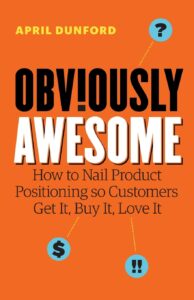
Obviously Awesome
Article #312
The psychology of the first purchase — what a customer is risking beyond money and how to reduce it
Obviously Awesome by April Dunford. Dunford's positioning framework — the specific process of establishing what category a product belongs to, who it is for, and what makes it uniquely suitable for them — is the most practically structured available treatment of how to reduce the novelty-driven threat response and the psychological risk components of first purchase through precise category positioning. Her specific account of how positioning determines the reference frame within which the customer evaluates purchase risk is the most directly applicable available complement to the perceived risk research this article describes. Crossing the Chasm by Geoffrey Moore. Moore's account of the technology adoption lifecycle — and specifically the chasm between early adopters and early majority customers — is the most widely read available treatment of first-purchase risk at the market-segment level. His specific analysis of why the early majority's risk calculus is different from the early adopter's — and what risk reduction mechanisms are required to cross from one to the other — maps directly onto the Jacoby and Kaplan risk taxonomy and the Lewicki-Bunker calculus-based trust framework.
No books found matching your search.