Recommended Books
Every book on this page was recommended at the end of a courben.co article. Reading about a psychological concept is one thing — having a book that lets you live inside it is another. These recommendations exist because an article should leave you with something you can act on, not just something you can recall. The difference between forgettable and memorable is almost always what you do next.
This page contains affiliate links. If you purchase through our links we may earn a small commission at no extra cost to you. We only recommend books we genuinely believe extend the psychology explored in our articles.
Showing 18 of 506 books

Delivering Happiness
Article #311
Why trust is destroyed faster than it is built and what the asymmetry means for how you handle failure
Delivering Happiness by Tony Hsieh. Hsieh's account of how Zappos built its business around benevolence trust signals — the returns policy, the legendary customer service, the culture-based hiring — provides the most detailed available first-person account of what the service recovery paradox looks like when it is deliberately designed into a business model rather than managed reactively. His specific account of the commercial economics of treating customer service as a trust investment rather than a cost centre is the most practically applicable available complement to the research this article establishes. Turn Enemies into Allies by Judy Feld. Feld's account of conflict resolution and relationship repair in professional contexts — including the specific communication practices that accelerate trust restoration after violation — provides the most practically structured available treatment of what demonstrated behaviour change actually looks like in the period following an integrity violation.
Permission Marketing
Article #311
How trust is built in a commercial relationship — the psychological mechanisms and timeline
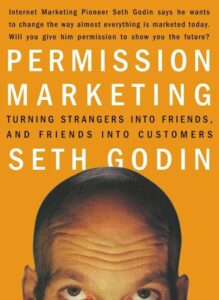
Permission Marketing by Seth Godin. Godin's account of the trust-as-prerequisite framework for commercial communication — the argument that marketing's primary function is not persuasion but the accumulation of the trust that makes subsequent communication welcome rather than intrusive — is the most influential available treatment of the relationship between trust development and marketing effectiveness. His specific account of how interruption-based marketing erodes the trust it depends on, and how permission-based approaches build it, maps directly onto the Lewicki-Bunker trajectory this article describes. Never Lose a Customer Again by Joey Coleman. Coleman's account of the first hundred days of the customer relationship — and the specific moments within that period where trust is most critically shaped by company behaviour — provides the most practically structured available treatment of the trust development timeline and the specific behavioural interventions that accelerate movement through the Lewicki-Bunker stages.
Building a StoryBrand
Article #310
Identity-driven purchasing — how buying becomes a statement about who the customer is or wants to be
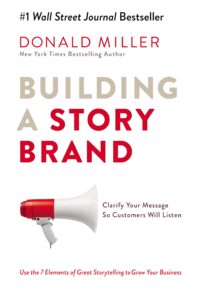
Building a StoryBrand by Donald Miller. Miller's brand communication framework — positioning the customer as the hero and the brand as the guide — is the most widely applied practical implementation of the identity purchasing mechanism in commercial communication. His specific account of how brands that reflect the customer's aspirational identity back to them generate substantially stronger engagement than brands that position their own achievements centrally maps directly onto the Belk extended self and Tajfel and Turner social identity mechanisms. Who Do You Want Your Customers to Become? by Michael Schrage. Schrage's argument that the most commercially consequential question in product design is not "what does this product do?" but "who does this product help the customer become?" is the most direct available commercial application of the identity purchasing research. His specific account of how the most successful products transform their customers' self-concepts — rather than merely satisfying their existing preferences — provides the most practically useful available framework for designing identity-driven products and positioning.
Pre-Suasion
Article #309
Social proof and conformity — how other people's behaviour shapes individual purchase decisions
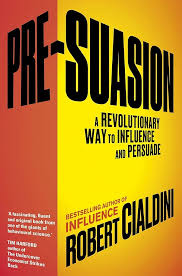
Pre-Suasion by Robert Cialdini. Cialdini's account of what happens before the persuasion attempt — the priming, the attention direction, and the context-setting that determines how social proof and other influence mechanisms are received — is the most directly applicable available complement to the social proof principles this article establishes. His specific account of how the context in which social proof is presented determines its effectiveness is the most practically useful available treatment of the conditions that moderate social influence. The Tipping Point by Malcolm Gladwell. Gladwell's account of how social epidemics reach the threshold at which they tip into self-sustaining momentum — through connectors, mavens, and salesmen as the social network nodes that initiate and amplify cascades — provides the most readable available popular treatment of the informational cascade mechanism and its commercial application to product adoption.

Misbehaving
Article #308
Loss aversion in purchasing — why the fear of losing something is twice as powerful as the desire to gain
Misbehaving by Richard Thaler is the most readable available account of the endowment effect and status quo bias research — covering the specific experimental evidence for each mechanism and their commercial applications with the accessibility of narrative and the rigour of the primary researcher's own account. For the entrepreneur who wants the most directly applicable research foundation for designing trials, pricing anchors, and retention mechanisms around loss aversion principles, Thaler's account is the most practically useful available synthesis.

Unconscious Branding
Article #307
How unconscious decision-making drives purchase behaviour — what customers are actually responding to
Unconscious Branding by Douglas Van Praet. Van Praet's account of how brands connect with customers through unconscious emotional and associative mechanisms — drawing on neuroscience, evolutionary psychology, and cognitive science — provides the most practically applicable available treatment of how to design brand and product experiences that operate through the actual mechanisms of purchase rather than the deliberate evaluation mechanisms that customers report in surveys. His specific account of the seven steps of unconscious branding maps directly onto the mechanisms this article establishes. How Customers Think by Gerald Zaltman. Zaltman's Harvard Business School synthesis of the unconscious purchase decision research — the original source of the 95% claim and the most comprehensive available academic treatment of what customers are actually responding to — provides the most rigorous available foundation for the practical implications this article draws.
The Mom Test
Article #306
The gap between stated preference and actual behaviour — the fundamental problem with asking customers what they want
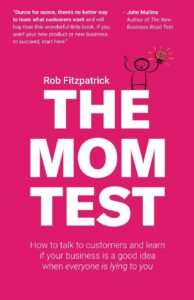
The Mom Test by Rob Fitzpatrick is the most directly applicable entrepreneurial methodology for getting past stated preferences to revealed behaviour in early-stage customer research — the specific conversational techniques for reorienting customer conversations from hypothetical preference to behavioural revelation. For the entrepreneur who is conducting customer discovery and wants the most practically structured available method for accessing the information that stated preference questions systematically fail to produce, this book provides the most concrete and immediately applicable framework.
The Effective Executive
Article #305
Firing psychology — why entrepreneurs wait too long and what that costs the team around the person being kept
The Effective Executive by Peter Drucker. Drucker's account of executive effectiveness — including his specific treatment of the staffing decision as the most consequential decision a leader makes, and his prescription that leaders who get the staffing decision wrong owe it to the organisation and to the person to correct it quickly — provides the most intellectually grounded available framework for the firing decision as an act of leadership rather than an act of cruelty. His specific account of the cost of keeping the wrong person in a role as a cost borne by everyone except the decision-maker provides the most direct available challenge to the compassion rationalisation that produces delay. The Manager's Path by Camille Fournier. Fournier's account of engineering management — including her specific and unusually direct treatment of the performance management and termination decision — is the most practically structured available treatment of how to recognise when the decision has been deferred too long and what a respectful, clear termination process actually involves. Her account of the difference between managing someone out slowly and making a clean decision is the most actionable available complement to the research this article describes.

An Elegant Puzzle
Article #304
The psychology of team attrition — what people are actually leaving when they leave your company
An Elegant Puzzle by Will Larson. Larson's account of engineering management in scaling companies — including the specific management practices that retain and develop capable technical people — is the most practically structured available treatment of what the research-supported retention behaviours look like in daily practice. His specific account of the systems and rhythms that effective managers build to ensure development, recognition, and genuine feedback provides the most actionable complement to the research framework this article describes. It's the Manager by Jim Clifton and Jim Harter. The most recent synthesis of Gallup's research on the manager relationship and its consequences for retention, engagement, and performance — written specifically for the organisational context where most attrition prevention decisions are made. Clifton and Harter's specific account of the twelve items that predict team outcomes, and the manager behaviours that determine each of them, is the most directly applicable available operational guide to the attrition mechanisms this article describes.
An Everyone Culture
Article #303
Psychological safety — what the research found and what it means for how you run meetings and handle failure
An Everyone Culture by Robert Kegan and Lisa Laskow Lahey. Kegan and Lahey's account of deliberately developmental organisations — cultures that explicitly make the growth of people part of the business model — provides the most structurally ambitious available treatment of what full psychological safety implementation looks like at the organisational level. Their specific account of the immunity to change — the invisible psychological commitments that prevent people from changing even when they want to — is the most useful available framework for understanding why safety-building interventions often fail to produce the behaviour change the research predicts. The Culture Code by Daniel Coyle. Coyle's account of how the most effective teams — from Navy SEALs to Pixar to San Antonio Spurs — create the psychological safety that produces performance, covering the specific signals, habits, and practices that distinguish high-safety from low-safety cultures. His account of the "belonging cues" that high-safety environments generate is the most behaviourally specific available popular treatment of what safety looks and feels like in practice.
Crucial Conversations
Article #302
Conflict avoidance in entrepreneurial teams — why the conversations not being had are always more expensive
Crucial Conversations by Kerry Patterson, Joseph Grenny, Ron McMillan and Al Switzler. The most widely used applied framework for the high-stakes conversations that conflict avoidance postpones — covering the specific skills of making it safe to talk, mastering the stories we tell ourselves about others' behaviour, and stating paths rather than positions in high-stakes discussions. Patterson et al.'s specific account of the "pool of shared meaning" that effective crucial conversations create is the most practically applicable available treatment of what successful difficult conversations actually produce. Thanks for the Feedback by Douglas Stone and Sheila Heen. Stone and Heen's account of what makes feedback difficult to receive — and how to design feedback conversations that are more likely to be heard rather than defended against — is the most directly applicable available complement to the avoidance problem this article describes. Their specific account of the three triggers that cause feedback to be rejected (truth triggers, relationship triggers, and identity triggers) is the most practically useful available explanation of why avoided conversations become harder to have the longer they are deferred.
Daring to Lead
Article #301
Trust as a psychological construct in teams — what it actually means and how it is built and destroyed
Daring to Lead by Brené Brown. Brown's account of vulnerability as a leadership practice — grounded in her research on shame and courage — provides the most emotionally precise available treatment of what modelling vulnerability actually requires of the leader and what it costs. Her specific account of the distinction between performed vulnerability (sharing feelings strategically to appear relatable) and genuine vulnerability (sharing information that creates real exposure) maps directly onto the Edmondson mechanism: it is genuine vulnerability that signals psychological safety, not performed vulnerability that the team can identify as impression management. Trustedby David Horsager. Horsager's account of the eight pillars of trust — covering the specific behavioural practices that build each component across time — is the most practically structured available complement to the Mayer et al. research framework. His treatment of consistency as the foundation of integrity trust, and of the specific ways that leaders undermine their own integrity trust without intending to, is the most actionable available treatment of the component this article identifies as most difficult to build and most consequentially damaged by violation.

The Goal
Article #300
How the need for control that serves an early stage business destroys a scaling one
The Goal by Eliyahu Goldratt. Goldratt's account of the theory of constraints — through the narrative of a manufacturing plant manager who discovers that the system's throughput is limited by a single bottleneck — provides the most accessible available quantitative framework for understanding why the founder-as-approval-point systematically limits organisational velocity. The manufacturing metaphor translates directly to entrepreneurial teams, and the theory's prescription — identify the constraint, elevate it, prevent it from limiting the system — is the operational version of the delegation transition this article describes. The Five Dysfunctions of a Team by Patrick Lencioni. Lencioni's account of the specific team dysfunctions that absent trust and absent accountability produce — and how they compound — is the most widely read popular treatment of what sustained founder control produces in team culture over time. His specific account of the absence of commitment and avoidance of accountability as downstream consequences of absent trust maps directly onto what the SDT controlled motivation cycle and the psychological safety deficit this article describes look like in practice.
Multipliers
Article #299
The Pygmalion effect in leadership — why your expectations of people shape their actual performance
Multipliers by Liz Wiseman. Wiseman's research on leaders who amplify the intelligence of their teams versus those who diminish it operationalises the Pygmalion and Golem mechanisms in practical leadership terms. Her specific account of the behaviours that distinguish leaders who elicit high performance from those who suppress it is the most directly applicable popular treatment of the four-channel model — and her research on the Diminisher pattern maps precisely onto the Golem effect's withdrawal of climate, input, output, and feedback. Developing the Leader Within You by John Maxwell. Maxwell's account of how leaders' beliefs about their people shape the culture and performance of their organisations is the most widely read popular treatment of the expectation-to-performance mechanism. His specific account of how leaders who invest in the potential of their people produce fundamentally different organisational outcomes from those who invest only in their current performance is the applied version of the Eden workplace Pygmalion research.
Work Rules!
Article #298
How unconscious bias shapes every hiring decision before the interview begins
Work Rules! by Laszlo Bock. Bock's account of how Google redesigned its hiring processes to reduce bias and improve predictive validity — the specific structural changes, their evidence basis, and their measured effects on hiring outcomes — is the most widely read applied account of research-based hiring reform available. His specific account of which intuitions about hiring are accurate and which are systematically wrong is the most practically applicable complement to the Banaji and Greenwald research. Sway: The Irresistible Pull of Irrational Behaviour by Ori Brafman and Rom Brafman. The Brafmans' account of the psychological forces that pull decisions away from rational evaluation — including the commitment bias, the diagnosis bias, and the value attribution mechanisms that operate in hiring — is the most readable popular treatment of the specific irrationality this article documents in the hiring context.
Tribal Leadership
Article #297
The founder identity versus the leader identity — why most entrepreneurs never make the transition consciously
Tribal Leadership by Dave Logan, John King and Halee Fischer-Wright. Logan, King and Fischer-Wright's account of the specific cultural stages that organisations move through as they grow — and the specific leadership identity that each stage requires — provides the most directly applicable framework for understanding what the founder is being asked to become at each transition point. Their account of the shift from individual excellence to team excellence as the primary leadership orientation maps directly onto the builder-to-leader identity transition this article describes. The Making of a Manager by Julie Zhuo. Zhuo's account of what the management identity requires — written from the perspective of a first-time manager who made the transition without having planned to — is the most emotionally accurate available popular treatment of the liminal phase. Her specific account of the confusion, overcontrol, and eventual recalibration that characterise the early stages of the leadership identity is the phenomenological complement to the Ibarra provisional self research.
Trillion Dollar Coach
Article #296
Why the psychological skills that build a company are not the skills that lead one
Trillion Dollar Coach by Eric Schmidt, Jonathan Rosenberg and Alan Eagle. The account of Bill Campbell's coaching practice with Silicon Valley's most consequential founders and CEOs provides the most well-documented available case study of what external support for the builder-to-leader transition looks like — and what it produces. Campbell's specific approach of helping founders develop the emotional capacity and interpersonal skills that the leadership transition requires, without requiring them to abandon the instincts that made them successful, is the applied version of the provisional self mechanism. The CEO Next Door by Elena Botelho and Kim Powell. Botelho and Powell's large-scale data analysis of what distinguishes effective CEOs from ineffective ones — covering the specific behavioural shifts that predict leadership performance at scale — provides the most empirically grounded available account of what the builder needs to develop. Their specific finding that the behaviours that predict CEO success are learnable rather than innate is the data-driven case for the transition being achievable rather than a fixed personality characteristic.
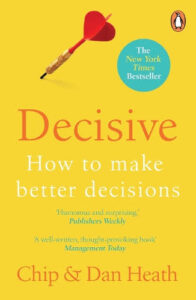
Decisive
Article #295
Building a personal decision-making framework — what the research supports as a repeatable process for high quality decisions
Decisive by Chip Heath and Dan Heath is the most accessible available synthesis of the debiasing research and its practical implementation — covering the WRAP framework that directly addresses the most consequential decision biases this article series has documented. For the entrepreneur who wants a single readable account of how to build the decision quality improvements the research supports into an everyday practice, this is the most practical entry point.
No books found matching your search.