Recommended Books
Every book on this page was recommended at the end of a courben.co article. Reading about a psychological concept is one thing — having a book that lets you live inside it is another. These recommendations exist because an article should leave you with something you can act on, not just something you can recall. The difference between forgettable and memorable is almost always what you do next.
This page contains affiliate links. If you purchase through our links we may earn a small commission at no extra cost to you. We only recommend books we genuinely believe extend the psychology explored in our articles.
Showing 18 of 506 books
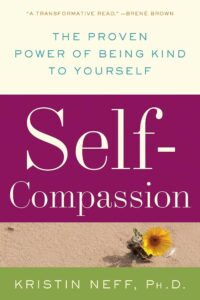
Self-Compassion: The Proven Power of Being Kind to Yourself
Article #277
Why watching your child fail at something is the most direct psychological mirror of how you handle business failure — and what it reveals
Self-Compassion: The Proven Power of Being Kind to Yourself by Kristin Neff. Previously recommended in this series. Neff's account of self-compassion as a psychological capacity that extends across contexts is the most direct available treatment of the pathway from entrepreneurial failure processing to parental failure response — the argument that the same capacity that allows the entrepreneur to hold business failure without shame is the capacity that allows them to hold their child's failure without catastrophising. The Gifts of Imperfection by Brené Brown. Previously recommended in this series. Brown's vulnerability and wholehearted living research is the most accessible available account of what it means to model imperfection and failure acceptance rather than perfectionism and rescue — the behavioural expression of the entrepreneurial failure schema that the parenting context makes visible and that the child absorbs as their own relationship to failure.

Scarcity
Article #276
The psychology of single-parent entrepreneurship — why the cognitive load is not double but exponential, and what the research shows about sustainable strategy
Scarcity by Sendhil Mullainathan and Eldar Shafir is the most directly applicable book for the single-parent entrepreneur who wants to understand the cognitive mechanism that makes their load qualitatively different from what arithmetic would suggest. Mullainathan and Shafir's account of how scarcity taxes the cognitive system across all domains — not only the scarce domain — is the theoretical foundation for the exponential load claim, and their specific research on the cognitive consequences of scarcity is more practically useful than generic time management advice because it explains why the conventional solutions consistently fail to deliver the expected relief.

The Seven Principles for Making Marriage Work
Article #275
How relationship conflict between co-parenting entrepreneurs affects business partnership dynamics in ways neither party acknowledges
The Seven Principles for Making Marriage Work by John Gottman and Nan Silver is the most directly applicable research synthesis for the co-parenting relationship whose conflict is contaminating the business partnership. Gottman's account of the Four Horsemen, the flooding mechanism, and the communication repair strategies that distinguish stable from deteriorating relationships applies directly to the co-parenting dynamic that this article describes — and the love maps and bids-for-connection research provides the framework for understanding what the co-parenting relationship would need to maintain the collaborative quality that the business partnership requires.
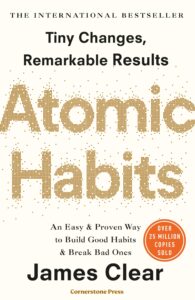
Atomic Habits
Article #274
Why entrepreneurs who maintain consistent parenting routines make better strategic business decisions — the neuroscience of structure and executive function
Atomic Habits by James Clear is the most widely read practical account of how habits are established and maintained — covering the cue-routine-reward structure and the automaticity threshold at which routine behaviour stops requiring deliberate PFC engagement. For the entrepreneurial parent who wants to understand the mechanics of establishing the family routines that this article's mechanisms depend on, Clear's framework is the most practically applicable available guide. The neurological account in this article explains why the habits matter; Clear provides the most actionable account of how to build them.
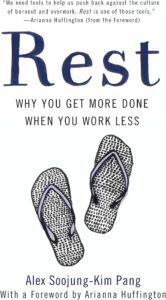
Rest
Article #273
How sleep deprivation from parenting and sleep deprivation from business compound into a cognitive deficit that neither alone would create
Rest by Alex Soojung-Kim Pang. Previously recommended in this series. Pang's account of how deliberate rest protection — including sleep — functions as a strategic performance investment rather than a productivity compromise is the most practically applicable complement to Walker's neurological account. Where Walker establishes the cost of insufficient sleep, Pang provides the framework for understanding sleep protection as something that produces better outcomes rather than simply preventing worse ones. The Expectant Father by Armin Brott, or for a research-grounded account of the parenting sleep deprivation period specifically: the primary research synthesised in the PLOS ONE (2021) mothers' sleep study and the MDPI (2025) scoping review provides the most direct account of what the parenting-specific sleep architecture disruption actually involves and how it interacts with the background stress of professional demands.
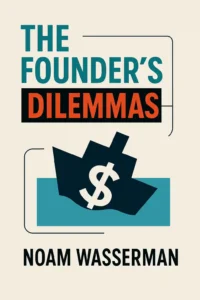
The Founder’s Dilemmas
Article #272
Why children raised by entrepreneurs are statistically more likely to become entrepreneurs — and whether that's psychology, modelling, or something darker
The Founder's Dilemmas by Noam Wasserman. Previously recommended in this series. Wasserman's data on founder biographical backgrounds addresses the intergenerational transmission question through the lens of what the family background actually installs in terms of strategic defaults, authority relationships, and risk calibration — much of which reflects the collateral effects pathway rather than the modelling one. Born to Rebel by Frank Sulloway. Previously recommended in this series. The birth order and family niche model predicts that the specific form of intergenerational transmission varies by sibling position — eldest children are more likely to replicate the authority-maintaining features of the parental entrepreneurial blueprint; laterborn children are more likely to replicate or amplify its challenging-the-established-order features. Both are transmissions; the content differs.
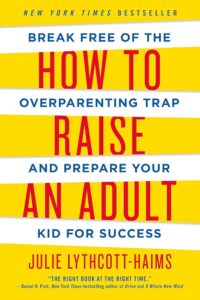
How to Raise an Adult
Article #271
The psychology of entrepreneur parents who over-provide materially to compensate for emotional unavailability — and what children actually need instead
How to Raise an Adult by Julie Lythcott-Haims is the most research-grounded popular account of what material over-provision actually produces — and what it fails to produce. Lythcott-Haims spent years as a Stanford dean watching the developmental consequences of high-material, low-emotional parenting arrive in early adulthood as young people who could not manage frustration, could not make decisions without external scaffolding, and could not locate intrinsic motivation underneath the provision they had been given. The book is direct, specific, and more practically useful than most parenting literature because it names the problem without euphemism and proposes interventions that are grounded in developmental evidence rather than parenting ideology.
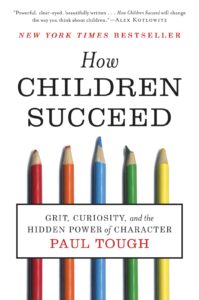
How Children Succeed
Article #270
The psychology of what your children actually learn when they watch you work — and why it has nothing to do with what you intended to teach them
How Children Succeed by Paul Tough is the most research-grounded available account of what actually predicts long-term developmental outcomes in children — and the answer is consistently the non-academic, non-explicit curriculum: resilience, emotional regulation, social skills, and the relationship to adversity that the observational curriculum provides. For the entrepreneurial parent who wants to understand what the most consequential content of their observed curriculum actually is, this book provides the clearest available research framework for identifying and shaping it.
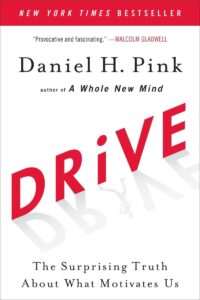
Drive
Why entrepreneurs who use their children as motivation eventually burn out faster than those who use internal purpose — the neuroscience of external anchoring
Drive by Daniel Pink is the most accessible synthesis of the SDT research applied to professional motivation — covering the distinction between controlled and autonomous motivation types, the burnout evidence, and the practical question of what intrinsic motivation actually requires and how it is built. For the entrepreneur who recognises the children-as-motivation pattern and wants the most direct available research framework for understanding why it is structurally problematic and what the alternative looks like, this is the clearest available starting point.
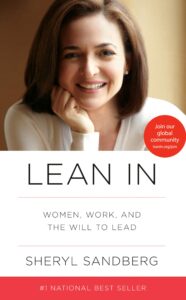
Lean In
Article #268
The identity crisis of the entrepreneur-parent — why 'business owner' and 'parent' are two self-concepts that create genuine neurological conflict
Lean In by Sheryl Sandberg. Sandberg's account of the work-family identity conflict is the most widely read popular treatment of role salience, identity hierarchy, and the specific pressure that high-performing professional and entrepreneurial parents experience in managing competing self-concept demands. Its particular value for the entrepreneur-parent is in the gendered dimension of role salience — the research-supported finding that women in entrepreneurial roles carry higher parental guilt partly because the cultural expectation of maternal primary caregiving assigns the parental self-concept a different kind of obligation than it typically assigns the paternal one. The Whole-Brain Child by Daniel Siegel and Tina Payne Bryson. Previously recommended in this series. Siegel and Bryson's account of present-moment attunement as the neural requirement for effective parenting is the most accessible available treatment of why the entrepreneur's future-orientation is a specific parenting challenge — and what the shift to genuine present-moment engagement actually involves at the neural level.

Parenting from the Inside Out
Article #267
How building a business in front of your children creates a psychological blueprint they will either replicate or reject and resent
Parenting from the Inside Out by Daniel Siegel and Mary Hartzell is the most directly applicable book for the entrepreneurial parent who wants to understand how their own psychological state and self-awareness shapes the quality of the blueprint they are transmitting. Siegel and Hartzell's central argument — that the parent's capacity for reflective self-awareness determines the depth and accuracy of the attunement they can offer the child — applies specifically to the narrative dimension of the blueprint: the more reflective and self-aware the entrepreneurial parent, the richer and more honest the account of the entrepreneurial experience they can provide to their children, and the more nuanced the blueprint the child can form.

Parenting from the Inside Out
Article #266
The psychology of 'not being present' — why physically being home and psychologically being home are neurologically different states, and what children actually register
Parenting from the Inside Out by Daniel Siegel and Mary Hartzell is the most directly applicable book for the entrepreneurial parent who wants to understand what their own psychological state is providing to their child's development — and what changes when that state becomes genuinely present rather than physically proximate. Siegel and Hartzell's account of how the parent's own emotional attunement and awareness determines the quality of the parent-child interaction is grounded in the same neuroscience that the still-face and polyvagal research establishes, made accessible for parents rather than clinicians. For the parent who has understood intellectually that psychological presence matters but wants the developmental science behind why it matters at the level of the child's nervous system, this book provides that foundation with unusual clarity.

Playing and Reality
Article #265
How the psychological concept of 'good enough parenting' applies directly to 'good enough leadership' — and why perfectionists fail at both
Playing and Reality by Donald Winnicott. The most direct account of Winnicott's developmental theory and the good-enough parenting concept in its original form. It is a clinical text written for practitioners, not a leadership book — but reading it produces a recognition of how many of the leadership problems that business psychology addresses in commercial language were described with more precision in the developmental psychology literature decades earlier. When Perfect Isn't Good Enough by Martin Antony and Richard Swinson. Previously recommended in this series. Antony and Swinson's account of the concern-over-mistakes dimension of perfectionism — the destructive component — and the high personal standards dimension — the adaptive one — provides the most practically applicable framework for the perfectionist leader who wants to understand which part of their perfectionism is helping and which part is producing the outcomes this article describes.

Rich Dad Poor Dad
Article #264
Why children of entrepreneurs develop fundamentally different relationships with risk, money, and authority than their peers
Rich Dad Poor Dad by Robert Kiyosaki. Not an academic text, and the specific financial claims in the book should be read critically rather than as research findings. But its central thesis — that growing up with an entrepreneurial parent versus a salaried parent installs fundamentally different mental models about money, risk, and professional identity — is directly consistent with the Klontz money scripts research and the Bandura social learning framework that this article is built on. Read it as a popular illustration of the transmission mechanism, with the Klontz and Marquis and Tilcsik research providing the empirical grounding. The Founder's Dilemmas by Noam Wasserman. Previously recommended in this series. Wasserman's data on entrepreneur biographies consistently reveals that many of the most consequential entrepreneurial characteristics — risk tolerance, authority relationships, money attitudes — reflect family-of-origin patterns rather than purely individual dispositions. Reading it after this article produces a recognition of how much of what appears as individual founder psychology is actually intergenerational transmission made visible.

A Secure Base
Article #263
Why the most psychologically durable entrepreneurs are not the most driven — they're the most relationally secure
A Secure Base by John Bowlby. Previously recommended in this series. Bowlby's foundational account of the secure base function — the relational precondition for sustained exploratory engagement with high-uncertainty environments — is the theoretical foundation for every claim this article makes about relational security as a durability resource. Reading it confirms that the entrepreneurial durability advantage of secure attachment is not a modern extension of attachment theory; it is a direct prediction from its original premises. The Body Keeps the Scoreby Bessel van der Kolk. Previously recommended in this series. Van der Kolk's account of how relational security is registered and stored in the nervous system — and how its absence produces the chronic physiological stress responses that drive alone cannot compensate for — provides the somatic and neurological dimension of the durability argument. The entrepreneur whose drive is operating on top of an insecurely attached nervous system is not just working harder psychologically. They are working against a physiological system that is continuously generating threat signals that the relational security would have reduced.

The Art of Being a Good Friend
Article #261
How maintaining real friendships outside of business is not a choice — it's a requirement
The Art of Being a Good Friend by Shasta Nelson. Nelson's research-grounded framework for the specific behaviours that maintain friendship quality — her three requirements of positivity, consistency, and vulnerability — provides the practical operational framework for actually maintaining non-business friendships through the specific demands that entrepreneurial life creates. Understanding the requirement without the means to meet it produces only guilt; Nelson provides the means. Social: Why Our Brains Are Wired to Connect by Matthew Lieberman. Lieberman's neuroscience account of social connection as a fundamental brain function — not a cultural preference or an emotional luxury — provides the most rigorous available scientific foundation for the claim this article makes. His specific account of the metabolic cost of social exclusion and the neural machinery of social connection makes the social baseline theory legible in a way that the original research papers do not.
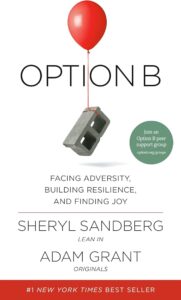
Option B
Article #260
The psychology of personal identity crises triggered by business failure — why it's always about the relationship, not the revenue
Option B by Sheryl Sandberg and Adam Grant is the most directly applicable account of grief, resilience, and narrative reconstruction following major professional and personal loss. Sandberg's experience of sudden bereavement and her subsequent return to full professional functioning provides the most detailed available first-person account of what the narrative reconstruction process actually involves — the specific cognitive and emotional work of rebuilding a self-story that does not depend on the loss it has absorbed. For the entrepreneur in the aftermath of significant business failure, this book provides both the research framework and the emotional texture of what recovery looks like in practice.
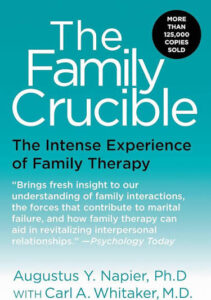
The Family Crucible
Article #259
Why sibling dynamics from childhood re-emerge in co-founder relationships, investor dynamics, and team hierarchies
The Family Crucible by Augustus Napier and Carl Whitaker is the most accessible account of family systems dynamics available — covering the projection process, coalition formation, role assignment, and the triangulation mechanisms that this article applies to co-founder and team contexts. Written as a narrative account of a single family's therapy, it makes the abstract family systems concepts experiential in a way that more theoretical texts do not. For the entrepreneur who wants to understand why their team dynamics feel inexplicably like a family dynamic, this book provides the conceptual framework in its most readable form.
No books found matching your search.