Recommended Books
Every book on this page was recommended at the end of a courben.co article. Reading about a psychological concept is one thing — having a book that lets you live inside it is another. These recommendations exist because an article should leave you with something you can act on, not just something you can recall. The difference between forgettable and memorable is almost always what you do next.
This page contains affiliate links. If you purchase through our links we may earn a small commission at no extra cost to you. We only recommend books we genuinely believe extend the psychology explored in our articles.
Showing 18 of 506 books
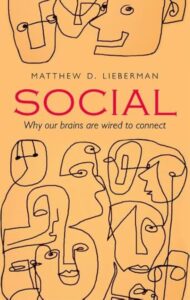
Social: Why Our Brains Are Wired to Connect
Article #258
How the quality of your closest personal relationships predicts your emotional regulation capacity under business pressure
Social: Why Our Brains Are Wired to Connect by Matthew Lieberman is the most accessible neuroscience account of how the social brain operates — covering the neural evidence for social regulation, the metabolic cost of social exclusion, and the specific mechanisms through which close relationships reduce the brain's regulatory burden. Lieberman's account of the social baseline and its neural expression is the most readable available treatment of the science that this article is built on. For the entrepreneur who finds the claim that relationship quality is a neural asset counterintuitive — who has treated emotional regulation as a purely individual capacity — this book provides the empirical foundation for updating that assumption.

The Happiness Trap
Article #257
The psychology of the entrepreneur who builds to escape — how relationships become collateral damage of avoidance
The Happiness Trap by Russ Harris is the most accessible account of the experiential avoidance mechanism and the ACT framework for understanding why avoidance strategies — including the escape-into-business pattern — maintain and intensify the fears they are managing rather than resolving them. Harris's particular strength is in making the ironic rebound mechanism legible: the more effectively the business functions as an escape from intimacy, the more threatening the intimacy becomes, because the avoidance is preventing the corrective experience that would update the internal working model. For the entrepreneur who recognises the escape-building pattern and wants to understand what is actually happening at the psychological level, this is the most directly applicable available framework.

Boundaries
Article #256
Why the boundaries you never learned to set in relationships are the exact boundaries you fail to set with clients
Boundaries by Henry Cloud and John Townsend is the most widely read clinical psychology account of how boundary patterns are or are not learned in childhood, and what the professional and personal consequences of boundary failures look like in adult life. Cloud and Townsend write from a clinical rather than academic perspective, which makes the book unusually accessible and practically specific — they describe the recognition patterns for boundary failure with enough concrete detail that most readers identify their own patterns within the first few chapters. For the entrepreneur who recognises the client boundary problem but does not have a vocabulary for where it came from or what the developmental logic of it is, this is the most direct available starting point.

The Birth Order Book
Article #255
How birth order psychology shapes your leadership style, negotiation approach, and team dynamics in predictable ways
The Birth Order Book by Kevin Leman. Leman's account is more anecdotal and less rigorously evidenced than Sulloway's, but it is more practically accessible and more directly applied to professional contexts. Its value is in the specific leadership, relationship, and communication patterns that each birth order position tends toward — described in enough concrete detail to be recognisable. Cite Sulloway and Healey and Ellis for any specific empirical claims; use Leman for the applied framing. Range by David Epstein. Previously recommended in this series. Epstein's account of how breadth and openness to cross-domain experience produces specific kinds of insight maps onto the laterborn openness-to-experience profile in ways that are more empirically grounded than the birth order literature itself. For the lastborn entrepreneur trying to understand why their generalist instincts feel more natural than the specialist deep-dive that conventional startup advice recommends, Epstein provides the research framework that validates the tendency without requiring the birth order literature to carry more weight than its methodology supports.
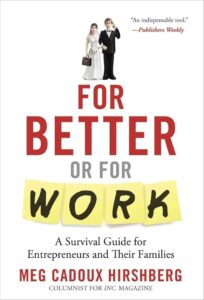
For Better or For Work
Article #254
The psychology of what happens when your business becomes more emotionally demanding than your relationship
For Better or For Work by Meg Cadoux Hirshberg remains the most directly applicable book for the specific dynamic this article describes — written from the partner's side of exactly this experience, across multiple years and multiple phases of an entrepreneurial relationship. Hirshberg's account of watching the business receive what the relationship needed, and of navigating the specific loneliness of being second to something that cannot be competed with directly, is the most honest insider account of the emotional substitution pattern available. What gives the book its particular value is that Hirshberg describes the dynamic without attributing it to the entrepreneur's bad intentions — she understands the pull, which makes her account more accurate and more useful than one organised around blame.

A General Theory of Love
Article #253
Why entrepreneurs in long-distance relationships make structurally different strategic decisions than those in co-habiting ones
A General Theory of Love by Thomas Lewis, Fari Amini and Richard Lannon. Lewis and colleagues' account of limbic resonance — the physiological synchrony that close human contact produces and that digital communication can only partially replicate — is the most readable available treatment of why proximity matters biologically, not just emotionally. Their account of limbic regulation, the process through which close others modulate each other's nervous systems through physical presence, directly explains the co-regulation deficit that long-distance relationships produce and that no amount of video call quality can fully substitute for. Wired for Love by Stan Tatkin. Tatkin's practical, neurobiologically grounded account of how the primary attachment relationship regulates the nervous system applies directly to the long-distance entrepreneur's experience of operating without the continuous nervous system regulation that co-habiting proximity provides. His account of what happens to risk tolerance and threat sensitivity when the regulating relationship is structurally unavailable is the most practically applicable treatment of the long-distance decision-making difference available.

A Secure Base
Article #252
How relationship status affects risk tolerance in entrepreneurs — the neuroscience of what security does to decision-making
A Secure Base by John Bowlby is the foundational theoretical account of how the secure base function enables exploratory behaviour — the framework that the Lerner et al. and Feeney and Van Vleet research extends directly to entrepreneurship and adult risk-taking. Bowlby's account is not primarily a relationship book; it is a theory of human motivation and exploration, grounded in decades of developmental and clinical research. Reading it alongside the neuroimaging and attachment-entrepreneurship research produces the most complete available account of why the quality of the closest relationship is not peripheral to business performance but structurally enabling of it. The book is short, precise, and more accessible than its clinical origins suggest.

Hillbilly Elegy
Article #251
The psychology of being the first entrepreneur in your family — and why success can feel like a form of betrayal
Hillbilly Elegy by J.D. Vance is the most widely read insider account of the first-generation social mobility experience — the between-world belonging, the survivor guilt, the betrayal perception, and the specific ways that the cultural capital gap produces the faking-it dynamic in practice. Vance's account is not a triumph narrative; it is an honest account of the psychological cost of moving between worlds, written by someone who had made the move and was still reckoning with what it meant. For the first-generation entrepreneur who recognises the between-world experience but has not had access to language for it, this book provides that language more directly than the academic literature that formally documents the same mechanisms.

Daring Greatly
Article #250
Why the fear of outgrowing your social circle is one of the most suppressed barriers to entrepreneurial growth
Daring Greatly by Brené Brown. Previously recommended in this series. Brown's research on the specific courage required for visibility — and the shame response that suppresses it — is the most direct available account of the psychological experience of being visible at levels that exceed the origin group's norm. Her distinction between fitting in (suppressing difference to maintain group membership) and belonging (being genuinely seen and accepted, difference included) maps precisely onto the outgrowing dilemma the article describes. Educated by Tara Westover. Westover's memoir of intellectual and educational upward mobility from an origin community that could not follow her — and the psychological cost and meaning of that navigation — is the most emotionally precise account available of what the outgrowing experience feels like from the inside. It does not offer solutions; it offers recognition, which is often what the entrepreneur who is silently managing this tension most needs to find.

Mind Over Money
Article #249
How your friendship group's collective attitude toward money quietly shapes your pricing psychology
Mind Over Money by Brad Klontz and Ted Klontz is the most accessible account of the money scripts research and its application to real financial decision-making. Klontz spent years applying the money scripts framework in clinical and research contexts, and the book makes the research accessible without losing its precision. For the entrepreneur who recognises the discomfort-at-pricing pattern and wants to understand where it comes from and how to work with it rather than simply override it, this is the most direct available resource. It does not assume a psychology background and it does not offer motivational reframing as a substitute for understanding the mechanism.
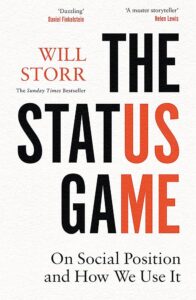
The Status Game
Article #248
The psychology of social comparison among peers — why watching friends succeed in careers you chose not to pursue creates specific entrepreneurial distortions
The Status Game by Will Storr is the most psychologically rigorous popular account of how status comparison shapes human behaviour and strategic choice. Storr's treatment of the neural pain of status loss, the automatic nature of comparison responses, and the specific ways that status-seeking distorts decision-making is directly applicable to the peer comparison mechanism this article describes. The book is not reassuring — it does not offer a way to stop making comparisons — but it provides the most honest available account of why the comparisons produce the responses they do, which is the necessary precondition for making strategic decisions independently of those responses.
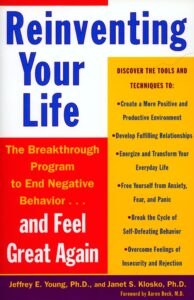
Reinventing Your Life
Article #247
How parental expectations operate as invisible business partners in every strategic decision you make
Reinventing Your Life by Jeffrey Young and Janet Klosko. Young's schema therapy framework identifies the specific patterns that childhood relational experiences install as adult operating templates — including the demanding standards schema and the subjugation schema, both of which are direct expressions of the introjected parental standard mechanism. The book is structured around recognisable patterns rather than clinical categories, and the entrepreneur who reads it will identify their own invisible partner with unusual specificity. Awareness by Anthony de Mello. De Mello's account of how programmed responses — absorbed from family, culture, and early experience — operate as automatic filters on adult perception and choice is the most accessible philosophical treatment of what the SDT introjection research establishes empirically. For the entrepreneur who wants to understand what it means to make a decision that is genuinely their own rather than a response to an internalised program, this is the clearest available account of what that distinction actually involves.

The Other Side of Sadness
Article #246
The Other Side of Sadness by George Bonanno. Bonanno's account of the resilience trajectory — and his challenge to the cultural assumption that grief must be prolonged and incapacitating to be genuine — is the most important corrective to the grief-as-barrier assumption that many entrepreneurs bring to their own experience of loss. His research establishes that continuing to function, to build, and to pursue new directions alongside genuine grief is not avoidance or denial. For the entrepreneur who is grieving and building simultaneously and feels that they are somehow not grieving correctly, this book provides the most honest account of what the research actually shows. Working Identity by Herminia Ibarra. Ibarra's research on career reinvention — particularly her account of how identity change follows action rather than preceding it — is the most practically applicable framework for the entrepreneur using loss as a moment of genuine directional reconstruction.
Outliers
Article #246
How the people you spend the most time with set the psychological ceiling on your ambition without either of you realising
Outliers by Malcolm Gladwell. Gladwell's account of how social context — birth cohort, community, cultural environment — shapes opportunity and outcome is the most accessible popular synthesis of the peer effect and social environment research. It is deliberately illustrative rather than technically rigorous, which makes it a useful companion to the Christakis and Fowler research: where Connected provides the mechanism, Gladwell provides the narrative texture of what the mechanism looks like at scale across different domains and contexts. Daring Greatly by Brené Brown. Previously recommended in this series. Brown's account of the belonging anxiety that suppresses vulnerability — and by extension, the ambition that requires vulnerability to pursue — is the most direct treatment available of the internal ceiling that the fear of outgrowing one's social group produces. Her research on the relationship between belonging and worthiness is directly applicable to the self-suppression mechanism that social mobility anxiety produces.

Generation to Generation: Life Cycles of the Family Business
Article #245
The psychology of family businesses — why the family system's dysfunction becomes the organisation's dysfunction
Generation to Generation: Life Cycles of the Family Business by Kelin Gersick, John Davis, Marion Hampton McCollom and Ivan Lansberg is the most comprehensive research-based account of how family businesses develop, fail, and occasionally thrive across generational transitions. The book maps the overlapping systems — family, ownership, and business — and documents with clinical precision how the emotional dynamics of each system create the governance challenges that family business practitioners consistently encounter. For the entrepreneur in a family business trying to understand why normal management interventions are not producing normal management outcomes, this book provides the most complete diagnostic framework available. It is rigorous without being inaccessible, and it treats the family system's influence on organisational behaviour with the seriousness the research supports.

Frientimacy
Article #244
How becoming successful financially changes your existing friendships in ways nobody warns you about
Frientimacy by Shasta Nelson. Nelson's research-grounded framework for understanding what genuinely sustains adult friendships — her three requirements of positivity, consistency, and vulnerability — maps directly onto the friendship mechanisms that financial divergence disrupts. The book provides practical vocabulary for identifying which friendships have the relational infrastructure to survive significant life change and which were always more situationally maintained than genuinely intimate. For the entrepreneur navigating which pre-success friendships are worth the deliberate maintenance investment that wealth divergence makes necessary, this is the most practically useful book available. Lost Connections by Johann Hari. Hari's account of what genuine connection actually requires — shared meaning, mutual vulnerability, authentic self-disclosure — is the most readable treatment of why the concealment strategy that protects friendships from comparison pain simultaneously prevents them from providing what friendship is for. His argument that connection requires being genuinely known, not carefully curated, applies with specific precision to the financial success concealment dynamic that this article describes.

Hardwiring Happiness
Article #243
The psychology of building a business to prove something — and what happens when you succeed
Hardwiring Happiness by Rick Hanson. Hanson's account of why the brain fails to sustain the emotional impact of achieved goals — the negativity bias, the hedonic treadmill, and the neurological basis of the arrival fallacy — is the most accessible scientific explanation for why proving-business success produces the emotional flatness that the entrepreneur was not expecting. Understanding the mechanism does not eliminate the experience, but it reframes it from personal inadequacy to neurological predictability, which is a more useful starting point for what comes next. Man's Search for Meaning by Viktor Frankl. Frankl's account of meaning as something discovered through engagement rather than delivered by achievement is the most enduring available treatment of the question that proving-business success leaves the entrepreneur with: what do I build toward now? His distinction between meaning pursued as a goal and meaning that emerges as a byproduct of committed engagement with something larger than the self is the most direct available prescription for the identity reconstruction task that post-proof success creates.
The Founder’s Dilemmas
Article #242
Why co-founder relationships follow the same psychological patterns as marriages — and fail for identical reasons
The Founder's Dilemmas by Noam Wasserman is the most research-grounded account of co-founder relationship dynamics available. Wasserman spent years at Harvard Business School collecting and analysing data from thousands of startups, and the book's treatment of co-founder selection, equity structure, dissolution causes, and the failure patterns that the research consistently identifies is both empirically rigorous and directly applicable. The specific finding that 65% of startups experience co-founder departure before exit — and Wasserman's detailed account of the values and communication patterns that predict which 65% — is the business case for taking the co-founder relationship as seriously as any other aspect of the venture. If you have a co-founder or are about to acquire one, this book is required reading before the conversation about equity begins.
No books found matching your search.