Recommended Books
Every book on this page was recommended at the end of a courben.co article. Reading about a psychological concept is one thing — having a book that lets you live inside it is another. These recommendations exist because an article should leave you with something you can act on, not just something you can recall. The difference between forgettable and memorable is almost always what you do next.
This page contains affiliate links. If you purchase through our links we may earn a small commission at no extra cost to you. We only recommend books we genuinely believe extend the psychology explored in our articles.
Showing 18 of 506 books
The Managed Heart
Article #222
Why emotional exhaustion is more damaging than physical exhaustion and recovers more slowly
The Managed Heart by Arlie Hochschild is the foundational account of emotional labour and its costs — the book that established the distinction between surface and deep acting, named the category of work that emotional labour describes, and documented what it costs at the level of felt experience and psychological health. Hochschild wrote this in 1983 as a sociologist studying flight attendants and debt collectors, before the neuroscience of prefrontal depletion and REM sleep emotional processing existed to explain the mechanisms she was documenting. Reading it after the neuroscience makes both the sociological and the scientific account richer: the conditions Hochschild described as producing psychological damage are now understood at the level of specific neural circuits being depleted, and the recovery she found inadequate is now explained by the specific sleep architecture requirements that emotional processing demands. For any entrepreneur whose work involves sustained emotional engagement with customers, team members, or investors — which is to say, most entrepreneurs — this is the book that names the specific form of depletion their work is producing.
Daily Rituals: How Artists Work
Article #221
The psychology behind why the most productive people in history all had non-negotiable rest rituals
Daily Rituals: How Artists Work by Mason Currey is the most direct empirical documentation of the rest-structured daily schedule pattern across 161 artists, writers, philosophers, and scientists. Currey's method is straightforward — documenting the actual daily schedules of historically productive individuals from their letters, diaries, and biographies — and the pattern that emerges is strikingly consistent: almost none of them worked the long undifferentiated hours that contemporary productivity culture prescribes, and almost all of them had non-negotiable daily rituals that protected rest, movement, and social engagement alongside concentrated work. For any entrepreneur who wants to design their own daily schedule around the structure of sustained high output rather than the myth of maximum hours, this is the book that provides the empirical template from the people who produced the most.
Spark: The Revolutionary New Science of Exercise and the Brain
Article #220
The neuroscience of why exercise is more effective than medication for mild-to-moderate anxiety and depression
Spark: The Revolutionary New Science of Exercise and the Brain by John Ratey is the foundational popular synthesis of the exercise-brain research and remains the most complete accessible account of the BDNF mechanism, the antidepressant comparison, and the anxiety-reduction mechanisms available in a single volume. Ratey was writing before the 2024 BMJ meta-analysis but his coverage of the Blumenthal sertraline trial and the mechanistic evidence for exercise as antidepressant treatment is rigorous and specific. For any entrepreneur who is intellectually convinced that exercise matters but has not yet understood why it matters at the neurobiological level — and why that level of understanding changes the motivation calculation — this is the book that provides the mechanism with enough depth to make the prescription feel grounded rather than aspirational.
Why Zebras Don’t Get Ulcers
Article #219
The relationship between psychological safety and physiological stress — why toxic environments make you physically ill
Why Zebras Don't Get Ulcers by Robert Sapolsky is the most accessible and scientifically rigorous synthesis of the stress biology research available — covering the HPA pathway, immune consequences, cardiovascular effects, and the mechanisms through which social threat activates the same biology as physical danger. Sapolsky writes with unusual wit and clarity for a Stanford neuroendocrinologist, and his account of why the human capacity for anticipatory stress — for generating cortisol in response to imagined future threats — makes us uniquely vulnerable to the chronic social stressors that toxic environments produce is the most readable available treatment of the biology this article documents. For any entrepreneur trying to understand why the environments they build have the physical health consequences they do, this is the book that makes the biology personal and the mechanisms clear.
The Sleep Revolution
Article #218
Why 'pushing through' exhaustion creates a neurological debt that compounds with interest
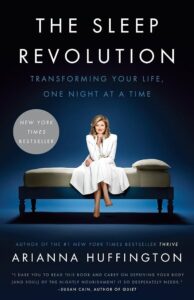
The Sleep Revolution by Arianna Huffington is the most culturally influential popular account of sleep as a performance prerequisite rather than a productivity sacrifice — written by someone who collapsed from exhaustion, broke her cheekbone in the fall, and spent the subsequent years investigating the neuroscience of what she had been doing to her brain. Huffington is not a researcher, and the specific empirical claims should be followed to their primary sources. What the book provides that the primary sources do not is the account of what pushing through exhaustion looks like from inside a high-performing professional life, why it feels rational at each individual step, and what the accumulated consequence looks like when it arrives. For any entrepreneur whose relationship to exhaustion is primarily one of muscling through it, this is the book that makes the neurological account of compounding debt feel personally relevant rather than academically distant.
The Nature Fix
Article #217
The neuroscience of why nature exposure reduces cortisol levels faster than any other intervention
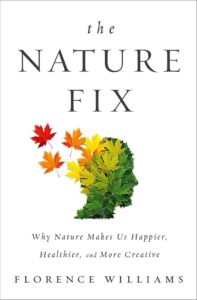
The Nature Fix by Florence Williams is the most accessible and scientifically rigorous synthesis of the global nature-and-health research — covering the Japanese Shinrin-yoku programme, the Kaplan attention restoration research, the Ulrich stress reduction studies, and the neuroimaging evidence. Williams travels to Japan, Finland, South Korea, and the American wilderness, embedding the laboratory findings in the lived reality of what nature immersion actually produces in people who are accustomed to it as a regular practice rather than an occasional treat. For any entrepreneur trying to understand why their instinct to go outside when they are overwhelmed is not an avoidance behaviour but a neurologically sound recovery strategy — and what the research says about the optimal dose, frequency, and type of nature engagement — this is the book that covers the evidence with the rigour it deserves and the readability the subject requires.
Stolen Focus
Article #216
The psychology behind why you feel guilty when you rest and what this reveals about your conditioning
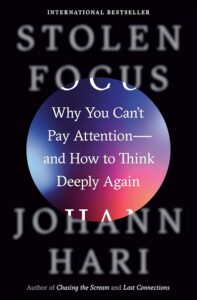
Stolen Focus by Johann Hari examines the structural features of the contemporary digital environment that make psychological detachment from work genuinely difficult even when the person intends to rest. Hari's account of how notification systems, variable reward schedules, and the collapse of the boundary between work and personal digital space have made the kind of genuine rest that recovery requires structurally harder to achieve than at any previous point in professional history provides the environmental context within which individual rest guilt operates — and why addressing only the individual psychological mechanism while leaving the structural environment unchanged is insufficient.
An Unquiet Mind
Article #215
Why the recovery from burnout takes 3–5x longer than the period that caused it
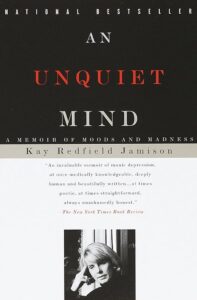
An Unquiet Mind by Kay Redfield Jamison is not a burnout book, and that is precisely why it is the most useful book for understanding the asymmetric relationship between psychological collapse and psychological recovery. Jamison — a clinical psychologist who documents her own experience of bipolar disorder with unusual clinical precision — provides the most rigorous first-person account available of why recovery from severe psychological dysregulation takes the time it takes, why the expectation of linear improvement is wrong, why good days do not signal completion of recovery, and what it actually feels like to be inside a recovery process that is real but not yet finished. The mechanisms are different from burnout, but the structural dynamic is the same: biological dysregulation that developed over time reverses over a longer time, with setbacks, and with a trajectory that bears no resemblance to the speed of onset. For any entrepreneur navigating burnout recovery — or trying to understand someone who is — this is the book that makes the timeline comprehensible and the process less frightening.
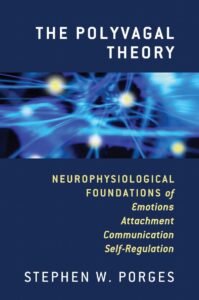
The Polyvagal Theory
Article #214
The psychology of 'functional freeze' — when you're burned out but still performing
The Polyvagal Theory by Stephen Porges is the foundational text on the three-circuit autonomic nervous system model and the dorsal vagal shutdown state that provides the most precise neurophysiological account of why the functional freeze state produces the specific combination of continued performance and emotional shutdown. Porges's framework changes how the functional freeze experience is understood: not as laziness, not as depression, not as weakness, but as an autonomic nervous system response to sustained inescapable threat — a response that is adaptive in the evolutionary context for which it was designed and deeply maladaptive in the context of professional life where the threat is chronic rather than acute. For any entrepreneur who has experienced the specific phenomenology of going through the motions while feeling nothing, or of performing competently while internally disconnected from the experience of performing, this book provides the most precise available account of what is happening neurophysiologically.
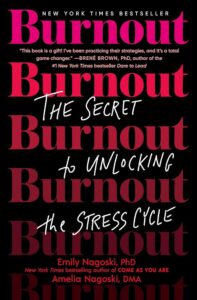
Burnout: The Secret to Unlocking the Stress Cycle
Article #213
Why burnout is not caused by too much work — it's caused by too little psychological recovery
Burnout: The Secret to Unlocking the Stress Cycle by Emily and Amelia Nagoski is the most accessible popular synthesis of the stress cycle and the biological requirement for completing the physiological stress response through active recovery rather than mere work cessation. The Nagoskis' central contribution is making the distinction between stressor completion — removing or reducing the source of stress — and stress response completion — actually completing the physiological cycle that the stressor activated. Many people end the stressor without completing the stress response, which leaves the physiological activation unresolved and the allostatic load accumulating. For any entrepreneur who has taken a holiday and returned more exhausted than when they left, this book provides the precise mechanistic explanation and the evidence-grounded account of what completing the stress response actually requires.
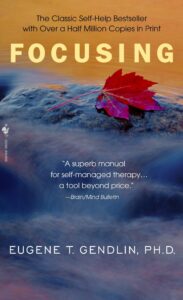
Focusing
Article #212
How to reconnect with genuine desire when years of obligation have buried it under layers of 'should'
Focusing by Eugene Gendlin is the foundational text on the felt sense methodology and its application to accessing pre-verbal authentic motivation. Gendlin developed the approach through systematic clinical observation of what distinguished clients who made progress in psychotherapy from those who did not — and the distinguishing factor was not the quality of their verbal articulation but their capacity to attend to a pre-verbal bodily signal he identified as the felt sense. For any entrepreneur who has tried to identify what they genuinely want through deliberate introspection and found the process producing only obligation-filtered answers, this book provides both the explanation for why conceptual introspection fails and a specific methodology for accessing the pre-verbal signal that obligation has not fully suppressed.
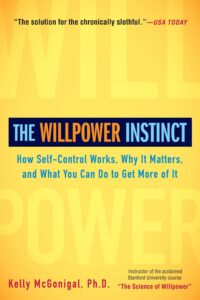
The Willpower Instinct
Article #211
Why self-discipline fails and self-understanding succeeds as a long-term strategy for sustained effort
The Willpower Instinct by Kelly McGonigal is the most accessible synthesis of self-control research that takes seriously both the genuine usefulness of willpower and its systematic failure patterns. McGonigal writes as a researcher who teaches the science of self-control at Stanford, and her account of when and why willpower-based strategies fail — and what the research-grounded alternatives look like — is more nuanced than most popular treatments of the subject. For any entrepreneur who has experienced the pattern of disciplined periods followed by collapse, this book provides the most direct available account of the structural reason that pattern is so consistent and what different approach the research actually supports.
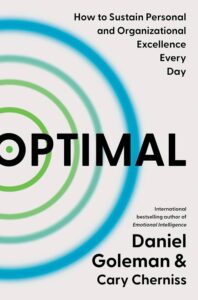
Optimal: How to Sustain Personal and Organizational Excellence Every Day
Article #210
The neuroscience of 'flow' — the psychological state where effort disappears and performance peaks
Optimal: How to Sustain Personal and Organizational Excellence Every Day by Daniel Goleman and Richard Davidson is the most recent synthesis of the neuroscience of peak performance states, drawing on Davidson's decades of affective neuroscience research. Their account of the neural signatures of optimal performance and the conditions that sustain them across the working day — not as occasional peak states but as a more consistent mode of engagement — extends the flow research into the practical question of how to design not just individual sessions but entire working lives around the conditions that produce peak neurological function.
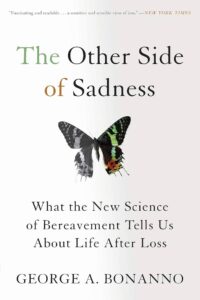
The Other Side of Sadness
Article #209
The psychology behind why some people bounce back from failure and others are permanently deflated
The Other Side of Sadness by George Bonanno is the most accessible synthesis of the resilience trajectory research and makes the case that most received wisdom about grief, loss, and recovery is empirically wrong in ways that actively harm people's relationship to their own recovery. Bonanno writes with the authority of someone who has spent three decades studying how people actually respond to adversity — not how they are supposed to, not how culture assumes they do, but how longitudinal data consistently shows they do. His central argument — that rapid recovery is normal, adaptive, and not evidence of insufficient feeling — is the finding that the research most needs to reach entrepreneurs, whose culture simultaneously valorises resilience as a badge and pathologises it as evidence of not taking failure seriously. For any entrepreneur who has recovered from a setback faster than their environment expected and felt guilty about it, this book provides the empirical case that they were not wrong to do so.
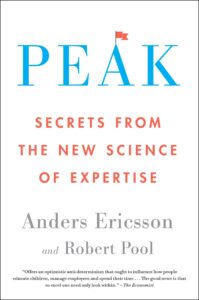
Peak: Secrets from the New Science of Expertise
Article #208
The psychology of how learned industriousness (the ability to sustain effort) is a psychological skill, not a personality trait
Peak: Secrets from the New Science of Expertise by Anders Ericsson and Robert Pool is the most accessible treatment of deliberate practice as the mechanism of expert performance development. Ericsson's central argument — that expert performance is the product of accumulated deliberate practice rather than innate talent — directly extends the Eisenberger framework to the domain of skill acquisition. But the finding that is most relevant here is the one that receives least popular attention: the capacity to sustain deliberate practice is itself trained, gradually and systematically, across years of development. Ericsson documents this across violinists, chess grandmasters, surgeons, and athletes with the precision of a researcher who spent four decades studying the empirical basis of excellence. For any entrepreneur who wants to understand both why their current effort capacity is not a fixed ceiling and what the research-grounded path for raising it actually looks like, this is the primary text.
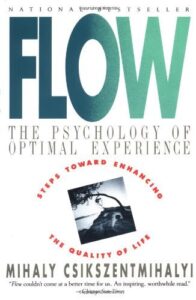
Flow
Article #207
The psychology behind why you can't force yourself to care about something your subconscious has decided doesn't matter
Flow by Mihaly Csikszentmihalyi is the foundational account of the conditions under which engagement becomes effortless — when challenge matches skill and the goal is genuinely valued, the dopamine system allocates resources without any need for volitional override. Flow is the phenomenological opposite of amotivation and is produced by the same dopaminergic value assignment that amotivation reflects from the other direction. Csikszentmihalyi's account of how to structure work toward these conditions — and why the flow state is reliably associated with intrinsically valued rather than extrinsically motivated activity — is the most practically applicable synthesis of what genuine engagement looks like and what produces it. For any entrepreneur who has experienced the difference between work that pulls them forward and work they have to push themselves through, this book provides the psychological architecture that explains why those two experiences feel so categorically different.
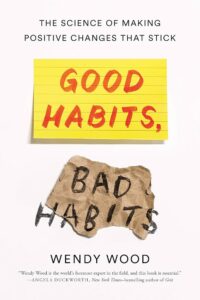
Good Habits, Bad Habits
Article #206
Why willpower is a depletable resource and the people who appear disciplined are actually designing environments
Good Habits, Bad Habits by Wendy Wood is the most direct synthesis of the habit-as-environment-design research programme. Wood is the researcher behind the 43 to 45% daily habit finding and the self-control survey results that show high self-control correlates with fewer temptations rather than more willpower expenditure. Her account of how habits form, how context stability is the primary driver of habit maintenance, and how changing the environment is reliably more effective than changing the intention is grounded in decades of primary research rather than in the anecdote-and-principle format of most habit books. For any entrepreneur who has attempted to build discipline through motivation and found it insufficient, this book provides the research-grounded alternative that the motivation strategy was never going to deliver.
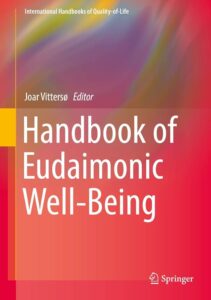
The Eudaimonic Turn
Article #205
The neuroscience of why purpose-driven people live longer, earn more, and experience less anxiety
The Eudaimonic Turn edited by Joar Vittersø is the most comprehensive academic synthesis of eudaimonic wellbeing research, including Ryff's six-dimension model, the health outcome evidence base, and the distinction from hedonic wellbeing. It is an academic edited volume and reads as one, but the chapters synthesising the MIDUS longitudinal data and the CTRA genomic findings are the most rigorous available account of what the biological evidence actually shows — and how substantial the difference between purpose-oriented and pleasure-oriented living is at the level of physical health outcomes. For any entrepreneur who wants the full evidence base rather than the summary, this is the primary academic reference.
No books found matching your search.