Recommended Books
Every book on this page was recommended at the end of a courben.co article. Reading about a psychological concept is one thing — having a book that lets you live inside it is another. These recommendations exist because an article should leave you with something you can act on, not just something you can recall. The difference between forgettable and memorable is almost always what you do next.
This page contains affiliate links. If you purchase through our links we may earn a small commission at no extra cost to you. We only recommend books we genuinely believe extend the psychology explored in our articles.
Showing 18 of 506 books

Shame and Guilt
Article #204
The psychology of shame versus guilt — why one destroys performance and the other drives it
Shame and Guilt by June Price Tangney and Ronda Dearing is the most empirically rigorous book-length treatment of the shame-guilt distinction and its consequences across psychological wellbeing, interpersonal behaviour, and performance. Tangney is the primary researcher behind the foundational findings this article draws on, and this book presents the evidence with the precision of someone who has spent a career distinguishing the two constructs empirically rather than theoretically. For any entrepreneur trying to understand why their response to failure sometimes drives repair and sometimes drives retreat, or why feedback lands differently in different emotional states, this is the book that provides the most direct and precise account of the mechanism.

The Curse of the Self
Article #203
Why the fear of judgement controls more of your behaviour than you will ever consciously realise
The Curse of the Self by Mark Leary is the most direct popular synthesis of sociometer theory and self-presentation research, arguing that the self-concept and its social management consume an extraordinary and largely invisible proportion of human cognitive and behavioural resources. Leary writes as the researcher who developed the sociometer framework, and his account of how continuously and automatically the social monitoring system operates — and how much behavioural territory it occupies without appearing on the surface as social anxiety — is the most direct available treatment of the article's central claim. For any entrepreneur trying to understand why certain decisions consistently feel harder than their objective difficulty warrants, or why the discomfort of visibility never quite becomes comfortable despite repeated exposure, this book provides the most precise available account of the architecture generating that experience.
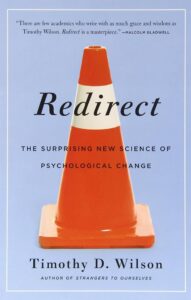
Redirect
Article #202
The psychological reason you feel most anxious right before a breakthrough
Redirect by Timothy Wilson examines the psychological conditions under which narrative change — reframing the story one tells about a difficult experience — produces genuine behavioural and emotional change. Wilson's account of why reappraisal is most effective when it is accurate rather than merely positive is the applied complement to the predictive processing framework: the brain updates its model in response to genuine prediction error, not in response to reassurance that does not match the evidence. Understanding that the peak anxiety is the mechanism of change rather than the evidence of failure is precisely the kind of accurate reframe Wilson documents as producing durable change.
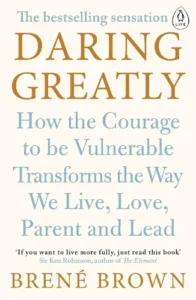
Daring Greatly
Article #201
The neuroscience behind why courage is not the absence of fear but a different relationship with it
Daring Greatly by Brené Brown is the most widely read applied account of the acceptance-based courage model — framing courage as the willingness to appear and act without certainty of the outcome, which is the psychological description of the BIS conflict state the rRST framework formalises. Brown's research on vulnerability as the precondition for genuine courage — the argument that the attempt to eliminate uncertainty before acting is the mechanism that prevents both connection and achievement — maps directly onto the neurological account this article documents. Her work is qualitative rather than neurological, but the practical framework she builds from it is the most accessible available guide to the acceptance-based approach that the vmPFC extinction research supports.
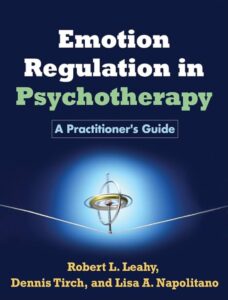
Emotion Regulation in Psychotherapy
Article #200
How experiential avoidance — refusing to feel uncomfortable emotions — is the root of most psychological suffering
Emotion Regulation in Psychotherapy by Robert Leahy, Dennis Tirch and Lisa Napolitano is the most directly applicable clinical text on the relationship between emotion regulation strategies and psychological suffering. Their account of how suppression produces the physiological and interpersonal consequences Gross's research documents — and what functional alternatives to avoidance look like in practice — is the clinical architecture that sits behind the more accessible ACT-based treatments. For any entrepreneur or professional trying to understand not just that emotional avoidance is costly but precisely how the costs accumulate and what interrupts them, this is the most rigorous available account.
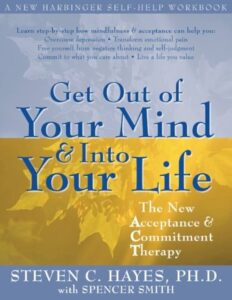
Get Out of Your Mind and Into Your Life
Article #199
Why the things you avoid become the walls of your psychological prison
Get Out of Your Mind and Into Your Life by Steven Hayes and Spencer Smith is the most accessible ACT-based treatment of the valued living gap — Hayes's account of how the attempt to avoid psychological pain produces the progressive life constriction this article documents. Hayes writes with unusual directness about the mechanism through which avoidance eventually occupies the space that valued living was supposed to fill, and his framework for identifying which domains avoidance has colonised and what re-engaging with them requires is the most practically structured available treatment of the prison metaphor. For any entrepreneur who recognises the pattern of narrowing — domains of professional or personal life that have quietly contracted around what is comfortable rather than what matters — this book provides both the diagnosis and the most evidence-consistent account of what reverses it.
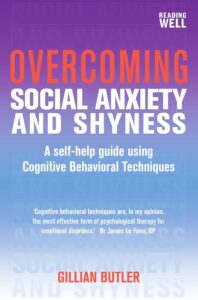
Overcoming Social Anxiety and Shyness
Article #198
How safety behaviours (the small things you do to manage anxiety) actually make anxiety worse
Overcoming Social Anxiety and Shyness by Gillian Butler is the most accessible clinical guide to the self-focus and safety behaviour mechanisms that Wells and McManus established in their foundational research. Butler's treatment of how safety behaviours maintain social anxiety by preventing the corrective experience that would reduce it is the most practically structured account available for anyone who recognises these patterns in professional social contexts — networking events, pitches, team leadership, client relationships. She writes with the clarity of someone who has helped many people through precisely these patterns, and the book is grounded firmly in the cognitive model rather than generic confidence advice.
Anxiety: A Very Short Introduction
Article #197
Why avoidance feels like relief in the short term but builds psychological pressure that eventually bites back harder
Anxiety: A Very Short Introduction by Daniel Freeman and Jason Freeman is the most concise research-grounded account of how the anxiety maintenance cycle works, with avoidance as the central mechanism documented across phobias, social anxiety, and generalised anxiety. At under 200 pages, it covers the learning theory architecture, the clinical evidence base, and the treatment implications with the precision of researchers who know the field and the clarity of writers who know their audience. For any entrepreneur who recognises the pattern of short-term relief followed by escalating pressure in their own avoidance behaviours — around difficult conversations, strategic decisions, or performance realities — this book provides the most direct available account of the mechanism and what interrupts it.
Visible Learning
Article #196
Why metacognition — the ability to think about your own thinking — is the single most powerful psychological skill available to an entrepreneur
Visible Learning by John Hattie is the synthesis of over 800 meta-analyses across educational interventions and represents the most comprehensive available evidence base for what actually produces performance improvement. Hattie's identification of metacognitive strategy instruction as one of the ten most powerful influences on achievement — with effect sizes that increase over time — is the empirical foundation for treating metacognition as the highest-leverage cognitive investment available. For any entrepreneur who wants to understand which cognitive skills to prioritise developing, this book provides the comparative evidence base that makes the case for metacognition not through argument but through data.
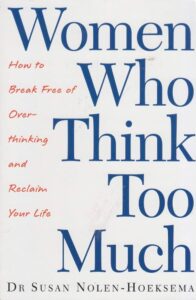
Women Who Think Too Much
Article #195
Why overthinking is not intelligence — it's anxiety wearing a mask of productivity
Women Who Think Too Much by Susan Nolen-Hoeksema — the primary researcher behind the response styles research — is the most direct accessible synthesis of the findings this article draws on. Nolen-Hoeksema is unusually clear about the central paradox: overthinking feels like the responsible approach precisely because it feels thorough and serious, while consistently failing to deliver the outcomes it promises. Her account of why the ruminative cycle is so difficult to exit once entered — because exiting feels like abandoning the problem rather than resolving it — captures the specific cognitive trap the research describes. For any entrepreneur who recognises the pattern of looping analysis that generates more anxiety without producing resolution, this is the book that names the mechanism most precisely.
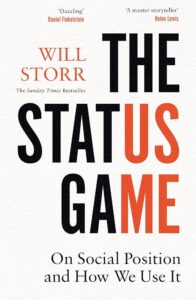
The Status Game
Article #194
The psychological trap of comparison thinking — why it activates entirely different brain circuits than self-evaluation
The Status Game by Will Storr is the most directly applicable popular synthesis of the social comparison literature. Storr argues that status competition — the comparison drive that Festinger formalised and the ventral striatum encodes — is the primary organising force in human social behaviour, and traces its consequences through psychology, evolutionary biology, culture, and history with a range that makes the mechanism feel as large as it actually is. For any entrepreneur trying to understand why the comparison instinct is so difficult to simply decide to stop engaging with, Storr's account of the evolutionary pressures that made relative standing a matter of survival provides the context that makes the neural findings intelligible.
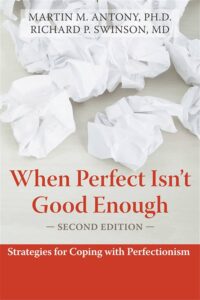
When Perfect Isn’t Good Enough
Article #193
Why perfectionistic thinking is not about high standards — it's about fear of judgement
When Perfect Isn't Good Enough by Martin Antony and Richard Swinson is the most directly applicable clinical treatment of perfectionism grounded in the Frost and Hewitt-Flett research programmes. Antony and Swinson explicitly distinguish concern over mistakes from personal standards — the distinction the research identifies as the difference between the adaptive and maladaptive forms — and provide a cognitive-behavioural framework for identifying when perfectionism is driven by fear rather than by genuine investment in quality. For any entrepreneur who recognises the procrastination, the inability to ship, the excessive revision, or the avoidance of visible creative risk in themselves, this book provides both the precise diagnosis and the most evidence-grounded account of what actually causes those patterns and what addresses them.
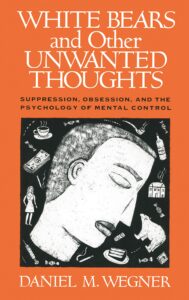
White Bears and Other Unwanted Thoughts
Article #192
The psychological phenomenon of thought suppression — why trying not to think about something guarantees you will
White Bears and Other Unwanted Thoughts by Daniel Wegner himself is the original popular account of the thought suppression research, written before the formal theoretical framework appeared. Wegner is an unusually clear and self-aware scientific writer, and reading his own account of the white bear experiments — including the Dostoevsky passage that motivated them — provides the foundational understanding that makes the subsequent clinical applications intelligible. It is short, precise, and more readable than most popular psychology books on cognition.
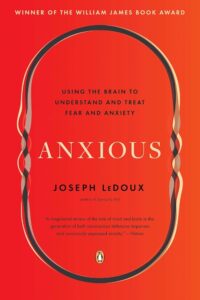
Anxious
Article #191
Why your brain treats imagined scenarios as real experiences — and what this means for anxiety
Anxious by Joseph LeDoux is the most neurologically precise treatment of why imagination triggers the same threat circuits as real experience. LeDoux's distinction between the survival circuit — the system that processes threats, real and imagined, before conscious awareness is involved — and the conscious experience of fear is the foundational conceptual tool for understanding why anxiety cannot be resolved by the simple instruction to stop worrying. The threat system is not responding to conscious belief about whether something is real or dangerous. It is responding to signal strength in the perceptual circuits. For any entrepreneur trying to understand why anxiety persists despite rational knowledge that the feared outcome is unlikely, LeDoux provides the neurological account that makes sense of the experience.
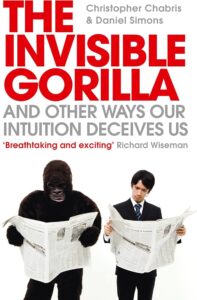
The Invisible Gorilla
Article #190
How mind-reading — assuming you know what others think of you — distorts every social interaction
The Invisible Gorilla by Christopher Chabris and Daniel Simons is the most accessible treatment of the limits of human attention, and it provides the attentional mechanism that underlies why the spotlight effect is a reliable overestimation. The gorilla experiment — in which subjects asked to count basketball passes fail to notice a person in a gorilla suit walking through the scene — demonstrates that even highly salient stimuli go unnoticed when attention is directed elsewhere. This is precisely the mechanism the spotlight effect depends on: others are not attending to what you believe they are attending to because their attention is already fully occupied elsewhere. Chabris and Simons document this across perception, memory, and social judgment with the kind of experimental precision that makes the finding feel genuinely surprising even when you have already been told the result. For any entrepreneur who carries anxiety about how they are being perceived in social and professional interactions, this book reframes that anxiety by showing how little of what feels enormous to the person experiencing it actually registers to anyone else.
The Power of Bad: How the Negativity Effect Rules Us — and How We Can Rule It
Article #189
The neuroscience behind why negative thoughts are stickier than positive ones — and what this means for how entrepreneurs make decisions
The Power of Bad: How the Negativity Effect Rules Us — and How We Can Rule It by Roy Baumeister and John Tierney is the most directly applicable book-length treatment of the negativity bias research for anyone trying to understand how it operates in their own decisions and what to do about it. Baumeister is the researcher behind the 2001 cross-domain synthesis this article draws on most heavily, and the book extends that research into applied guidance across relationships, work, media consumption, and strategic thinking. What distinguishes it from most popular psychology books on bias is the specificity of the correction strategies — Baumeister and Tierney are not simply describing the problem but identifying the conditions under which the negativity weighting system can be deliberately recalibrated. For any entrepreneur who has noticed that bad news hits harder than good news should, that one poor review lingers longer than twenty good ones, and that the downside scenarios of any decision feel more vivid than the upside ones, this book provides both the explanation and the most evidence-grounded account of what to do about it.
Expert Political Judgment
Article #Why the most effective entrepreneurs think in gradients, not categories — the psychology of integrative complexity
Why the most effective entrepreneurs think in gradients, not categories — the psychology of integrative complexity
Expert Political Judgment by Philip Tetlock, previously cited in this series, is the foundational 20-year, nearly 300-expert study that established the hedgehog-fox distinction empirically. Reading it alongside Superforecasting provides both the raw evidence base and the applied synthesis — and the contrast between the two books is itself instructive about how a researcher translates twenty years of controlled evidence into practical guidance without losing the precision that makes the evidence meaningful.

The Philosophical Baby
Article #187
How the communication patterns you grew up with shape your entrepreneurial decision-making
The Philosophical Baby by Alison Gopnik synthesises developmental research on how early communicative environments shape the cognitive tools children develop — including causal reasoning, hypothesis testing, and the capacity for creative imagination. Gopnik is one of the most rigorous developmental scientists working in this area and one of the most accessible writers in science, and the combination produces a book that makes the developmental research feel urgently relevant rather than academically remote. Her central argument — that children are not deficient adults but cognitively different ones, with specific cognitive strengths that the adult brain trades away for efficiency — directly underpins the FCPT and Vygotskian frameworks this article draws on. For any entrepreneur trying to understand where their current thinking patterns came from, and why some cognitive capacities feel natural while others require deliberate effort, this book provides the developmental account with unusual precision and clarity.
No books found matching your search.