Recommended Books
Every book on this page was recommended at the end of a courben.co article. Reading about a psychological concept is one thing — having a book that lets you live inside it is another. These recommendations exist because an article should leave you with something you can act on, not just something you can recall. The difference between forgettable and memorable is almost always what you do next.
This page contains affiliate links. If you purchase through our links we may earn a small commission at no extra cost to you. We only recommend books we genuinely believe extend the psychology explored in our articles.
Showing 18 of 506 books
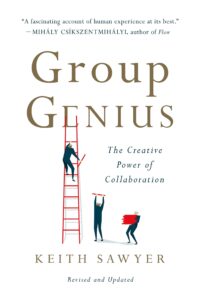
Group Genius: The Creative Power of Collaboration
Article #186
The neuroscience of collaborative creativity — why two entrepreneurs generate better ideas than one (but only under specific psychological conditions)
Group Genius: The Creative Power of Collaboration by Keith Sawyer is the most directly applicable book-length treatment of collaborative creativity research, and it makes a case that is more nuanced than either the "collaboration always works" or "solo work is superior" position that most people default to. Sawyer draws on the brainstorming failure literature, the improvisation research, and case studies from science and art to identify the specific structural conditions under which collaboration genuinely exceeds individual output. His improvisation model — the idea that the most productive creative collaboration looks less like a planning session and more like jazz, with each participant building on and extending what the other just contributed — maps closely onto what the hyperscanning research now confirms neurologically. For any entrepreneur or founding pair who has experienced the frustration of collaborative sessions that produce less than expected, and wants to understand why and what to do about it, this book provides the framework with more precision than most treatments of the topic.
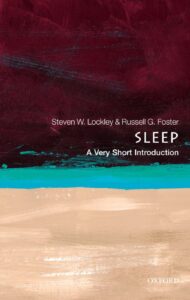
Sleep: A Very Short Introduction
Article #185
Most people think of sleep as a single recovery state. The neuroscience shows two qualitatively distinct processes occurring in sequence — and understanding which one you are truncating changes how you think about when and how to sleep relative to the kind of cognitive work you need to do.
Sleep: A Very Short Introduction by Steven Lockley and Russell Foster is the most concise and research-grounded available account of sleep architecture, the distinct functions of NREM and REM stages, and the consequences of disrupting each. At under 200 pages, it covers the neuroscience with enough precision to be genuinely useful without requiring specialist background. For any entrepreneur who wants to understand their own sleep architecture rather than simply following generic sleep hygiene advice, this is the entry point that makes the subsequent research intelligible.
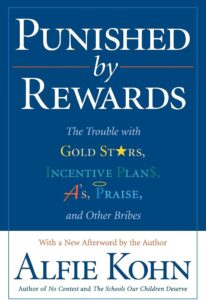
Punished by Rewards
Article #184
Why intrinsic motivation produces more innovative business outcomes than extrinsic rewards
Punished by Rewards by Alfie Kohn is the most direct applied treatment of the reward-undermining research for an organisational audience. Kohn draws extensively on the Deci, Lepper, and Amabile research programmes and applies them across education, parenting, and workplace contexts with a directness that makes the implications impossible to avoid. He is more polemical than the underlying research strictly requires, but the core argument is well-supported and the organisational examples are immediately recognisable.
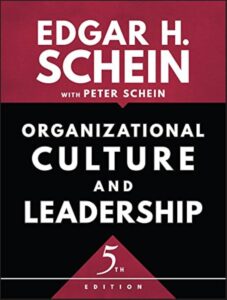
Organisational Culture and Leadership
Article #183
The psychology behind why some company cultures foster innovation and others systematically crush it
Organisational Culture and Leadership by Edgar Schein is the foundational theoretical treatment of how organisational culture operates through three levels — artefacts, espoused values, and underlying assumptions — with the underlying assumptions being the level that determines actual behaviour. Schein's framework is the conceptual architecture within which Ekvall's climate dimensions, Rousseau's psychological contract, and affective contagion all operate. Reading Schein makes it possible to diagnose precisely which level of a culture is producing the innovation problem: a gap between espoused values ("we value creativity") and underlying assumptions ("but risk-taking is punished") is the most common structure of the innovation-crushing culture, and Schein provides the clearest analytical tool for identifying and addressing it.
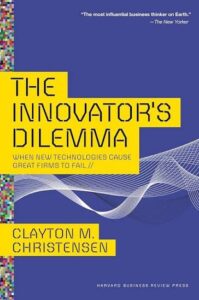
The Innovator’s Dilemma
Article #182
Why the most innovative business decisions feel wrong at the time — the discomfort of novelty
The Innovator's Dilemma by Clayton Christensen is the most rigorous applied treatment of why market-leading companies consistently fail to adopt the disruptive innovations that subsequently destroy them. Christensen's account maps precisely onto the Mueller et al. bias-against-creativity finding: disruptive innovations feel wrong to the incumbents because they do not match the schema of what a good business opportunity looks like when evaluated through the lens of an existing market position. The financial analysis always shows the opportunity is too small, the technology is too immature, and the customers are the wrong segment — all of which is accurate within the existing schema and irrelevant to the emerging one.
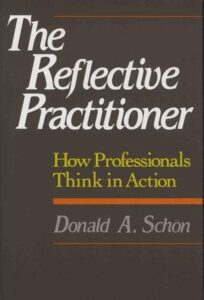
The Reflective Practitioner
Article #181
The psychology of rapid prototyping — why making things quickly reduces the psychological barrier to innovation
The Reflective Practitioner by Donald Schön is the foundational theoretical text for understanding the cognitive relationship between making and thinking. Schön's concept of reflection-in-action — the way practitioners think through doing rather than before doing — and the materials' talk-back mechanism — the way physical artefacts reveal aspects of a problem that purely mental engagement conceals — provide the theoretical framework that the rapid prototyping literature builds on. For any entrepreneur who has experienced the phenomenon of understanding a problem differently after beginning to build something, this book provides the most precise account of why that happens and what it means for how creative work should be structured.

Range
Article #180
How the 'curse of expertise' means the most knowledgeable person in the room is often the least innovative
Range by David Epstein is the most accessible treatment of why cognitive breadth outperforms deep specialisation in complex, changing environments. Epstein's central argument — built across elite sport, scientific discovery, artistic innovation, and business — is that the ability to apply frameworks across domains, and the willingness to abandon a familiar framework when it stops fitting, predicts innovative performance better than the depth of investment in any single one. He covers the Einstellung effect and cognitive entrenchment research directly, and his evidence makes the case that the people most valuable in genuinely novel situations are rarely the deepest experts in the specific domain.
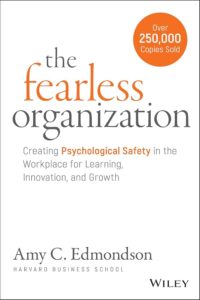
The Fearless Organization
Article #179
Why psychological safety is the prerequisite for innovation — not talent, not resources, not strategy
The Fearless Organization by Amy Edmondson is the primary researcher's own book-length treatment of the construct, its evidence base, and its application to building innovative organisations. Edmondson is careful about what the research shows and what it does not — she is the right person to present both the strength of the evidence and its limits. For any entrepreneur or team leader who has noticed that people hold back, that meetings are more polite than useful, or that the best ideas seem to arrive in informal conversations rather than structured sessions, this book identifies the mechanism with precision and gives the most evidence-grounded account of what leader behaviour actually produces the conditions that change it.
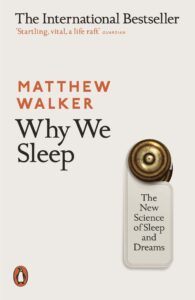
Why We Sleep
Article #178
The neuroscience of why early mornings and late evenings produce different types of creative business ideas
Why We Sleep by Matthew Walker synthesises the REM sleep and insight research alongside the hypnagogic creativity literature in a way that makes the neurological architecture of sleep feel urgent rather than academic. Walker's treatment of what REM sleep is actually doing — the loose associative consolidation that produces the morning insights entrepreneurs most value — is the most accessible version of the Wagner and Lacaux findings available. For any entrepreneur who has been treating sleep as a productivity tax rather than the cognitive infrastructure it actually is, this book is the most direct available case for reconsidering that position.
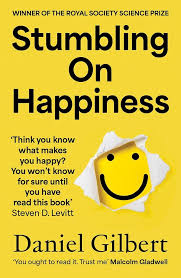
Stumbling on Happiness
Article #177
How mind-wandering serves a critical psychological function for strategic thinking
Stumbling on Happiness by Daniel Gilbert is the most accessible treatment of the human capacity for prospection — the mental time travel into personal futures that the DMN's self-referential processing produces. Gilbert's central argument is that the human ability to simulate future experience is both the most distinctive feature of the human mind and the source of the most systematic cognitive errors. For any entrepreneur trying to understand why they make the future choices they do — why long-term thinking feels so much harder than short-term thinking, and why the futures they plan for rarely feel the way they expected — this book provides the psychological framework with unusual clarity and wit.
Range
Article #176
How cognitive flexibility predicts entrepreneurial innovation better than intelligence
Range by David Epstein is the most accessible cultural synthesis of the cognitive flexibility argument. Epstein's central claim is that the ability to apply frameworks across domains — the cognitive signature of high flexibility — predicts innovative performance better than deep domain specialisation in complex, unpredictable environments. He documents this across elite sport, scientific discovery, artistic innovation, and business, and his central finding maps directly onto the neuroentrepreneurship evidence: the people who produce the most innovative outcomes are typically not the deepest experts in the specific domain of the innovation. They are the people with the broadest framework repertoire and the least attachment to any single one of them.
The Organised Mind
Article #175
The relationship between boredom and business innovation — and why being busy all the time kills creativity
The Organised Mind by Daniel Levitin is the most directly applicable treatment of the busyness-kills-creativity argument. Levitin synthesises the information overload and cognitive load research and applies it to professional decision-making, creative work, and the structural changes that constant connectivity has made to the cognitive environment. His estimate that Americans were processing approximately 100,000 words of information daily outside of work by 2011 — five times the load of 25 years prior — puts the cognitive cost of the modern information environment in terms that make the experimental findings immediately legible. For any entrepreneur trying to understand why their most intellectually demanding work keeps failing to produce the results they expect, this is the book that identifies the environmental culprit most precisely.
Incognito
Article #174
How the incubation effect means taking breaks from problems solves them faster
Incognito by David Eagleman provides the broader framework within which incubation operates — the argument that the vast majority of cognitive work, including problem-solving, happens below the level of conscious awareness. Eagleman writes with genuine clarity and wit, and his treatment of the unconscious cognitive processes that the incubation research documents makes the laboratory findings feel recognisable rather than academic. For any entrepreneur who has been puzzled by the pattern of their own best thinking — why solutions arrive when they stop trying, why rest produces breakthroughs that effort doesn't — this book provides the conceptual architecture that makes the pattern intelligible.
A Beautiful Constraint
Article #173
The psychology behind why constraints produce better creative output than unlimited freedom
A Beautiful Constraint by Adam Morgan and Mark Barden is the practitioner-facing synthesis of this research grounded in business case studies. Morgan and Barden document their propelling question methodology — how deliberately tight constraints reframe problems in ways that generate more innovative solutions than open-ended briefs — with examples drawn from entrepreneurial and corporate contexts that make the mechanism immediately applicable. For any entrepreneur who has ever had a breakthrough under pressure and wondered why their best ideas arrived when resources were tightest, this book provides both the explanation and the framework for designing those conditions deliberately rather than waiting for circumstance to impose them.
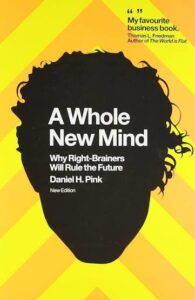
A Whole New Mind
Article #172
How psychological distance from a problem is the single best predictor of innovative solutions
A Whole New Mind by Daniel Pink makes the commercial case for exactly the kind of thinking that psychological distance enables — the big-picture, cross-domain, abstract pattern recognition that CLT identifies as the output of high-level construal. Pink argues that the economic conditions now reward this mode of thinking more than the analytical, detail-focused mode that formal education primarily trains. His argument and the CLT research reach the same conclusion from different directions: the ability to think at a distance from a problem is not a soft skill — it is the specific cognitive capability that generates the solutions analytical effort alone cannot.
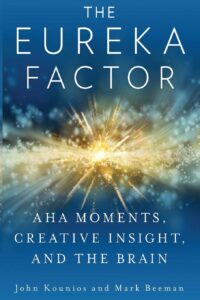
The Eureka Factor
Article #171
The neuroscience of insight — what actually happens in your brain during a eureka moment
The Eureka Factor by John Kounios and Mark Beeman is the accessible synthesis of this research programme written by the two researchers who produced the foundational findings. Kounios and Beeman are scrupulous about distinguishing what the evidence shows from what it does not, and they connect the laboratory findings to real-world experience in a way that most neuroscience writing fails to achieve. For any entrepreneur who wants to understand the mechanics of their own best thinking — what conditions produced the insights that mattered, and how to create those conditions more reliably — this is the book that answers it from primary evidence rather than popular oversimplification.
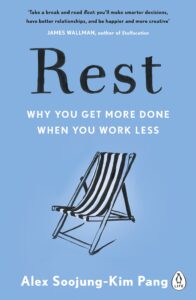
Rest
Article #170
The psychology behind why your most creative business ideas come when you stop trying to be creative
Rest by Alex Soojung-Kim Pang is the most applicable synthesis of this research for entrepreneurs. Pang documents in detail how the world's most productive scientists, writers, artists, and business builders across history worked — and the consistent pattern is not the hustle-culture prescription of maximum hours. It is intensive morning work, protected recovery, regular walking, and the deliberate creation of conditions that allow incubation to occur. Darwin walked the same path every day. Dickens walked twenty miles. Poincaré described his mathematical breakthroughs arriving during unconscious processing with precision. Pang pulls the pattern together with the neuroscience and makes it directly applicable — not as a lifestyle philosophy but as a practical system for anyone who does work that requires genuine original thinking.
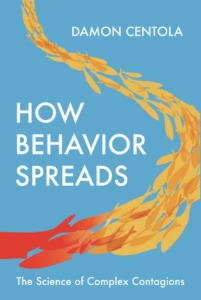
How Behavior Spreads
Article #169
How the social contagion theory explains why business trends thrive in some markets and fail in others
How Behavior Spreads by Damon Centola is the most directly relevant treatment of why the viral metaphor fails for business adoption and what the actual mechanics of behavioural spread look like. Centola synthesises a decade of complex contagion research and applies it to technology adoption, social movements, and organisational change — showing across each domain why the strategies that work for spreading information reliably fail for spreading behaviours, and what the alternative looks like in practice. For any entrepreneur trying to understand why their product is not spreading despite genuine early adoption, or why a competitor's model succeeded in one market and is stalling in another, this is the book that makes the mechanism legible rather than mysterious.
No books found matching your search.