Recommended Books
Every book on this page was recommended at the end of a courben.co article. Reading about a psychological concept is one thing — having a book that lets you live inside it is another. These recommendations exist because an article should leave you with something you can act on, not just something you can recall. The difference between forgettable and memorable is almost always what you do next.
This page contains affiliate links. If you purchase through our links we may earn a small commission at no extra cost to you. We only recommend books we genuinely believe extend the psychology explored in our articles.
Showing 18 of 506 books
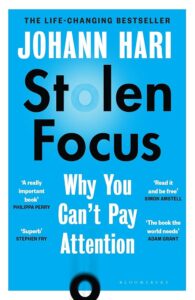
Stolen Focus
Article #150
How the mere presence of a phone on a desk reduces cognitive capacity — even when turned off
Stolen Focus by Johann Hari is the most accessible and research-grounded treatment of the full ecosystem of attention disruption — including smartphone design, notification architecture, and the social conditions that make phone separation feel costly. Hari's account of the attention economy and how it is structured to maximise the habitual approach impulses that the suppression load mechanism requires maps directly onto the Ward et al. finding. For any entrepreneur who wants to understand not just what the phone is doing to their cognitive capacity in the moment but how the design choices that produced that dependency were made, this is the most readable and most practically useful starting point.
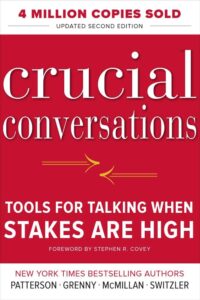
Crucial Conversations
Article #149
Why the most psychologically healthy organisations tolerate productive conflict
Crucial Conversations by Kerry Patterson, Joseph Grenny, Ron McMillan and Al Switzler is the most practically grounded treatment of how to conduct task-level disagreement without triggering the relationship conflict escalation that destroys its value. Their framework maps directly onto the interaction norm variable that Jehn and Mannix identify as the primary moderator of whether conflict stays productive. For any entrepreneur who understands the research and wants a practical skill framework for what to actually say and do when a high-stakes disagreement is beginning to tip from productive to personal, this is the most directly applicable available starting point.
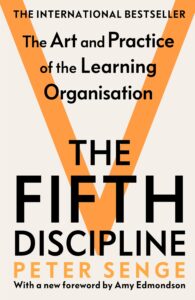
The Fifth Discipline
Article #148
The psychology of organisational memory — why companies keep making the same mistakes
The Fifth Discipline by Peter Senge is the most widely read applied treatment of how organisations can build the learning infrastructure needed to avoid the repeated mistake problem. Senge's five disciplines — systems thinking, personal mastery, mental models, shared vision, and team learning — are the practitioner answer to the Levitt and March diagnosis. His argument that organisations systematically fail to learn because their members cannot see the systemic structures producing the patterns they experience is the most accessible available account of why individual intelligence and organisational intelligence are not the same thing, and what the gap between them costs.
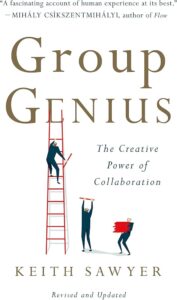
Group Genius: The Creative Power of Collaboration
Article #147
Why brainstorming sessions produce worse ideas than individuals working alone
Group Genius: The Creative Power of Collaboration by Keith Sawyer is the most practically grounded treatment of what actually makes group creative processes work — and what does not. Sawyer synthesises the brainstorming research literature and identifies the specific conditions under which group interaction adds genuine value to individual creativity as opposed to subtracting from it. His argument is not that groups are always worse than individuals but that the specific format of Osborn's face-to-face brainstorming is systematically designed to activate the mechanisms that produce the deficit, and that redesigning the process architecture along the lines the research prescribes recovers most of the lost value. For any entrepreneur who runs team ideation sessions and wants to understand both why the current format is underperforming and what specifically to replace it with, this is the most direct available starting point.

Grooming, Gossip, and the Evolution of Language
Article #146
The psychology of workplace gossip — why it serves a genuine psychological function
Grooming, Gossip, and the Evolution of Language by Robin Dunbar is the foundational text for the evolutionary account of gossip as social maintenance and the most rigorous available argument for why the two-thirds conversation statistic should reframe rather than alarm anyone thinking about workplace communication. Dunbar's central thesis — that language evolved primarily to service social networks, and that gossip is the primary vehicle through which it does so — makes the case that suppressing gossip is not a management strategy but a misunderstanding of what human social communication is fundamentally for. For any entrepreneur who wants to understand why their team gossips and what it would actually cost to prevent them, this is the most direct and most intellectually substantial starting point available.
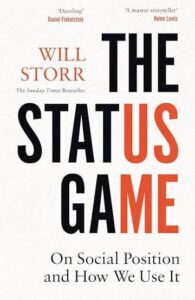
The Status Game
Article #145
How social comparison in the workplace drives both motivation and toxicity simultaneously
The Status Game by Will Storr is the most accessible contemporary treatment of how status competition — the applied form of social comparison — drives both the highest-quality human achievement and the most destructive interpersonal behaviour, and why the same mechanism produces both simultaneously. Storr draws on evolutionary psychology, neuroscience, and historical case studies to argue that the pursuit of relative status is one of the most powerful forces in human motivation — and that the environments humans create to channel it determine whether it produces the cooperation and striving that build organisations or the sabotage and malicious envy that destroy them. For any entrepreneur who wants to understand the deeper logic of why their team dynamics look the way they do, it is the most readable and most practically illuminating available account of the mechanism at work.
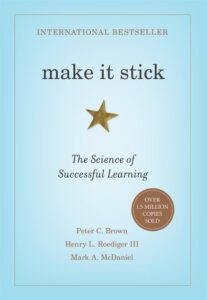
Make It Stick: The Science of Successful Learning
Article #144
Peter Brown, Henry Roediger and Mark McDaniel
Make It Stick: The Science of Successful Learning by Peter Brown, Henry Roediger and Mark McDaniel is the most accessible synthesis of CLT, the spacing effect, the testing effect, and interleaving available to a non-specialist reader. The book translates decades of learning science research into specific, counter-intuitive design principles — the most important being that the training methods that feel most productive to learners and trainers are often the least effective, while the methods that feel most difficult and uncomfortable tend to produce the most durable learning. For any entrepreneur making decisions about how to train their team, it provides the most direct available evidence that the training investment they are currently making is probably designed in exactly the way that minimises its return.

The Lucifer Effect
Article #143
The bystander effect in organisations — why nobody reports problems they all see
The Lucifer Effect by Philip Zimbardo is the most comprehensive treatment of how situational factors — including diffusion of responsibility, authority hierarchies, and the gradual normalisation of inaction — produce the bystander dynamics that allow organisational problems to persist without intervention. Zimbardo's analysis extends well beyond the Stanford prison experiment to the specific institutional structures that make good people silent in organisations where bad things are happening. For any entrepreneur who wants to understand not just the mechanisms but the systemic conditions that sustain them, and what dismantling those conditions actually requires, this book provides the most rigorous and most honest available starting point.
The Advantage
Article #142
Why reward systems based on individual performance destroy team collaboration
The Advantage by Patrick Lencioni is the most practically grounded treatment of how reward and accountability structures must be aligned with collaborative cultural values to produce genuine organisational health. Lencioni's argument — that misaligned incentives are one of the most common causes of dysfunctional team behaviour, and that cultural interventions cannot substitute for structural alignment — maps directly onto the Deutsch cooperation-competition framework. For any entrepreneur who has tried to address team collaboration problems through values and culture while leaving the reward structure unchanged, this book provides both the diagnosis of why that approach is insufficient and the most accessible available account of what structural alignment actually requires.

The Extended Mind: The Power of Thinking Outside the Brain
Article #141
How the physical environment of your office shapes the quality of decision-making
The Extended Mind: The Power of Thinking Outside the Brain by Annie Murphy Paul is the most directly relevant treatment of how the physical environment functions as a cognitive resource rather than a mere container for cognition. Paul's argument — that thinking happens not just inside the brain but through the body, through gesture, and through the physical environment — provides the theoretical foundation for the entire office environment and decision-quality research programme. For any entrepreneur who wants to understand not just the specific research findings but the deeper case for why environmental design is a cognitive intervention, this book is the most intellectually satisfying and most practically motivating starting point available.

Together: The Healing Power of Human Connection in a Sometimes Lonely World
Article #140
Why remote workers experience loneliness differently from in-office isolation
Together: The Healing Power of Human Connection in a Sometimes Lonely World by Vivek Murthy is the most rigorous and most compassionate treatment of loneliness as a public health crisis available. Murthy's framework of three dimensions of loneliness — intimate, relational, and collective — provides the conceptual structure for understanding why remote work produces a specific loneliness profile rather than a simple reduction in contact, and why different dimensions require different responses. For any entrepreneur managing a remote team or navigating remote work personally, it is the most humane and most practically grounded starting point available.
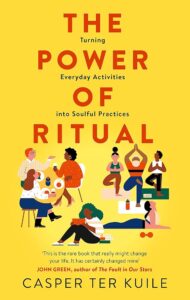
The Power of Ritual
Article #139
The psychology of workplace rituals — why random tasks and games work even when they feel pointless
The Power of Ritual by Casper ter Kuile is the most practically grounded contemporary treatment of how to design meaningful rituals in secular and workplace contexts. Ter Kuile's framework for identifying what makes any repeated practice become a genuine ritual rather than mere routine — and what distinguishes rituals that develop meaning over time from activities that remain empty habits — is directly applicable to the workplace context the article describes. For any entrepreneur who wants to understand not just what the psychology predicts about rituals but what specifically to do to build them authentically in a team environment, this is the most accessible and most practically direct available starting point.
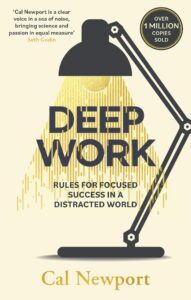
Deep Work
Article #138
Why open-plan offices reduce productivity — the psychology of environmental distraction
Deep Work by Cal Newport is the most practically grounded treatment of why cognitively demanding knowledge work requires extended periods of uninterrupted focus — and why the open-plan office is structurally incompatible with the environmental conditions that serious thinking requires. Newport's framework draws directly on the irrelevant speech effect and interruption cost research documented in this article, and his prescriptions — time-blocking, deliberate isolation, communication discipline — are the behavioural antidotes to the cognitive costs the architecture imposes. For any entrepreneur designing their own working environment or managing a team, this book provides the most direct available account of what the research demands in practice, and why protecting focused time is not a personal preference but a prerequisite for the quality of output that knowledge work requires.
Don’t Make Me Think
Article #137
Why your pricing page layout influences decisions more than the actual prices on it
Don't Make Me Think by Steve Krug is the most practically grounded available treatment of how users actually experience web interfaces — and the applied foundation for every claim in this article about how scan paths and visual hierarchy determine decisions. Krug's central insight is that users scan rather than read, and that they satisfice rather than optimise — they take the first reasonable option they encounter rather than evaluating all options to find the best one. His documentation of how this actually plays out across real interface decisions is the most direct available translation of the eye-tracking and pre-attentive processing research into actionable guidance for anyone designing a pricing page. For any entrepreneur who wants to understand not just why layout matters but specifically what to do about it, this book is the most readable and most immediately useful starting point available.
The Art of Pricing
Article #136
The psychology behind why 'most popular' plan labels increase selection by 30-40%
The Art of Pricing by Rafi Mohammed is the most practically grounded available treatment of how pricing architecture — including tier structure, anchoring, and the psychology of choice — can be deliberately designed to guide customers toward the options that serve both their needs and the seller's revenue goals. Mohammed's framework for thinking about willingness to pay across different customer segments maps directly onto the mechanisms this article describes: the "most popular" label works because it resolves genuine uncertainty about which tier fits the buyer's situation, and Mohammed's approach to segmented pricing architecture provides the strategic context for understanding where that uncertainty comes from and how to design around it. For any entrepreneur building a multi-tier pricing page from scratch, or restructuring an existing one that isn't converting, this book provides the most direct available bridge between pricing psychology and the specific decisions that determine how a pricing page actually performs.
The Culture Map
Article #135
Why odd/even pricing psychology differs across cultures — and what this means for international businesses
The Culture Map by Erin Meyer is the most practically grounded modern treatment of how cultural dimensions affect business communication and decision-making. Meyer's eight scales of cultural difference — including the communication scale that maps directly onto Hall's high/low context distinction — give the abstract pricing research concrete operational form. For any entrepreneur navigating international market entry decisions, her framework translates cultural theory into specific, actionable guidance for how to adapt not just pricing but every dimension of commercial communication to the cultural context in which it lands.
Dollars and Sense
Article #134
The psychological impact of currency symbols — why removing the currency ($) sign from menus increases spending
Dollars and Sense by Dan Ariely and Jeff Kreisler is the most accessible available treatment of why currency representations are never neutral — why the pain of paying varies with how visible the transaction is made, and how different pricing presentations modulate the intensity of that pain. Ariely's treatment of the mechanisms by which restaurants, subscription services, and luxury retailers systematically reduce the visibility of the payment act — and why this works despite consumers being intellectually aware of it — is the most readable available account of the mechanisms this article documents. For any entrepreneur making decisions about how to present prices across any medium, it is the most directly relevant starting point available.
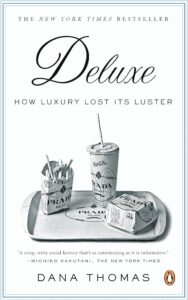
Deluxe: How Luxury Lost Its Luster
Article #133
The prestige pricing effect — why luxury products sell more at higher prices
Deluxe: How Luxury Lost Its Luster by Dana Thomas is the most practically grounded journalistic account of how luxury brands manage — and sometimes destroy — the Veblen effect through production, distribution, and licensing decisions. Thomas's reporting on LVMH, Burberry, Gucci, and the broader luxury industry over the period when mass-market expansion strategies collided with Veblen economics provides the commercial case study material that makes the abstract mechanism concrete. For any entrepreneur thinking about premium positioning and the conditions under which it holds or collapses, this is the most direct available account of what the Veblen architecture looks like from the inside of the brands that built and then damaged it.
No books found matching your search.