Recommended Books
Every book on this page was recommended at the end of a courben.co article. Reading about a psychological concept is one thing — having a book that lets you live inside it is another. These recommendations exist because an article should leave you with something you can act on, not just something you can recall. The difference between forgettable and memorable is almost always what you do next.
This page contains affiliate links. If you purchase through our links we may earn a small commission at no extra cost to you. We only recommend books we genuinely believe extend the psychology explored in our articles.
Showing 18 of 506 books
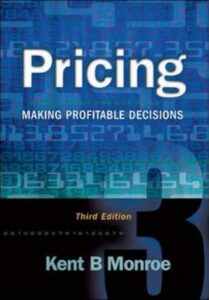
Pricing: Making Profitable Decisions
Article #132
How the Weber-Fechner law explains why a £10 increase on a £50 product feels massive but on a £500 product feels invisible
Pricing: Making Profitable Decisions by Kent Monroe is the most rigorous applied treatment of the Weber-Fechner framework in pricing available. Monroe's synthesis of the psychophysics literature and its pricing applications — including his foundational 1971 work on logarithmic price scales and acceptable price ranges — is the academic text that translated the 19th-century sensory research into something directly applicable to how entrepreneurs should think about price sensitivity, change thresholds, and the relative perception of discounts and increases. For any entrepreneur who wants to understand the perceptual mechanics of pricing rather than just its economics, it is the most direct available starting point.
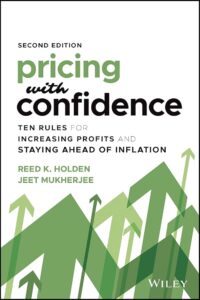
Pricing with Confidence
Article #131
Why raising your prices psychologically attracts better customers — not fewer customers
Pricing with Confidence by Reed Holden and Mark Burton is the most rigorous applied treatment available of how to raise prices without losing customers. Holden and Burton's research on customer price sensitivity segmentation — identifying which customers are genuinely price-sensitive and which are using price as a proxy for quality — is the applied operationalisation of the Rao and Monroe research that makes the article's central argument actionable. For any entrepreneur who understands intellectually that higher prices attract better customers but needs the practical framework for how to implement that insight without losing existing relationships, this book provides the most direct available starting point.
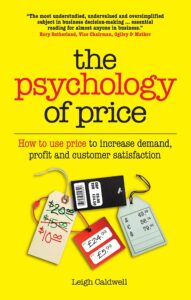
The Psychology of Price
Article #130
How context-dependent pricing means the same product can be worth £10 or £100 depending on framing
The Psychology of Price by Leigh Caldwell is the most practically grounded treatment of context-dependent pricing available. Caldwell's framework for understanding how buyers construct value — and specifically how sellers can shape that construction through context, framing, and positioning — is the applied operationalisation of Thaler's theoretical framework. Where Thaler establishes the mechanism through elegant laboratory experiments, Caldwell translates it into the specific decisions an entrepreneur makes when designing a pricing architecture: how to present, what to signal, how to frame the transaction, and which mental account to activate. For any entrepreneur who wants to understand not just that context determines value but what to actually do about it, this book is the most direct available starting point.
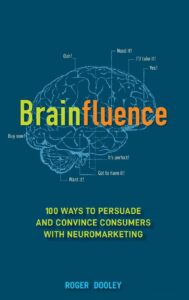
Brainfluence
Article #129
The neuroscience behind why £97 feels dramatically cheaper than £100 (charm pricing)
Brainfluence by Roger Dooley is the most practically grounded compendium of neuromarketing research applied directly to business decisions. Dooley's treatment of pricing psychology — including the left-digit effect, charm pricing, and prestige pricing — is written with the specific goal of translating laboratory findings into decisions an entrepreneur can make on Monday morning. His guidance on which pricing format works for which consumer psychology and which product category is the most directly actionable available treatment of the mechanisms this article describes, and it sits alongside the Poundstone and Ariely books as the third essential text for any entrepreneur who wants to understand what price actually communicates to the brain of the person reading it.
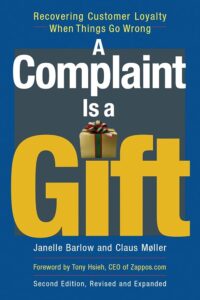
A Complaint is a Gift
Article #128
The psychology behind why customers who complain are your most valuable asset
A Complaint is a Gift by Janelle Barlow and Claus Møller is the foundational practitioner text on the complaint-as-asset philosophy, and its title is the most concise available statement of the article's central argument. Barlow and Møller operationalise the TARP research and the service recovery paradox into a practical complaint-handling methodology that addresses every dimension of the justice framework the research identifies — distributive, procedural, and interactional. Their treatment of why the customer who complains is giving the brand a gift that the silently departing customer withholds is both the most readable available account of the mechanism and the most directly applicable to any entrepreneur building a customer service system from scratch. For any entrepreneur who has been treating complaints as problems to be closed rather than intelligence to be learned from, this book is where to start.

The Future of Nostalgia
Article #127
How the nostalgia effect in marketing creates emotional connections that bypass rational evaluation
The Future of Nostalgia by Svetlana Boym is the most theoretically rigorous treatment of nostalgia as a cultural phenomenon available. Boym's distinction between restorative nostalgia — which seeks to recover the past as it was — and reflective nostalgia — which dwells on longing without expecting recovery — maps directly onto the two types of nostalgic marketing that produce different consumer responses. Restorative nostalgia produces the urgency of the limited edition and the retro console; reflective nostalgia produces the slower, richer emotional engagement of brands like Coca-Cola and Levi's. Understanding which type a brand is activating is the first design decision in any nostalgia-based marketing strategy, and Boym's framework is the most rigorous available starting point for making that distinction clearly.
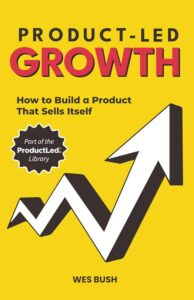
Product-Led Growth
Article #126
The endowment effect in free trials — why customers value something more after they've used it for 7 days
Product-Led Growth by Wes Bush is the most practically grounded treatment of how to design free trial and freemium experiences that deliberately engineer ownership psychology. Bush's activation and engagement frameworks are operationalisations of Pierce et al.'s psychological ownership routes into product design decisions — turning the academic mechanisms of control, intimacy, and self-investment into specific product features and onboarding sequences. For any entrepreneur building a product with a free tier or trial period, it provides the most direct available translation of the endowment effect research into the actual decisions that determine whether a trial converts.
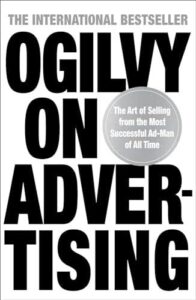
Ogilvy on Advertising
Article #125
The bizarreness effect — why unusual marketing is remembered better than conventional marketing
Ogilvy on Advertising by David Ogilvy is the foundational practitioner text on advertising memorability, written by someone who spent decades studying what actually makes advertisements remembered and acted upon. Ogilvy's research predates the formal bizarreness effect literature by years but independently documents many of the same principles — the memory advantage of unexpected creative approaches, the retrieval advantage of distinctive brand imagery, and the commercial cost of advertising that blends into its environment rather than standing out from it. His account of why the most creative advertisements are rarely the safest ones, and why the safest advertisements are rarely the most effective ones, provides both the practitioner evidence and the creative philosophy for applying the distinctiveness principle in practice. For any entrepreneur making decisions about creative strategy, it is the most practically grounded available account of what the psychology of memory means for the work of advertising.
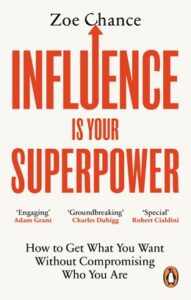
Influence Is Your Superpower
Article #124
Why limited-time offers work psychologically even when customers know they're marketing tactics
Influence Is Your Superpower by Zoe Chance is the most recent applied treatment of how influence mechanisms operate even when targets are fully aware of them. Chance's research at Yale on why knowing about a persuasion tactic rarely provides immunity from it is the most direct academic treatment of this article's central question — and her account of the mechanisms through which emotional responses outpace and override rational awareness provides both the theoretical framework and the practical self-defence tools for anyone who wants to understand why they keep buying things they did not plan to buy. For any entrepreneur using urgency tactics in their own marketing, the book provides equal insight into why those tactics work and what distinguishes their ethical from their manipulative application.
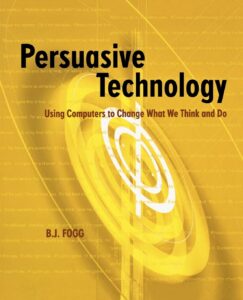
Persuasive Technology: Using Computers to Change What We Think and Do
Article #123
The psychology of trust in digital environments — what makes strangers give you their credit card details
Persuasive Technology: Using Computers to Change What We Think and Do by BJ Fogg is the primary source for the Prominence-Interpretation Theory, the web credibility research, and the foundational framework for understanding how digital environments produce trust and persuasion. Fogg spent years at Stanford's Persuasive Technology Lab studying the specific mechanisms through which computers and websites change what people believe and what they do — and the research documented in this book is the most rigorous available account of why design is not an aesthetic preference but a trust mechanism, why the manipulation-detection heuristic fires when it does, and how digital environments can be structured to produce the credibility signals that strangers need before they will commit to a transaction. For any entrepreneur building a digital product or online sales environment, this is the most directly applicable available treatment of the psychological architecture that determines whether strangers will trust them with their money.
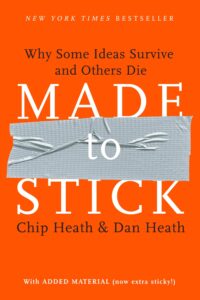
Made to Stick
Article #122
The psychology behind why longer landing pages convert better for high-consideration purchases
Made to Stick by Chip and Dan Heath is the most applicable treatment of why specific, concrete, story-based information structures are more persuasive than abstract claims — and the most direct guide to how to build the argument architecture that makes a long landing page convert. Their SUCCESs framework — Simple, Unexpected, Concrete, Credible, Emotional, Stories — maps directly onto the information architecture of high-converting long-form pages, providing a practical template for turning the ELM's central route insight into actual page structure. For any entrepreneur writing copy for a high-consideration product, it is the most useful bridge between the psychology of persuasion and the craft of building a page that answers every question before the buyer has to ask it.
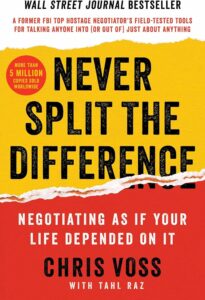
Never Split the Difference
Article #121
Why customers anchor to the first price they see and all subsequent prices are judged relative to it
Never Split the Difference by Chris Voss is the most practically grounded negotiation treatment of the anchoring mechanism available. Voss, a former FBI hostage negotiator, develops the "extreme anchor" technique — setting a first offer that is deliberately high to establish a reference point well above the seller's actual target, giving room for the buyer to feel they have achieved a concession while still landing at a favourable outcome. His treatment of how to set anchors, how to respond to incoming anchors from buyers, and the psychological dynamics of adjustment from a reference point provides the most immediately applicable account of the pricing anchoring research for anyone conducting sales conversations. For any entrepreneur who negotiates pricing, partnerships, or contracts, it is the most direct available translation of the anchoring research into practical technique.
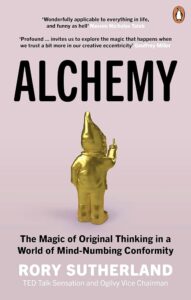
Alchemy
Article #120
How the scarcity principle drives urgency without feeling manipulative when done ethically
Alchemy by Rory Sutherland is the most practically irreverent treatment available of why psychological value — including the value generated by genuine scarcity — consistently outweighs rational utility value in determining what people want and what they pay for it. Sutherland's argument, drawn from his decades at Ogilvy and his engagement with behavioural economics research, is that entrepreneurs who understand the psychological mechanisms of value creation can generate genuine desirability without competing purely on functional attributes or price. His treatment of why illogical pricing and genuine exclusivity create value that rational product improvements cannot replicate provides the philosophical framework for understanding scarcity as a legitimate value-creation tool rather than merely a manipulation tactic. For any entrepreneur who wants to understand why perceived scarcity generates desire that abundant availability cannot match — and how to use that understanding ethically — this is the most readable and most thought-provoking starting point available.

Contagious
Article #119
Why social proof works better when it comes from people similar to the buyer (not celebrities or influencers)
Contagious by Jonah Berger is the most practically grounded available treatment of the social transmission mechanisms that make peer influence so powerful relative to celebrity or top-down endorsement. Berger's research on why products and ideas spread through peer networks — documenting that word-of-mouth conversations drive approximately 20 to 50 percent of purchasing decisions across categories — provides both the mechanism and the commercial scale of peer social proof. His framework for understanding what makes peer-shared social proof credible and memorable is the most directly applicable account of similarity-based influence for an entrepreneur building a customer acquisition strategy.

Priceless
Article #118
Why customers who pay more report higher satisfaction (the price-quality heuristic)
Priceless by William Poundstone is the most accessible and comprehensive treatment of the psychology of pricing available. Poundstone synthesises the price-quality heuristic research, the anchoring effects that govern price perception, and the neurological evidence including the Plassmann wine study into a coherent framework for understanding why prices are never just numbers — they are psychological signals that alter what people expect, what they experience, and how much they enjoy it. For any entrepreneur making pricing decisions, this book provides the most readable available account of the psychological forces governing how price is perceived and what it does to the people who pay it.
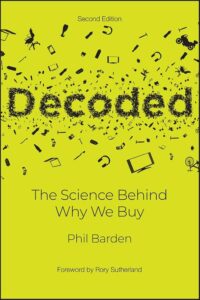
Decoded
Article #117
The psychology of why customers say they want X but buy Y (stated vs revealed preferences)
Decoded by Phil Barden is the most practically applicable treatment of the gap between what consumers say and what actually drives their purchase decisions. Barden spent over 25 years as a senior marketer at Unilever, Diageo, and T-Mobile before immersing himself in decision science, and the book combines that practitioner experience with a rigorous treatment of the neuroscience and behavioural economics research. His reward-minus-pain framework for understanding purchase decisions is the most directly usable available model for translating the stated-revealed preference gap into product and pricing decisions. For any entrepreneur who has discovered that what customers said they wanted in research and what they actually bought were different things, this book provides the most direct and most practically grounded explanation of why — and what to design for instead.
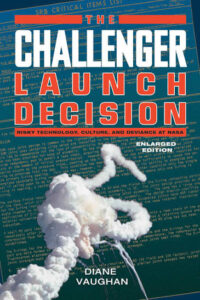
The Challenger Launch Decision
Article #116
Why diverse leadership teams make slower decisions but fewer catastrophic mistakes
The Challenger Launch Decision by Diane Vaughan is the most forensically detailed available account of how a homogeneous organisational culture produces catastrophic decision failures. Vaughan spent years analysing every meeting, memo, and decision in the lead-up to the Challenger disaster, and her central finding — that the engineers and managers involved were not negligent or irrational but were following the shared cognitive framework of a deeply homogeneous culture that had normalised risk through repeated exposure — is the most precise available documentation of what the absence of genuine dissent costs. For any entrepreneur building a leadership culture, this book provides the clearest real-world account of how the mechanisms described in this article play out at their most consequential extreme.
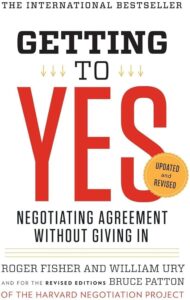
Getting to Yes
Article #115
The psychology of trust repair after broken promises
Getting to Yes by Roger Fisher and William Ury is the most widely used applied treatment of how to structure explicit commitments in negotiation and professional contexts in ways that reduce the vulnerability that promise-making creates. The Schweitzer research established that making an explicit promise amplifies both the initial trust gain and the damage when the promise is broken — and Fisher and Ury's principled negotiation framework provides the practical alternative: structuring agreements around interests, criteria, and options rather than explicit personal commitments, which achieves the same alignment without creating the amplified downside that a broken promise carries. For any entrepreneur who finds themselves regularly making commitments they cannot consistently keep, this book offers the most directly useful framework for how to build reliable agreements that do not require the kind of explicit promise-making that turns every delivery failure into a trust violation.
No books found matching your search.