Recommended Books
Every book on this page was recommended at the end of a courben.co article. Reading about a psychological concept is one thing — having a book that lets you live inside it is another. These recommendations exist because an article should leave you with something you can act on, not just something you can recall. The difference between forgettable and memorable is almost always what you do next.
This page contains affiliate links. If you purchase through our links we may earn a small commission at no extra cost to you. We only recommend books we genuinely believe extend the psychology explored in our articles.
Showing 18 of 506 books
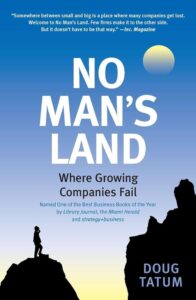
No Man’s Land
Article #96
How scaling your business changes relationships you have with others in predictable psychological ways
No Man's Land by Doug Tatum is the most focused available treatment of the specific relational and psychological changes that occur in the growth zone between small business and scalable company. His central concept maps directly onto what this article describes: too big for the original peer relationships, too small for the institutional support structures of a mature company, caught between two worlds with the navigational tools of neither.
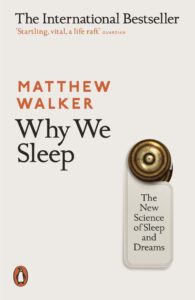
Why We Sleep
Article #95
The neuroscience of growing a business — why your brain physically adapts (and resists) each stage of scale
Why We Sleep by Matthew Walker is the most accessible research-grounded treatment of sleep's role in prefrontal cortex maintenance, memory consolidation, and emotional regulation. Walker's research provides the practical protective intervention that the stress-damage mechanism demands — and makes the case, with unusual rigour, that the entrepreneur who treats sleep as a productivity variable to be minimised is dismantling the neural architecture their business depends on.
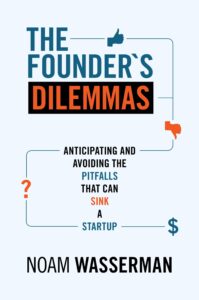
The Founder’s Dilemmas
Article #94
How entrepreneurial attachment to early decisions creates 'strategic debt' that compounds over time
The Founder's Dilemmas by Noam Wasserman is the most empirically grounded treatment of how early entrepreneurial decisions create compounding constraints. Drawing on data from over 10,000 entrepreneurs, Wasserman traces how co-founder selection, equity splits, role definitions, and investor choices establish path dependencies that determine outcomes long after those decisions feel reversible. For any entrepreneur who wants to understand which of their current decisions are accumulating as strategic debt, it is the most direct starting point available.

Thinking in Systems
Article #92
Why companies that grow fastest psychologically are the ones that slow down on purpose at specific milestone
Thinking in Systems by Donella Meadows provides the most rigorous available framework for understanding why deliberate pauses function as leverage points in complex adaptive systems. Her treatment of feedback loops, delays, and the counterintuitive behaviour of systems under pressure explains precisely why the pause that appears to slow a growing company is often the intervention that accelerates it at a deeper level. For any entrepreneur who wants to understand the systems logic beneath the reflection research, it is the most intellectually grounded starting point available. -
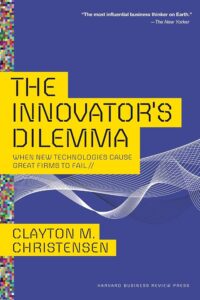
The Innovator’s Dilemma
Article #93
How the psychology of organisational inertia means fast-growing companies become rigid at exactly the wrong time
The Innovator's Dilemma by Clayton Christensen is the most widely read applied treatment of how the competency trap and structural inertia combine to make successful companies systematically unable to respond to disruption. His framework is the accessible expression of the Hannan, Freeman, Levinthal and March mechanisms — translated into cases that are concrete enough to recognise in a company you are building. For any entrepreneur who wants to understand how the thing they are building right now is also building the rigidity that will constrain it later, it is the most direct starting point available. -
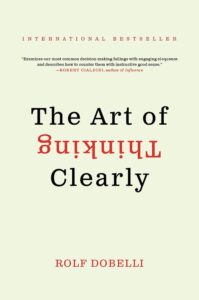
The Art of Thinking Clearly
Article #91
Why the concept of 'choice architecture' means whoever designs the decision environment controls the outcome
The Art of Thinking Clearly by Rolf Dobelli is a concise, practitioner-oriented catalogue of the cognitive biases that choice architecture exploits and counteracts. Where most treatments of behavioural economics build gradually toward practical application, Dobelli moves immediately to it — each of the 99 chapters is a named bias or error with a concrete example and a direct implication for decisions. For any entrepreneur who wants a working reference for the specific mechanisms underlying each choice architecture tool, it is the most immediately usable starting point available.
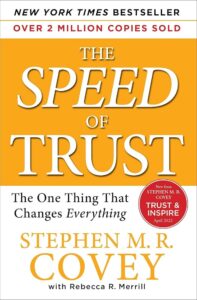
The Speed of Trust
Article #89
The behavioural economics of trust — why it takes years of positive interactions to build and one negative interaction to destroy
The Speed of Trust by Stephen M.R. Covey is the most widely read applied treatment of trust in business contexts. His framework for quantifying the commercial cost of low-trust organisations — the "trust tax" that low-trust environments impose on every transaction, and the "trust dividend" that high-trust environments generate — grounds the asymmetric trust research in measurable business outcomes. For any entrepreneur who wants to understand what the neural architecture of trust asymmetry costs in operational and financial terms, it is the most direct available translation of the mechanism into business language.
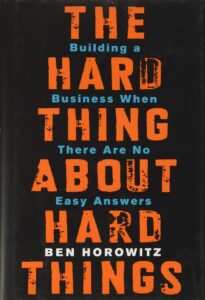
The Hard Thing About Hard Things
Article #90
The psychological stages of business growth and why each one breaks an entrepreneur in a different way
The Hard Thing About Hard Things by Ben Horowitz is the most psychologically honest first-person account available of what each stage of company growth does to the person running it. His "struggle" section is a direct phenomenological account of the Greiner crisis structure experienced from the inside — without the distance of theory, and without the reassurance that it gets easier.
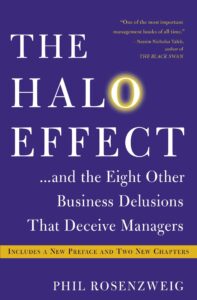
The Halo Effect
Article #86
How the concept of 'bounded rationality' means every business strategy is limited by the cognitive capacity of the people making it
The Halo Effect by Phil Rosenzweig is the most direct application of bounded rationality to business strategy available. His argument — that most business strategy writing mistakes correlation for causation, and attributes strategic success to qualities that are only visible in retrospect — is a sustained case study of hindsight bias and the halo effect producing distorted strategic frameworks at scale. For any entrepreneur who has drawn strategic lessons from business success stories, this book provides the most rigorous available account of why those lessons are less reliable than they appear.
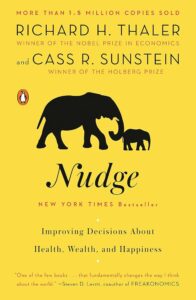
Nudge
Article #87
The behavioural economics of information overload and why more options reduce decision quality
Nudge by Richard Thaler and Cass Sunstein is the most directly applicable treatment of how choice architecture can counteract information overload in practice. Their concept of the choice architect — the person who designs the environment in which decisions are made — reframes the entrepreneur's role: not just deciding, but designing the conditions under which good decisions become more likely. Default options, simplified menus, and strategic sequencing are all tools that work by respecting working memory constraints rather than ignoring them.
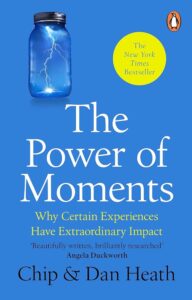
The Power of Moments
Article #88
How the peak-end rule means customers judge their entire experience by two moments
The Power of Moments by Chip and Dan Heath is the most applied available treatment of how to deliberately engineer peak moments in customer and employee experiences. Their four elements of defining moments — elevation, insight, pride, and connection — provide an operationalisation of what the peak should be designed to achieve. For any entrepreneur who understands the peak-end rule theoretically and wants a practical framework for acting on it, this book is the most direct available bridge between the research and the design decisions.
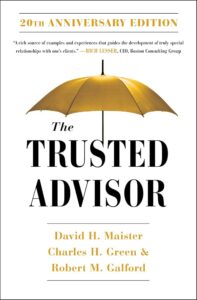
The Trusted Advisor
Article #85
The behavioural economics of pricing transparency — when honesty increases willingness to pay
The Trusted Advisor by David Maister, Charles Green and Robert Galford is the most directly applicable treatment of how trust functions as a commercial mechanism. Their Trust Equation — credibility plus reliability plus intimacy, divided by self-orientation — maps precisely onto the conditions under which pricing transparency increases willingness to pay. Transparency increases credibility and reduces perceived self-orientation simultaneously, which are the two highest-leverage variables in the equation. For any entrepreneur making decisions about how much to reveal about their pricing, this book provides the most practically grounded framework for understanding what trust actually consists of and how it is built or destroyed.
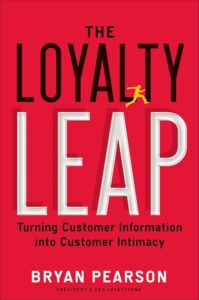
The Loyalty Leap
Article #84
The behavioural economics behind why loyalty programmes work (and when they stop working)
The Loyalty Leap by Bryan Pearson is the most directly applicable treatment of loyalty programme design from a practitioner who spent decades running one of the world's largest data-driven loyalty operations. Pearson's account of what actually drives genuine customer commitment — as distinct from transactional repeat purchase — addresses the attitudinal versus behavioural loyalty gap the article identifies directly. His treatment of why programmes that generate impressive membership numbers consistently fail to generate the emotional attachment that prevents switching provides both the diagnostic framework and the practical design principles for building something that works beyond the first redemption cycle.
Made to Stick
Article #83
Why the 'identifiable victim effect' means one customer story drives more action than statistical analysis of thousands
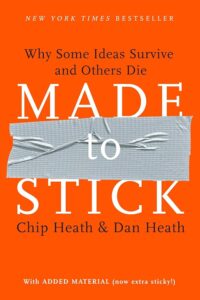
Made to Stick by Chip and Dan Heath is the most practically applicable treatment of why concrete, personal, individual stories outperform abstract data in every communication context. Their principles of stickiness — concrete, emotional, story-based — are directly rooted in the identifiable victim effect literature, and their practical guidance on how to make an idea land with the emotional system rather than just the analytical one translates the research into something immediately usable for any entrepreneur who communicates their product's value to investors, customers, or teams.
Influence
Article #83
Why the endowment effect means your worst customers are the ones who got your product for free
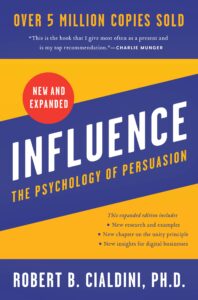
Influence by Robert Cialdini is the most directly applicable treatment of why the commitment-consistency principle produces better customer behaviour than free access alone. His account of how the act of commitment — including financial commitment — drives subsequent loyal behaviour provides the psychological antidote to the free-customer entitlement problem, and remains the most practically grounded available treatment of why paying for something changes how people relate to it.
Hooked
Article #81
The psychology behind why 'free' is not a price — it's an emotional trigger that bypasses rational evaluation
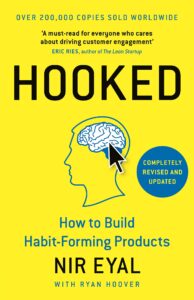
Hooked by Nir Eyal is the most directly applicable treatment of how free access is used to establish the behavioural loops that eventually make paid conversion feel natural rather than like a loss. His hook model — trigger, action, variable reward, investment — explains the product design architecture that makes the zero price effect work in the entrepreneur's favour across the full acquisition-to-conversion journey, not just at the point of entry.
The Tyranny of Metrics
Article #80
The behavioural economics of employee incentives — why most bonus structures backfire psychologically
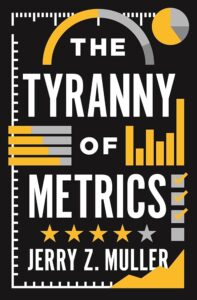
The Tyranny of Metrics by Jerry Muller is the most comprehensive available treatment of what happens when organisations optimise for what is measured rather than what matters. His case analyses across healthcare, education, policing, and corporate performance management provide the applied evidence base for Goodhart's Law at institutional scale. For any entrepreneur who has ever noticed that a metric they introduced seemed to produce the right numbers while something less visible got worse, this book explains the mechanism with unusual clarity and rigour.
Beyond Greed and Fear
Article #79
How the disposition effect makes entrepreneurs sell winning strategies too early and hold losing ones too long
Shefrin is one of the researchers who named the disposition effect, and this book is the most comprehensive available treatment of its practical consequences. His empirical trading data and case analyses translate directly to business decision-making, and his account of how the same psychological architecture that makes people risk-averse when ahead makes them risk-seeking when behind gives the article's central mechanism its most rigorous available grounding. For any entrepreneur who recognises the pattern described in the article — and most will, once they know what to look for — this is the most direct and most practically grounded starting point.
No books found matching your search.