Recommended Books
Every book on this page was recommended at the end of a courben.co article. Reading about a psychological concept is one thing — having a book that lets you live inside it is another. These recommendations exist because an article should leave you with something you can act on, not just something you can recall. The difference between forgettable and memorable is almost always what you do next.
This page contains affiliate links. If you purchase through our links we may earn a small commission at no extra cost to you. We only recommend books we genuinely believe extend the psychology explored in our articles.
Showing 18 of 506 books
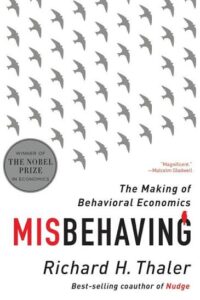
Misbehaving
Article #78
The endowment effect in business — why entrepreneurs overvalue their company
Thaler coined the term "endowment effect" in 1980 and this book is his first-person account of the research and its implications. His treatment of how ownership systematically distorts valuation — including the wine economist example and the mug experiments — gives the mechanism a clarity and candour that secondary accounts rarely match. For any entrepreneur approaching a valuation or exit conversation, it is the most useful available preparation: written by the researcher whose work established the problem, with the honesty of someone who has spent decades watching intelligent people make the same predictable mistake.
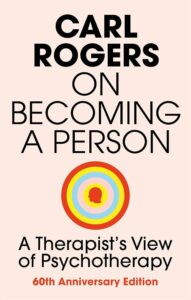
On Becoming a Person
Article #77
Why your self-worth is not something you build — it's something you uncover by removing what's hiding it
Rogers's landmark collection contains the clearest available first-person account of what the uncovering process actually looks and feels like — both from the therapist's perspective and from the clients he worked with across decades of clinical practice. His argument that self-worth was always present beneath the conditions of worth installed by others, and that therapeutic work is not construction but excavation, is made here with a warmth and precision no secondary account matches. For any entrepreneur who has spent years trying to build self-worth through achievement and found the foundation keeps shifting, this is the most direct available account of why that approach cannot work and what the alternative involves.
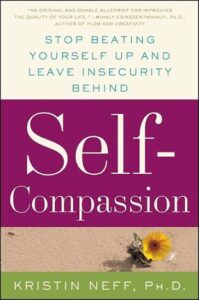
Self-Compassion
Article #76
How the gap between your 'ideal self' and 'actual self' generates either motivation or despair depending on one psychological variable
Neff's research establishes self-compassion as the specific psychological variable that keeps the ideal-actual gap motivating rather than depleting. Her randomised controlled trial evidence shows that a compassionate inner relationship with the gap — treating the distance between actual and ideal as information rather than indictment — produces measurably better resilience, approach motivation, and learning from failure than self-criticism. For any entrepreneur whose internal response to falling short of their ideal has become punishing rather than motivating, this book provides both the most evidence-based case for why that is counterproductive and the most practical account of what the alternative actually looks like.

To Have or To Be?
Article #75
Why the question 'who am I without my achievements' is the most important question you'll ever sit with
Fromm's distinction between having mode — a self constituted by what it possesses, produces, or performs — and being mode — a self that exists prior to and independently of those outputs — is the philosophical and psychological foundation for the article's central question. His argument that modern society systematically produces having-mode selves at the expense of being-mode ones, and that genuine psychological freedom requires distinguishing what you are from what you achieve, anticipates the self-determination theory research that followed it by decades. For any entrepreneur whose sense of self feels more contingent than they would like, it is the most rigorous and most humane starting point available.

The Redemptive Self
Article #74
How your identity attaches to your struggles and why letting go of problems can feel like losing yourself
McAdams's life story interview research — tracking how people construct narratives around adversity, and what distinguishes redemptive arcs from contamination ones — is both the most rigorous available treatment of why struggles become self-defining and the most practically useful account of what makes resolution possible without self-erasure. His finding that people with redemptive narrative identities show consistently better long-term wellbeing, more generative behaviour, and greater resilience gives the article's core argument its strongest empirical grounding. For any entrepreneur whose identity feels more tightly bound to their difficulties than they would have expected, this is the most honest starting point available.

The Antidote
Article #73
Why authenticity is psychologically exhausting in environments that reward performance
Burkeman's exploration of why conventional positive thinking and performance optimisation backfire — and his case for a "negative path" to genuine wellbeing that acknowledges difficulty rather than suppressing it — provides the most accessible available bridge between the academic mechanisms of emotional labour and a practical takeaway. His treatment of why constant positive self-presentation exhausts rather than energises, and why accepting negative emotional states rather than managing them produces more sustainable functioning, maps directly onto the article's core argument. For any entrepreneur who has found that trying harder to perform composure makes things worse rather than better, this book offers the most readable corrective available.
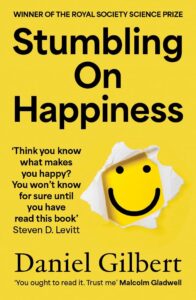
Stumbling on Happiness
Article #72
The psychology of 'arriving' — why reaching your goals rarely produces the feeling you expected
Gilbert's research on affective forecasting — why people are systematically poor at predicting what will make them happy — is the most directly applicable treatment of the arrival fallacy for a general audience. His findings on why the imagination consistently misrepresents future emotional states, and why the gap between anticipated and actual satisfaction is both predictable and persistent, maps precisely onto the article's central argument. For any entrepreneur who has hit a significant goal and felt confused by the absence of the expected feeling, this book provides the most readable and most research-grounded explanation of why that confusion is both universal and entirely predictable.
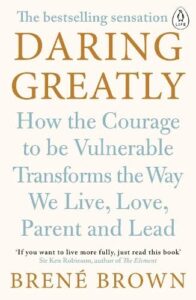
Daring Greatly
Article #71
Why your relationship with failure reveals more about your identity than your relationship with success
Brown's research on shame resilience and vulnerability is the most direct available treatment of why failure threatens identity for some people and not others. Her distinction between shame — the belief that the failure means something fundamental about who you are — and guilt — the belief that you did something wrong — maps precisely onto the article's central mechanism. For any entrepreneur who has noticed that setbacks land differently for them than the situation alone would justify, this book provides both the most accessible account of why and the most evidence-based case for what genuine resilience actually requires.

Playing and Reality
Article #69
The psychological cost of performing a version of yourself that isn't real
Winnicott's papers on the true self and false self — the foundational clinical treatment of how the performed, compliant self develops in response to relational demands — provide the deepest available clinical grounding for the article's core argument. His account of how the false self develops not through deliberate deception but through the gradual subordination of authentic experience to the requirements of the relational environment maps precisely onto the entrepreneurial performance pattern. For any entrepreneur who has sensed a widening gap between who they appear to be and who they actually are, this is the most honest and most clinically rigorous account of how that gap forms and what it costs.

I Thought It Was Just Me (But It Isn’t)
Article #68
The psychology of 'not enough' — where the feeling comes from and why achievement never fixes it
Brown's earlier and more research-dense treatment of shame — as distinct from the more accessible Gifts of Imperfection — provides the deepest available account of where the "not enough" feeling comes from, how it operates as a distinct psychological mechanism, and what the research supports as its antidote. Her treatment of shame as the specific emotional experience of conditional worth — the felt sense that the self, as it is without performance, is insufficient — maps directly onto the article's core argument. For any entrepreneur for whom the "not enough" feeling has become the permanent background of their working life, this is the most honest and most research-grounded starting point.
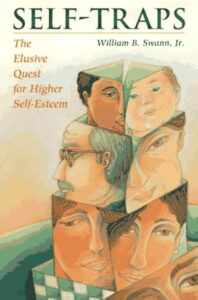
Self-Traps
Article #67
The neuroscience of self-image: your brain literally filters reality to match who you think you are
Swann is the primary researcher on self-verification theory, and this book is his accessible synthesis of the research for a general audience. His treatment of why people actively seek feedback that confirms negative self-views — and what it actually takes to genuinely change the self-concept, as opposed to what people typically try — is the most directly relevant applied text for the article's mechanisms. For any entrepreneur whose experience of success consistently fails to update their self-image in the way it logically should, this book provides both the most precise explanation of why the filtering system works against them and the most evidence-based account of what changes it.

The Presentation of Self in Everyday Life
Article #66
The psychology behind why you become a different person depending on who you're with
Goffman's foundational sociological text established the dramaturgical framework — the idea that all social interaction involves performance calibrated to audience, stage, and script — and remains the most precise and most readable account of why contextual self-variation is not inauthenticity but the normal architecture of social cognition. His front stage/backstage distinction provides the most useful available framework for distinguishing adaptive contextual flexibility from the more problematic absence of a coherent backstage self. For any entrepreneur who has noticed significant variation in who they are depending on who they are with, this book provides the clearest available explanation of why that is normal and when it becomes something worth examining.
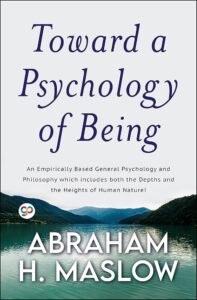
Toward a Psychology of Being
Article #65
Why your self-concept was built by other people and you've been living inside their blueprint ever since
Maslow's foundational humanistic argument — that the self most people present to the world is a construction designed to meet social needs rather than an expression of genuine nature, and that psychological growth involves progressively distinguishing the constructed self from the actual one — provides the most authoritative humanistic counterpart to the Cooley-Mead sociological framework the article draws on. His treatment of self-actualisation not as a destination but as a process of continuously shedding externally imposed definitions of the self maps directly onto the blueprint metaphor. For any entrepreneur who has sensed they are living inside someone else's idea of who they should be, this is the most grounded available starting point.

The Power of Now
Article #64
You are not your job title, your net worth, or your productivity — the psychology of identity fusion
Tolle's treatment of identity — specifically his argument that the self most people inhabit is a construction built from roles, achievements, and social positions rather than anything more fundamental — provides an unusual but directly relevant counterpoint to the psychology research on identity fusion. His framework for distinguishing the constructed identity from the observing awareness beneath it maps onto the article's central claim in a way that neither purely academic nor purely clinical texts achieve. For entrepreneurs whose sense of self has become entirely synonymous with what they produce, this book offers the most widely-read available account of what exists beneath that identification.
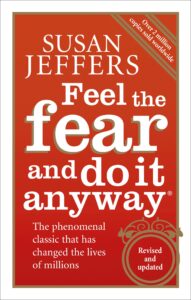
Feel the Fear and Do It Anyway
Article #63
The psychology of emotional courage — why feeling afraid and acting anyway is neurologically different from not feeling afraid
Jeffers's treatment of fear as a permanent feature of a meaningful life rather than a problem to be solved before action becomes possible is grounded in the psychological research on approach motivation and the neurological distinction between fear suppression and fear tolerance. Her central argument — that the goal is not to eliminate fear but to expand the range of actions available in its presence — maps precisely onto the neurological distinction the article draws. For entrepreneurs who have been waiting to feel ready before acting on something important, this book provides both the reframe and the most accessible available account of what acting from courage rather than from fearlessness actually looks like.
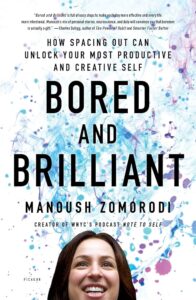
Bored and Brilliant
Article #62
How your relationship with boredom reveals everything about your relationship with yourself
Zomorodi's research-based treatment of boredom — drawing on neuroscience research showing that the default mode network, active during boredom, is responsible for creativity, self-reflection, and meaning-making — makes the case that boredom is not an absence of experience but a specific and valuable cognitive state. Her treatment of why the compulsive avoidance of boredom through stimulation and distraction correlates with reduced creative capacity, self-knowledge, and psychological flexibility maps directly onto the article's central argument. For entrepreneurs who have lost the ability to sit with emptiness, this book provides both the neuroscience of why that matters and a practical framework for recovering the capacity.
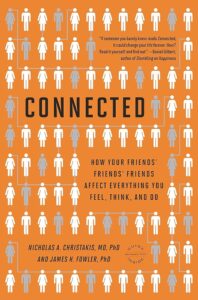
Connected
Article #61
Emotional contagion: you unconsciously absorb the psychological states of people around you
Christakis and Fowler's large-scale network research — tracking how behaviours, emotions, and psychological states spread through social networks across three degrees of separation — provides the most empirically rigorous available treatment of emotional contagion at a systems level. Their data on how happiness, depression, anxiety, and loneliness spread through connected populations gives the individual-level emotional contagion mechanism its broader social architecture. For entrepreneurs who build and inhabit teams, this book makes the case that the psychological states present in a network are not individual variables — they are environmental ones with measurable downstream effects.
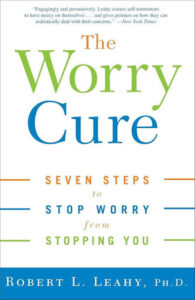
The Worry Cure
Article #60
The psychological phenomenon of 'anticipatory anxiety' — suffering from things that haven't happened
Leahy's cognitive therapy-based treatment of worry is the most practically structured available account of how anticipatory anxiety operates and what actually reduces it. His research on the specific cognitive distortions that sustain worry — including the overestimation of probability, the underestimation of coping capacity, and the use of worry as a form of psychological control — maps directly onto the anticipatory anxiety pattern. For entrepreneurs whose mental energy is disproportionately consumed by futures that haven't happened, this book provides both the clearest explanation of why and the most evidence-based practical framework for working with it.
No books found matching your search.