Recommended Books
Every book on this page was recommended at the end of a courben.co article. Reading about a psychological concept is one thing — having a book that lets you live inside it is another. These recommendations exist because an article should leave you with something you can act on, not just something you can recall. The difference between forgettable and memorable is almost always what you do next.
This page contains affiliate links. If you purchase through our links we may earn a small commission at no extra cost to you. We only recommend books we genuinely believe extend the psychology explored in our articles.
Showing 18 of 506 books

Strangers to Ourselves
Article #44
The difference between who you are and who you think you are (and why the gap matters)
Wilson's research on the adaptive unconscious — the vast majority of mental processing that happens outside conscious awareness — provides the empirical foundation for understanding why self-knowledge is so much harder to obtain than most people assume. His findings demonstrate that people are often poor judges of their own motivations, preferences, and even emotional states, not due to dishonesty but due to the genuine limits of introspective access. For an entrepreneur trying to close the gap between their self-image and their actual patterns of behaviour, this book provides both the sobering research on how wide that gap typically is and practical guidance on how to narrow it.
The Brain That Changes Itself
Article #43
Your personality is not fixed — the neuroscience of how your brain rewires itself throughout your life and what it means for your business
Doidge's synthesis of neuroplasticity research remains the most accessible and comprehensive treatment of how the adult brain continues to physically reorganise itself in response to experience throughout life. His case studies demonstrate that even deeply entrenched patterns of thought and behaviour are not permanent fixtures but the current state of an ongoing process. For an entrepreneur who has assumed that certain traits — risk tolerance, confidence, decision-making style — are simply who they are, this book provides the evidence that these are current configurations rather than fixed identities, with direct implications for how deliberately they can be shifted.
The Happiness Trap
Article #42
You are not your thoughts — how cognitive defusion changes the way you experience stress, doubt, and fear
Harris's accessible synthesis of Acceptance and Commitment Therapy research provides the clearest available treatment of cognitive defusion — the practice of relating to thoughts as mental events rather than as facts or commands. His research-grounded case studies demonstrate how the relationship with a thought, rather than the thought's content, determines its psychological impact. For an entrepreneur whose mind generates a constant stream of doubt, fear, and catastrophic predictions, this book offers a genuinely different way of relating to that stream — not eliminating it, but changing what it's allowed to do.

Burnout: The Secret to Unlocking the Stress Cycle
Article #41
Why the 'just push through it' narrative in startup/hustle culture is psychologically equivalent to telling someone to ignore a broken leg
Already recommended for the "pushing through" article. The Nagoski sisters' central argument — that stress and stressors are different things, and that the stress response itself requires completion rather than suppression — is the most direct scientific rebuttal to hustle culture's "push through it" framing available. Their research demonstrates that ignoring the stress response doesn't make it disappear; it accumulates, in much the same way that ignoring a physical injury doesn't heal it. For anyone steeped in a culture that treats exhaustion as a personal failing rather than a physiological signal, this book provides the corrective.
Designing Your Life
Article #40
Why entrepreneurs who maintain their real identity outside their business recover faster from setbacks
Burnett and Evans's research-informed framework, drawing on design thinking applied to life and career decisions, includes a specific and well-evidenced argument about the dangers of a single-point identity — building a sense of self entirely around one role or pursuit. Their research on resilience after setbacks consistently finds that people with multiple sources of identity and meaning recover faster and more completely than those for whom one pursuit represents their entire sense of self. For an entrepreneur whose identity has become entirely fused with their business, this book offers both the evidence for why that's risky and a practical framework for building a broader foundation.
Drive
Article #39
The neuroscience of entrepreneurial motivation — what happens in your brain when purpose-driven work meets exhaustion
Already recommended for a previous article on financial freedom. Pink's synthesis of self-determination theory — establishing autonomy, mastery, and purpose as the genuine drivers of sustained motivation — is equally relevant here from the opposite direction: what happens when those drivers are present but exhaustion has depleted the capacity to act on them. His research on the difference between motivation and capacity provides a useful framework for entrepreneurs who feel purpose-driven but find that purpose alone is not sufficient when exhaustion has set in.
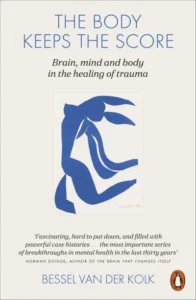
The Body Keeps the Score
Article #38
The surprisingly common experience of entrepreneurial dissociation during high-stress periods
Already recommended for the stress responses article. Van der Kolk's treatment of dissociation as a nervous system response to overwhelming stress — rather than a sign of weakness or instability — provides the clearest available account of why this experience is both common and physiologically explicable. His research establishes dissociation as a spectrum that ranges from mild and everyday to clinically significant, which is directly relevant to entrepreneurs experiencing milder versions during sustained high-stress periods. For anyone who has noticed feeling strangely distant from their own experience during the most demanding stretches of building a business, this book provides both validation and explanation.
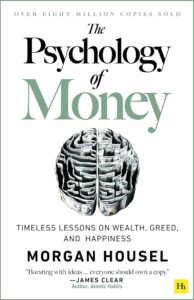
The Psychology of Money
Article #37
How childhood experiences with money create unconscious financial scripts that run your business decisions
Housel's research-grounded argument — that financial decisions are far less about spreadsheets and far more about the stories people were told about money, scarcity, and security in their formative years — is the most accessible treatment of financial scripts available. His case studies illustrate how two people with identical financial information can make completely different decisions because of entirely different internalised relationships with risk and money. For an entrepreneur whose financial decisions sometimes surprise even themselves, this book offers a way of recognising where those patterns originated.
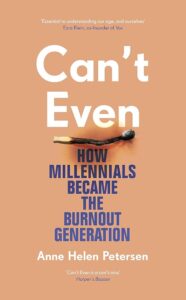
Can’t Even
Article #36
Why self-care advice is psychologically inadequate for the unique pressures of entrepreneurship
Petersen's research and reporting on burnout culture makes a specific and important argument: that generic self-care advice consistently fails because it treats structural problems as personal ones, offering individual solutions to conditions that are fundamentally systemic. Her analysis of why bubble baths and meditation apps cannot address burnout caused by genuinely unsustainable demands is directly applicable to entrepreneurship, where the demands are often self-imposed but no less structural in their effects. For anyone who has tried the standard self-care toolkit and found it insufficient, this book explains why that isn't a personal failing.

Dopamine Nation
Article #35
The psychology of entrepreneurial substance use — why entrepreneurs self-medicate with alcohol, caffeine, and stimulants
Lembke's research on the brain's reward system and how chronic high-stimulation environments recalibrate what feels necessary just to function normally is the most directly relevant treatment of self-medication patterns available. Her clinical work establishes that substances used to manage the demands of high-pressure environments are not separate from those environments' psychological effects — they are a direct response to them. For an entrepreneur who has noticed their relationship with caffeine, alcohol, or stimulants has shifted from occasional to structural, this book provides both the neuroscience and a path toward understanding what is actually happening.

The All-or-Nothing Marriage
Article #34
The psychology of entrepreneurial relationships — why building a business comes at a cost
Finkel's research on how modern relationships have come to carry an unprecedented psychological weight — expected to provide not just companionship but self-actualisation, identity, and meaning — is directly relevant to understanding why entrepreneurial relationships come under such specific strain. His findings on the resource allocation problem, where time and attention devoted to one all-consuming pursuit inevitably draws from another, map precisely onto the entrepreneur-partner dynamic. For anyone trying to understand why building a business seems to cost more in their relationships than the hours alone would suggest, this book provides the research explaining why.
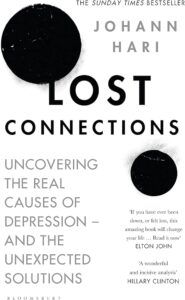
Lost Connections
Article #32
The unmentioned statistics on entrepreneur mental health (and why they are worse than you think)
Hari's investigation into the social and structural causes of depression and anxiety — and his argument that much of what gets treated as individual psychological failure is in fact a predictable response to specific conditions — provides essential context for the entrepreneurial mental health statistics. His research reframes the question from "what is wrong with entrepreneurs" to "what about this environment reliably produces these outcomes." For anyone confronting how widespread these statistics actually are, this book offers both validation and a genuinely different way of understanding why.
The Body Keeps the Score
Article #31
The neuroscience of stress responses in entrepreneurs — fight, flight, freeze, and fawn in business contexts
Van der Kolk's research on how the nervous system processes threat — and how the four stress responses of fight, flight, freeze, and fawn become automatic patterns that operate well beyond the situations that originally produced them — is the most comprehensive treatment of this mechanism available. While his clinical focus is trauma, the underlying neuroscience of the stress response applies directly to the high-stakes, high-uncertainty environment of entrepreneurship. For anyone who has noticed they respond to business pressure in a pattern that doesn't quite match the actual situation, this book explains where that pattern came from and how it operates.
Burnout: The Secret to Unlocking the Stress Cycle
Article #30
How to recognise when "pushing through" has crossed from resilience into psychological self-harm
The Nagoski sisters' research on the physiological stress response — and specifically on the difference between the stressor itself and the stress response it triggers — provides the clearest available framework for distinguishing genuine resilience from sustained self-harm dressed up as toughness. Their central finding, that the stress response must be physiologically completed rather than simply tolerated, directly addresses why "pushing through" without ever processing the stress accumulates into something that eventually breaks. For any entrepreneur who has lost the ability to tell the difference between pushing through and harming themselves, this book offers both the science and a genuinely practical way forward.
Fooled by Randomness
Article #29
The illusion of control — why entrepreneurs believe they have more influence over outcomes than they actually do
Taleb's treatment of how thoroughly human cognition underestimates the role of chance — and overestimates the role of skill and intention — in determining outcomes is the foundational text on the illusion of control. His research-grounded argument that successful people routinely misattribute luck to skill, and that this misattribution becomes more dangerous the more successful someone becomes, speaks directly to the entrepreneurial context. For anyone whose business outcomes feel like a direct reflection of their own decisions, this book provides an uncomfortable but genuinely useful recalibration.
Essentialism
Article #28
The psychology of opportunity cost — why saying yes to one thing means saying no to ten others
McKeown's argument — that the inability to see trade-offs clearly is one of the most expensive habits a person can have — is grounded in research on decision fatigue, attention, and the compounding cost of diffuse commitment. His framework for evaluating opportunities not by what they offer but by what they cost in terms of everything else maps precisely onto the opportunity cost mechanism. For an entrepreneur facing a constant stream of opportunities that each look reasonable in isolation, this book provides the clearest available case for why "good" is often the enemy of "right," and how to tell the difference.
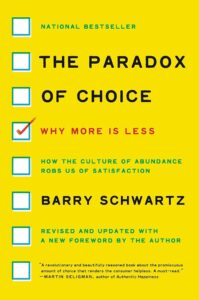
The Paradox of Choice
Article #27
The psychology of good "enough decisions" versus "perfect ones"
Schwartz's research on the psychological costs of maximising — the pursuit of the objectively best option — versus satisficing, settling for a sufficiently good one, is directly relevant to the pressure entrepreneurs feel around every decision. His findings show that maximisers consistently report lower satisfaction, more regret, and more decision fatigue than satisficers, even when their outcomes are objectively similar or better. For an entrepreneur paralysed by the search for the perfect choice, this book offers both the research explaining why that search is often self-defeating and a genuinely workable alternative.
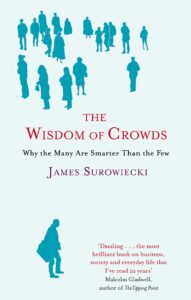
The Wisdom of Crowds
Article #26
The bandwagon effect — how seeing competitors do something makes you think it's the right strategy
Surowiecki's exploration of when collective behaviour produces genuinely better outcomes and when it produces collective error is the most useful available framework for understanding the bandwagon effect specifically. His research draws a sharp distinction between independent aggregation of diverse judgements, which can be remarkably accurate, and the kind of correlated copying that produces bubbles, fads, and strategic herd behaviour. For an entrepreneur watching competitors all move in the same direction, this book provides the tools to distinguish a genuine signal from a self-reinforcing illusion of consensus.
No books found matching your search.