Recommended Books
Every book on this page was recommended at the end of a courben.co article. Reading about a psychological concept is one thing — having a book that lets you live inside it is another. These recommendations exist because an article should leave you with something you can act on, not just something you can recall. The difference between forgettable and memorable is almost always what you do next.
This page contains affiliate links. If you purchase through our links we may earn a small commission at no extra cost to you. We only recommend books we genuinely believe extend the psychology explored in our articles.
Showing 18 of 506 books
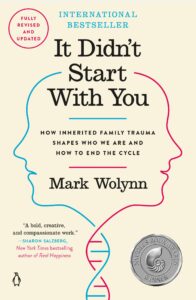
It Didn’t Start With You
Article #59
Why your emotional triggers are the most valuable map to your unresolved psychological material
Wolynn's research on inherited family trauma and the way unresolved material passes between generations provides an unusually precise framework for understanding why specific triggers carry more emotional weight than the present situation alone can explain. His core language — the core complaint, the core sentence, the core trauma — gives readers a structured method for tracing a trigger back to its origin rather than simply managing its surface expression. For any entrepreneur whose emotional responses to specific situations consistently exceed what the situation warrants, this book offers the most practically structured map available.

Together
Article #58
Why you can feel lonely in a room full of people who love you
Murthy, former US Surgeon General, draws on public health research, clinical experience, and neuroscience to make the case that loneliness is one of the most significant and most overlooked health crises of modern life. His distinction between intimate loneliness, relational loneliness, and collective loneliness maps precisely onto the specific experience of feeling isolated despite being surrounded by people who demonstrably care. For entrepreneurs who have struggled to articulate why they feel alone despite being well-connected, this book provides both the most credible epidemiological framing and the most compassionate account of what is actually happening.
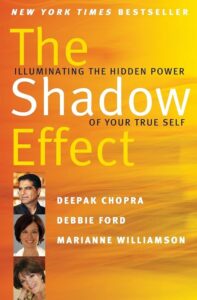
The Shadow Effect
Article #56
Why the emotions you refuse to feel don't disappear — they drive your behaviour from the shadows
Drawing directly on Jung's concept of the shadow — the repository of everything the self has disowned, suppressed, or refused to acknowledge — this book provides the most accessible available treatment of how unfelt emotions continue to generate behaviour from outside conscious awareness. Ford's contribution in particular translates the Jungian framework into concrete, recognisable patterns without losing the depth of the original concept. For any entrepreneur who suspects their most puzzling behavioural patterns are being driven by something they haven't looked at directly, this is the most readable entry point into the territory.

Waking the Tiger
Article #55
Why you emotionally overreact to small things when it's never about the small thing
Levine's somatic experiencing research establishes that unprocessed emotional experiences are stored in the nervous system and continue to generate physiological activation long after the original event has passed. His treatment of how seemingly minor triggers produce disproportionate responses — because they are activating stored material rather than responding to the present situation — is the most precise available account of the overreaction mechanism. For any entrepreneur who has noticed their reaction to something small was clearly about something larger, this book provides both the neurobiological explanation and a genuinely different framework for working with it.
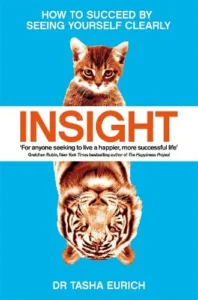
Insight
Article #44
Why self-awareness is uncomfortable and why that discomfort is the entire point
Eurich's large-scale research programme on self-awareness — involving thousands of participants across multiple studies — produced one of the most counterintuitive findings in applied psychology: that the vast majority of people who believe they are self-aware are not, and that the path to genuine self-awareness runs directly through discomfort rather than around it. Her distinction between internal self-awareness and external self-awareness, and her research on why introspection often makes self-knowledge worse rather than better, maps precisely onto why the discomfort of genuine self-examination is not a side effect but the mechanism itself. For any entrepreneur who has confused feeling self-aware with actually being so, this is the most rigorous available starting point.
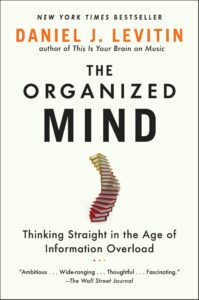
The Organized Mind
Article #45
Why you're psychologically addicted to certainty in a world that will never provide it
Levitin's neuroscience-grounded account of how the brain manages information, uncertainty, and decision-making under conditions of cognitive overload provides the clearest available explanation of why certainty feels like a biological need rather than a preference. His treatment of how the brain's pattern-recognition systems actively generate the feeling of certainty as a regulatory mechanism — independent of whether certainty is warranted — explains the addiction pattern with unusual precision. For entrepreneurs operating in genuinely uncertain environments who find that uncertainty produces an almost physical need to resolve itself, this book offers both the neuroscience of why and a practical architecture for functioning without the resolution the brain keeps demanding.

Self-Compassion
Article #46
Why the way you talk to yourself determines the ceiling of everything you'll ever achieve
Already recommended in previous articles. Neff's research on self-compassion reframes the inner voice question in a way that most treatments of self-talk miss entirely: the issue is not just what you say to yourself but the relationship quality of the voice saying it. Her randomised controlled trial evidence establishes that a compassionate inner voice produces measurably better performance, resilience, and learning from failure than a critical one — not because it is softer, but because it activates approach motivation rather than the avoidance and threat responses that self-criticism produces. For any entrepreneur whose internal voice has become their harshest critic, this book provides the most evidence-based case for why that is costing them and what the alternative actually looks like.
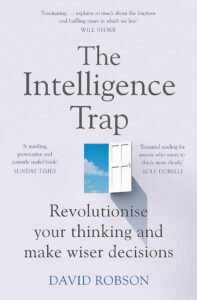
The Intelligence Trap
Article #47
How your brain constructs a version of reality that confirms what you already believe
Robson's research synthesis on why intelligent, educated, and experienced people are often more susceptible to specific cognitive errors — not less — is the most directly applicable treatment of the reality-confirmation mechanism for a high-achieving audience. His treatment of how expertise, confidence, and motivated reasoning combine to produce increasingly elaborate and convincing versions of what the person already believed maps precisely onto the predictive processing argument. For any entrepreneur who has assumed that their intelligence protects them from this pattern, Robson's evidence is both the most sobering and the most practically useful corrective available.
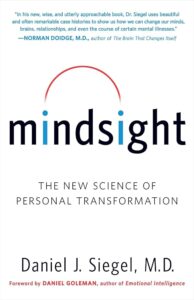
Mindsight
Article #??
Why understanding your own mind is not self-indulgence — it's the most practical skill you'll ever develop
Siegel's research on interpersonal neurobiology — the study of how the mind, brain, and relationships shape one another — provides the most scientifically grounded case available for why self-knowledge is a practical skill rather than an indulgence. His concept of mindsight, the capacity to perceive one's own mental processes with enough clarity to work with them deliberately, is supported by neuroimaging research showing that this capacity is both learnable and directly associated with better emotional regulation, decision-making, and relational functioning. For any entrepreneur who has been told that introspection is a distraction from execution, this book provides the neuroscience that makes the opposite case with unusual rigour.
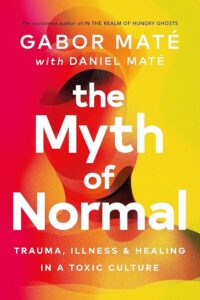
The Myth of Normal
Article #54
The psychological cost of 'keeping it together' when everything inside you is falling apart
Maté's most recent and most comprehensive work argues that the chronic suppression of authentic emotional states — driven by social, professional, and cultural pressure to perform composure — is one of the primary mechanisms behind a wide range of physical and psychological conditions. His treatment of the specific cost of sustained emotional performance, grounded in decades of clinical work and research on the mind-body connection, is the most direct available account of what keeping it together accumulates into over time. For any entrepreneur who has been maintaining composure for years and has started to notice the cost in their body as well as their mind, this is both the most honest and the most rigorously grounded starting point.
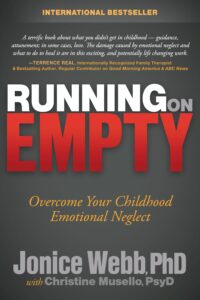
Running on Empty
Article #51
The difference between suppressing emotions and processing them (and why one destroys you slowly)
Webb's clinical research on emotional neglect — the specific developmental pattern in which emotions are consistently dismissed, minimised, or ignored rather than processed — provides the most direct account of what sustained suppression does over a lifetime rather than just in a single stressful period. Her treatment of how the habit of not processing emotions develops, what it costs across relationships and decision-making, and what distinguishes suppression from genuine emotional processing is directly relevant to the entrepreneurial context where toughness is culturally rewarded and emotional processing is rarely modelled. For any entrepreneur who recognises that they have been suppressing for longer than the current pressures would explain, this is the most useful starting point.
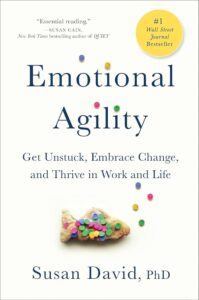
Emotional Agility
Article #50
Why you can't control your emotions, but you can change your relationship with them
David's research programme on psychological flexibility — developed through her work at Harvard Medical School — provides the most directly applicable treatment of the shift from emotional control to emotional agility. Her framework distinguishes between being hooked by emotions, bottling them, and developing the capacity to move through them with awareness and intention. The research behind the book establishes that emotional agility, not emotional management, predicts performance, resilience, and wellbeing under sustained pressure. For entrepreneurs whose default response to difficult internal states is suppression or avoidance, this book offers both the evidence for why those strategies fail and a genuinely practisable alternative.
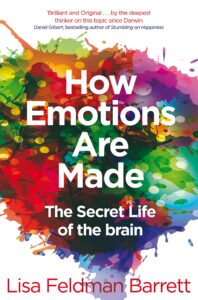
How Emotions Are Made
Article #49
The neuroscience behind why you can't think your way out of an emotional problem
Barrett's theory of constructed emotion — the research-grounded argument that emotions are not hardwired responses triggered by the brain but active constructions built from prediction, interoception, and past experience — reframes the entire question of why cognitive approaches fail for emotional problems. Her work establishes that emotions are generated by the same predictive architecture that builds all experience, which means they cannot simply be overridden by rational thought from the outside. For entrepreneurs who have tried to think their way through anxiety, grief, or fear and found it doesn't work, this book provides the most current neuroscientific explanation of why that is, and what the architecture actually requires instead.
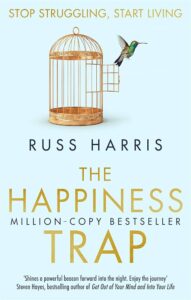
The Happiness Trap
Article #50
Why you can't control your emotions, but you can change your relationship with them
Already recommended in previous articles. Harris's ACT-based synthesis is the most accessible available treatment of the shift from emotional control to emotional flexibility — the research-grounded argument that attempting to control or suppress emotions makes them more powerful while changing one's relationship to them reduces their influence. His defusion techniques, which create observational distance between the person and their emotional experience without requiring the emotion to change or disappear, map directly onto the article's central claim. For any entrepreneur whose default response to difficult emotions is to manage or suppress them, this book offers both the evidence for why that strategy is counterproductive and a genuinely workable alternative.
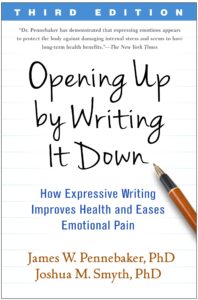
Opening Up by Writing It Down
Article #51
The difference between suppressing emotions and processing them (and why one destroys you slowly)
Already recommended in previous articles. Pennebaker's four decades of research on expressive writing and emotional disclosure — including his foundational discovery that translating difficult emotional experiences into language produces measurable physiological and psychological benefits, while suppression produces measurable costs — is the most direct scientific account of why the distinction between suppressing and processing is not motivational but biological. His documentation of the specific immune function, cortisol, and health consequences of sustained suppression gives the article's central claim its most rigorous empirical grounding.
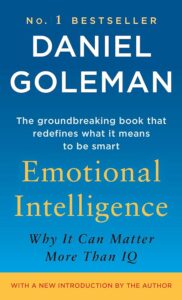
Emotional intelligence
Article #52
The neuroscience of emotional hijacking — what happens in your brain during the 6 seconds before you react
Goleman's synthesis of the neuroscience research on the amygdala, the prefrontal cortex, and the hijacking mechanism — where subcortical threat detection overrides cortical regulation before conscious awareness catches up — remains the most widely read and most accessible treatment of the neural architecture behind emotional reactivity. His framing of the amygdala hijack, grounded in LeDoux's foundational neuroscience research, gives the article's central mechanism its clearest available popular science treatment. For any entrepreneur who has noticed that their worst decisions tend to follow moments of emotional activation, this book explains the specific neural sequence responsible.
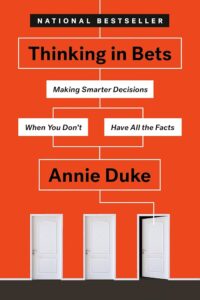
Thinking in Bets
Article #53
How to recognise when you're making a decision from fear disguised as logic
Duke's research-informed framework for distinguishing good decision processes from good outcomes — and her specific treatment of how emotional states, particularly fear and loss aversion, generate post-hoc rationalisations that present as logical analysis — is the most practically applicable treatment of the fear-disguised-as-logic pattern available. Her background as a professional poker player gives the book a grounded, unsentimental quality that abstracts well to entrepreneurial decision-making. For any entrepreneur who has noticed that their most elaborate logical justifications tend to coincide with their most anxious moments, this book provides both the mechanism and a structural way of catching it before it costs.
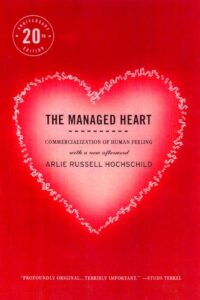
The Managed Heart
Article #54
The psychological cost of 'keeping it together' when everything inside you is falling apart
Hochschild's foundational research on emotional labour — the sustained effort of managing emotional expression to meet social or professional expectations — provides the most rigorous available account of what keeping it together actually costs physiologically and psychologically over time. Her documentation of the specific burnout, depersonalisation, and loss of emotional access that sustained surface acting produces maps directly onto the entrepreneurial experience of maintaining composed, confident, in-control presentation while the internal experience is something entirely different. For any entrepreneur who has been keeping it together for longer than they can remember, this book names what that is doing precisely.
No books found matching your search.