Recommended Books
Every book on this page was recommended at the end of a courben.co article. Reading about a psychological concept is one thing — having a book that lets you live inside it is another. These recommendations exist because an article should leave you with something you can act on, not just something you can recall. The difference between forgettable and memorable is almost always what you do next.
This page contains affiliate links. If you purchase through our links we may earn a small commission at no extra cost to you. We only recommend books we genuinely believe extend the psychology explored in our articles.
Showing 18 of 506 books

Exit, Voice, and Loyalty
Article #168
The cross-cultural psychology of customer complaints — why behaviour and opinions differ in different markets
Exit, Voice, and Loyalty by Albert Hirschman is the foundational text for the three-pathway framework that the entire cross-cultural complaint literature builds on. Published in 1970, Hirschman's analysis of when individuals choose exit, voice, or loyal waiting as responses to declining quality was originally a work of political economy — but its application to consumer behaviour and then to cross-cultural consumer behaviour has made it one of the most consequential frameworks in the field. The book is short, precise, and dense with insight. For any entrepreneur trying to understand why their customers in different markets behave differently when dissatisfied, and why the same measurement instrument produces opposite types of error in different cultural contexts, this is the framework that makes those differences intelligible.

The Spirit Level
Article #167
How the psychology of economic inequality shapes consumer behaviour and business opportunity simultaneously
The Spirit Level by Richard Wilkinson and Kate Pickett is the primary text — the most comprehensive empirical treatment of how inequality changes the psychological environment for everyone within a society, not just those at the bottom. Their cross-national comparison across 23 wealthy countries demonstrates that virtually every social outcome — mental health, physical health, trust, educational performance, social mobility — is worse in more unequal societies, at every income level. The book does not argue for a specific political programme. It argues from evidence that the psychological environment produced by inequality is measurably different from the one produced by equality, and that the difference shapes behaviour in ways that most economic analysis misses entirely. For any entrepreneur trying to understand the market they are operating in — what people actually want, why they want it, and what psychological needs their product genuinely serves — this is the book that provides the structural framework.

Bad Blood
Article #166
The psychology of business ethics across cultures — why 'right' and 'wrong' in business are psychologically constructed
Bad Blood by John Carreyrou is the most compelling recent case study of the moral judgment-action gap operating in a high-profile entrepreneurial context. The Theranos story is not primarily a story about a dishonest person — it is a story about the gradual normalisation of small ethical violations, each individually rationalised, accumulating into a catastrophic institutional failure. Carreyrou's reconstruction of how that process unfolded — who knew what, when, what they told themselves, and how the cultural environment of Silicon Valley's move-fast ethos made each incremental step feel acceptable — is the most accessible and most precise available documentation of the psychological mechanisms this article describes. For any entrepreneur building in an environment that rewards performance and punishes doubt, this is the book that most clearly illustrates what the normalisation of small ethical compromises actually looks like from the inside.

iGen
Article #165
How digital culture is creating a new generation of entrepreneurs with fundamentally different psychological profiles
iGen by Jean Twenge is the most comprehensive empirical treatment of how digital culture has altered the psychological profiles of the generation now entering entrepreneurship. Twenge's longitudinal data — drawn from surveys of millions of young people across decades — tracks the specific changes in attention, social connection, anxiety, independence, and risk orientation that digital nativity has produced. She is not alarmist and she is not dismissive: she is precise about what the evidence shows and honest about what it does not. For any entrepreneur trying to understand the generation they are hiring, the customers they are serving, or the psychological profile they themselves bring to building — this is the book that provides the empirical foundation rather than the generational stereotype.
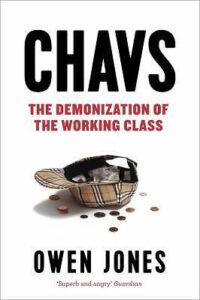
Chavs: The Demonization of the Working Class
Article #164
The psychology behind why some business strategies work in London but fail in Manchester despite being in the same country
Chavs: The Demonization of the Working Class by Owen Jones is the most accessible and most honest treatment of the specific class psychology that shapes consumer and employee behaviour in northern English cities — and of how consistently that psychology is misread, dismissed, and commercially underserved by London-based businesses and media. Jones' central argument is that working-class identity in northern cities is not a deficit to be improved but a coherent cultural identity that is systematically devalued by institutions that mistake London's values for universal ones. For any entrepreneur building a business in Manchester or serving northern markets, this book provides the psychological framework for understanding why your audience responds the way it does — and why the London playbook will always underperform until it is replaced with something that genuinely respects the environment it is trying to serve.

The New Argonauts
Article #163
How migration psychology shapes entrepreneurial behaviour in immigrant-founded businesses
The New Argonauts by AnnaLee Saxenian is the most empirically rigorous treatment of how skilled immigrant engineers and entrepreneurs created the global technology ecosystem by moving between Silicon Valley and their countries of origin. Saxenian's research is the foundational evidence for bicultural competence as a competitive advantage — her account of how Taiwanese and Indian engineers in Silicon Valley leveraged their dual cultural positioning to build industrial networks that neither their American nor their origin-country counterparts could replicate is the clearest available demonstration of what the acculturation research documents at the level of individual psychology. It is also a genuinely compelling read about how global economic geography gets made, and why the human capital flows that produce it are more consequential than almost any other force in contemporary economic development.
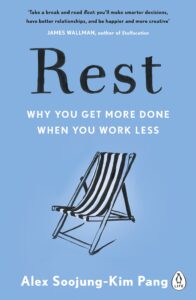
Article #162
Why the 'hustle culture' narrative is a specifically American psychological construct that actually damages entrepreneurs globally
Rest by Alex Soojung-Kim Pang is the most research-grounded treatment of the empirical case against hustle culture's core claim that more hours produce more output. Pang synthesises the deliberate practice research, the creativity research, and the cognitive performance literature to show systematically that the world's most productive people — Darwin, Dickens, Poincaré, contemporary elite performers across every field — work fewer hours than hustle culture prescribes, and that the rest they protect is not recovery from their work but a constitutive part of what makes it good. The book does not argue for laziness. It argues, with substantial evidence, that the hustle culture prescription is not the path to the outcomes it promises — and that the alternative is both more sustainable and more effective.
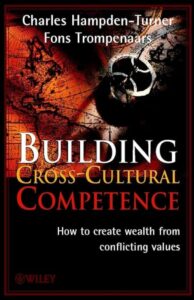
Building Cross-Cultural Competence
Article #161
The psychology of status in business — why some cultures respect wealth and others respect expertise
Building Cross-Cultural Competence by Charles Hampden-Turner and Fons Trompenaars is the practical extension of Riding the Waves of Culture specifically applied to the business competence problem — how to navigate the achieved/ascribed dimension and others when the two parties' value systems are in direct conflict. Where Riding the Waves is the diagnosis, this book is the treatment. The section on achieved versus ascribed status and how to reconcile these values-in-conflict without either party losing face is the most practically grounded treatment of the dimension available. For any entrepreneur who has found themselves in the specific situation of needing to establish credibility with a counterpart whose status signals they cannot read or cannot produce, this is the book that provides the framework and the specific guidance for doing so without misrepresenting either culture's requirements.

World 3.0
Article #160
Why businesses that adapt to local psychology outperform businesses that export their home culture
World 3.0 by Pankaj Ghemawat is the most rigorous empirical treatment available of the distances — cultural, administrative, geographic, and economic — that determine when adaptation is necessary and when standardisation is viable. Ghemawat's CAGE framework gives entrepreneurs a practical analytical tool for making the standardisation-adaptation decision rather than defaulting to intuition or organisational inertia. He is also one of the most effective debunkers of the globalisation myth — the assumption that the world has become culturally homogeneous enough that local adaptation is no longer necessary. His data shows it has not, and his framework shows what to do about that. For any entrepreneur navigating international markets or building a product for multiple cultural contexts, this is the book that replaces instinct with a disciplined analytical approach.
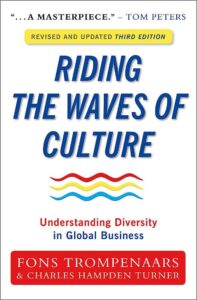
Riding the Waves of Culture
Article #159
How the psychology of time orientation (past, present, future) varies by culture and affects strategic planning
Riding the Waves of Culture by Fons Trompenaars and Charles Hampden-Turner is the most practically grounded applied treatment of cultural time orientation and its business consequences. Trompenaars' seven-dimension framework — developed from over 60,000 questionnaires across 100 countries — includes the past, present, and future orientation model that extends meaningfully beyond Hofstede's binary. For any entrepreneur who has experienced the specific frustration of a cross-cultural strategic conversation that went nowhere despite both parties being genuinely engaged, this book provides the most useful diagnostic framework for understanding what was actually happening. It is not an academic text — it is built around real business situations and written to be immediately applied.
Startup Communities
Article #158
Why entrepreneurial ecosystems have distinct psychological profiles that shape every business within them
Startup Communities by Brad Feld is the most practically grounded treatment of how entrepreneurial ecosystem psychological profiles are built, and why most attempts to engineer them fail. Feld's central argument — that startup communities are built by entrepreneurs, not governments or institutions, and that the cultural conditions must lead rather than follow the structural ones — is the practitioner translation of the Stam and Isenberg academic frameworks. For any entrepreneur trying to understand why building in one city feels different from building in another, or anyone trying to actively contribute to building something in their own ecosystem, Feld is the clearest and most honest guide available. He is also unusually candid about what does not work, which makes the book more useful than most ecosystem literature that focuses on success stories alone.

The Presentation of Self in Everyday Life
Article #157
Why the concept of 'face' in East Asian business psychology applies universally but is named differently
The Presentation of Self in Everyday Life by Erving Goffman is the most comprehensive treatment of face-work as a universal feature of human social interaction. Goffman's dramaturgical framework — front stage, back stage, impression management — provides the theoretical infrastructure for understanding how face operates across all cultural contexts before culturally specific expressions are overlaid. It is not a business book, but it is the book that explains why every business interaction involves the management of something that Chinese culture calls mianzi and Western culture manages without naming. It is also unusually readable for a work of academic sociology — Goffman writes with genuine wit, and the observations about social behaviour feel recognisable rather than remote.

The Protestant Ethic and the Spirit of Capitalism
Article #156
Why the 'Protestant work ethic' is a psychological construct that affects business decisions even in secular entrepreneurs
The Protestant Ethic and the Spirit of Capitalism by Max Weber is more readable than its reputation suggests, particularly in the Penguin Classics translation. Weber is often cited and rarely read, which produces a significantly impoverished understanding of what the argument actually says — and what it does not say. The thesis is more careful, more hedged, and more psychologically precise than most summaries convey. For any entrepreneur who has noticed patterns in their own relationship to work, failure, external help, or leisure that feel out of proportion to their conscious beliefs, reading Weber directly is the most efficient way to understand where those patterns come from. It is not a long book, and it is considerably more interesting than its reputation as a sociology classic would suggest.

Article #155
How language shapes business thinking — why bilingual entrepreneurs make different strategic decisions in different languages
Through the Language Glass by Guy Deutscher is the most rigorously honest treatment available of what language actually does and does not do to thought. Deutscher is careful — more careful than most popular treatments of this topic — to distinguish between what the evidence genuinely supports about linguistic relativity and what is mythology. He takes seriously both the limits of the Sapir-Whorf hypothesis and the genuine findings about how the categories a language makes available shape what its speakers find easy to notice and easy to think. For any bilingual entrepreneur who has sensed that their thinking shifts between languages and wants to understand what is actually happening rather than what popular intuition suggests, this is the book that handles the question with the precision it deserves. It is also a genuinely enjoyable read — Deutscher writes about linguistics the way the best science writers handle physics, making technical questions feel urgent and accessible without simplifying them into falsehood.

The Hidden Injuries of Class
Article #154
How the psychology of social class affects entrepreneurial risk-taking and growth ambition
The Hidden Injuries of Class by Richard Sennett and Jonathan Cobb is the most psychologically rich account of what class origin actually costs at the level of identity, dignity, and self-concept. Published in 1972 and still unsurpassed in its depth, the book is built around extended interviews with working-class men navigating a society that simultaneously promises meritocracy and structures itself against them. What Sennett and Cobb document is not resentment or deficit — it is the specific emotional architecture that class installs: the relationship to ambition, to self-worth, to the experience of being judged, and to the effort required to maintain dignity across class lines. For any entrepreneur trying to understand why certain patterns in their risk behaviour or growth ambition feel hard to shift despite their current circumstances, this is the book that reaches furthest into the mechanism. It is qualitative counterpart to the Kraus research — not data, but experience made precise.
The Culture Map
Article #153
How cultural dimensions predict which business strategies will work in different countries
The Culture Map by Erin Meyer is the most practically useful contemporary tool for entrepreneurs navigating specific bilateral relationships. Meyer's eight cultural scales intersect with and extend Hofstede's dimensions, and her approach is built around real business interaction — meetings, negotiations, feedback conversations, decision-making processes — rather than abstract scores. Where Hofstede gives you the map, Meyer gives you what to do when you are actually in the room. Highly readable, immediately applicable, and particularly good for anyone who has experienced the confusion of a cross-cultural professional relationship that went wrong without knowing exactly why.
Start With Why
Article #152
The psychology of organisational identity — why 'who we are' matters more than 'what we do' for maximum productivity
Start With Why by Simon Sinek is the most accessible place to start if this article sparked something for you. Sinek's central argument — that people don't buy what you do, they buy why you do it — is essentially a practitioner translation of the Albert and Whetten framework, reaching the same conclusion through a different path. He builds it around real organisations, makes it immediately applicable, and writes in a way that doesn't require any academic background to follow. If you lead a team or run a business and you're trying to figure out why some organisations just seem to pull people in while others don't, this is the book that answers it in plain terms.
Speak Up: Say What Needs to Be Said and Hear What Needs to Be Heard
Article #151
The psychology of organisational silence — why employees stop sharing ideas long before they quit
Speak Up: Say What Needs to Be Said and Hear What Needs to Be Heard by Megan Reitz and John Higgins is the most practically grounded treatment of the silence-to-voice journey available. Reitz and Higgins's research on the specific conditions under which individuals feel safe to speak — and the specific leader behaviours that create or destroy those conditions — maps directly onto the Morrison and Milliken framework. For any entrepreneur who wants to understand not just why silence develops but what leaders actually do differently in organisations where people speak up, this is the most direct available account of the behavioural specifics.
No books found matching your search.