Recommended Books
Every book on this page was recommended at the end of a courben.co article. Reading about a psychological concept is one thing — having a book that lets you live inside it is another. These recommendations exist because an article should leave you with something you can act on, not just something you can recall. The difference between forgettable and memorable is almost always what you do next.
This page contains affiliate links. If you purchase through our links we may earn a small commission at no extra cost to you. We only recommend books we genuinely believe extend the psychology explored in our articles.
Showing 18 of 506 books
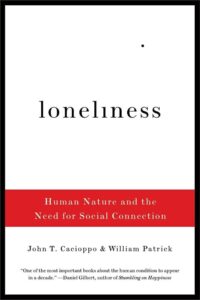
Loneliness: Human Nature and the Need for Social Connection
Article #241
The psychology of loneliness inside a full life — why being surrounded by family doesn't protect entrepreneurs from isolation
Loneliness: Human Nature and the Need for Social Connection by John Cacioppo and William Patrick is the most scientifically grounded accessible account of what loneliness actually is, how its biology works, and why the common-sense remedies — spend more time with people, be around family — frequently do not resolve it. Cacioppo spent his career running the loneliness research programme that produced the discrepancy model and the perceived isolation findings, and this book makes that research available to a general reader without losing its precision. For the entrepreneur who has been confused by the persistence of their own loneliness despite being surrounded by people who love them, Cacioppo's account of why contact is not the same as connection is the clearest available explanation of what they are experiencing and why it is not a failing of the relationships around them.

The Drama of the Gifted Child
Article #239
Why your relationship with your parents determines your relationship with authority, clients, and investors
The Drama of the Gifted Child by Alice Miller is a short, precise psychodynamic account of how parental relationship patterns — particularly those built on conditional approval and the suppression of authentic feeling — are re-enacted throughout adult professional life. Miller's particular focus is on high-achieving adults whose performance is partly driven by the approval-seeking established with demanding or critical parents, and the book's account of what it costs to build a professional identity on that foundation is the clearest available treatment of the mechanism this article describes. It is not a business book and does not pretend to be — but the entrepreneur who reads it in the context of their investor and client relationships will find the clinical observations more commercially relevant than most of the business psychology literature that covers similar ground less precisely.

Wired for Love
Article #238
The psychology of the 'supportive partner who secretly resents the business' — and why both people are usually unaware it's happening
Wired for Love by Stan Tatkin. Tatkin's neurobiologically grounded account of how partners function as each other's primary regulators — and what happens to that regulatory system under sustained stress and implicit threat — is the most mechanistically precise book available on why the suppressed resentment pattern produces the vague relational unease that neither person can identify. His framework for building what he calls a "couple bubble" — a mutual security system that is robust enough to hold the stresses that entrepreneurship generates — is directly applicable to the structural intervention the resentment pattern requires. Crucial Conversations by Kerry Patterson, Joseph Grenny, Ron McMillan and Al Switzler. The research-informed communication framework for making implicit dynamics explicit — covering how to approach conversations where the stakes are high, emotions are activated, and neither person is fully aware of what they are actually communicating. For the entrepreneurial couple who recognise the resentment pattern and want to address it directly without the conversation itself becoming the next source of conflict, this book provides the most practically applicable framework available.
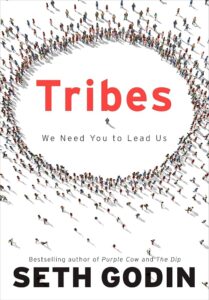
Tribes
Article #237
How friendship networks shrink predictably as your business grows — and the psychological cost of that isolation
Tribes by Seth Godin. Godin's short, direct account of community building as both a leadership function and an antidote to isolation is specifically useful for the entrepreneur who recognises the loneliness pattern but has not yet translated that recognition into a structural response. The book's core argument — that deliberate community is something built, not waited for — maps directly onto the EO peer forum evidence and applies regardless of industry or business stage. The Art of Gathering by Priya Parker. Parker's research-informed framework for building genuine connection through intentional design — how the structure of how people come together shapes what is possible within those encounters — is the most practically applicable book on moving from surface social contact to the relational depth that counters entrepreneurial isolation. It is not a business book, but the entrepreneur who reads it will immediately see its application to how they build and maintain the social infrastructure that the business progressively erodes.
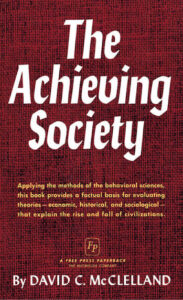
The Achieving Society
Article #236
Why entrepreneurs who feel unseen at home seek validation from their business in ways that distort strategy
The Achieving Society by David McClelland is one of the foundational texts in the psychology of motivation, and its direct relevance here is the empirical distinction between achievement, affiliation, and recognition as motivational drivers — and the documented evidence that recognition-motivated decision-making produces measurably worse long-term business outcomes than achievement-motivated decision-making. McClelland's research was built on decades of cross-cultural data and remains among the most rigorous accounts of how motivational profile shapes business performance. For the entrepreneur who suspects their decision-making has drifted toward visibility-seeking, the achievement motivation framework provides both the diagnostic vocabulary and the evidence base for why recalibrating matters commercially, not just psychologically. This is not a self-help book; it is serious social science that happens to be directly applicable to the pattern this article describes.
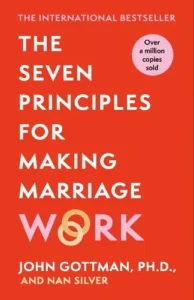
The Seven Principles for Making Marriage Work
Article #235
Why the person closest to you has more influence over your entrepreneurial decisions than any business coach
The Seven Principles for Making Marriage Work by John Gottman and Nan Silver. Gottman's love maps concept — the richness of a partner's internal model of each other's aspirations, fears, and inner world — is the most directly applicable framework in this book for the entrepreneur who wants to understand why partner influence is so contextually precise. A partner with a deep love map provides feedback that is calibrated to the actual person rather than a professional presentation of them, which is why it lands differently than coaching. The book is grounded in decades of Gottman Institute research and reads practically rather than theoretically. Hold Me Tight by Sue Johnson. Johnson's emotionally focused therapy framework explains how the primary attachment relationship provides the emotional security that makes genuine risk-taking possible — the base from which an entrepreneur ventures out. For the entrepreneur who has noticed that their willingness to take business risks fluctuates with the state of their relationship and wants to understand why, Johnson's account of how attachment security functions as an enabling condition for bold action is the clearest explanation available.
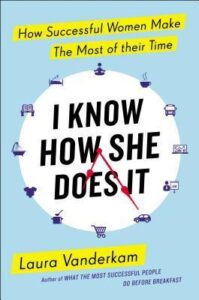
I Know How She Does It
Article #235
The psychology of building a business while raising children — why guilt is the most expensive cognitive overhead you carry
I Know How She Does It by Laura Vanderkam is among the most practically useful books an entrepreneurial parent can read, and its usefulness comes from data rather than reassurance. Vanderkam conducted detailed time-use studies of high-achieving women — executives, entrepreneurs, professionals with children — and found consistently that the subjective sense of never being present enough bore little relationship to the actual time records. Entrepreneurial parents typically spend considerably more quality time with their children than their guilt suggests, because guilt calibrates to the perfectionist ideal rather than the actual picture. The book's value is in replacing a vague, guilt-fuelled self-assessment with something more accurate — and in doing so, it makes the case more convincingly than any motivational argument that the cognitive overhead of parental guilt is frequently built on a false foundation. Read it as a corrective to the internal accounting system that most entrepreneurial parents are running, and read it specifically for the time-use methodology, which is more rigorous than the genre usually delivers.
The Art of Thinking Clearly
Article #234
How financial stress in a relationship changes the risk appetite of the entrepreneur inside it
The Art of Thinking Clearly by Rolf Dobelli. Where Housel writes about money specifically, Dobelli writes about the cognitive biases that distort decision-making more broadly — and the 99 biases he covers include loss aversion, the sunk cost fallacy, social proof, and the confirmation bias, all of which are directly activated by the kind of financial stress this article describes. Each chapter is short, readable, and grounded in research, making it an unusually practical reference for the entrepreneur who wants to audit their thinking in real time. The structure means you can read it non-linearly, going back to the relevant chapter when you notice a specific pattern in your own decision-making. Why We Make Mistakes by Joseph Hallinan. Hallinan's examination of systematic human error is less well known than Kahneman's work but more granular in its applied value — particularly on the question of how attention works under pressure and how cognitive depletion produces predictable, identifiable error patterns. For the entrepreneur operating from the bandwidth-depleted state that relationship financial stress produces, understanding the specific failure modes that emerge under cognitive load is genuinely useful. The book reads quickly and doesn't require a background in psychology to extract its value.
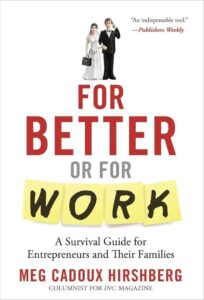
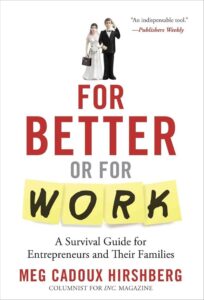
For Better or For Work
Article #232
Why entrepreneurs are statistically more likely to experience divorce — and the psychological mechanism behind it
For Better or For Work by Meg Cadoux Hirshberg is the most directly applicable book to this article — written by the long-term partner of an entrepreneur, research-informed rather than purely anecdotal, and specifically addressing the psychological mechanisms that the academic literature documents from the inside. Hirshberg describes the identity merger, the psychological absence alongside physical presence, the financial concealment cycle, and the partner's experience of competing with a business for their entrepreneur's primary relational attention — with the specificity that comes from having lived the mechanisms rather than only studied them. For any entrepreneur trying to understand what their partner experiences that they cannot see from their own position, and for any partner trying to name what they are experiencing without the vocabulary the research provides, this is the book that reaches both audiences at once.
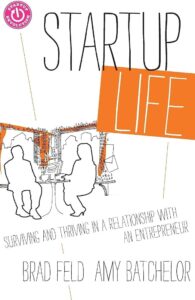
Startup Life
Article #231
The hidden cost of entrepreneurial ambition on romantic partnerships — and why both people usually blame the wrong things
Startup Life by Brad Feld and Amy Batchelor is the only book-length treatment of entrepreneurial partnership dynamics written from an insider perspective — Feld as a serial entrepreneur and venture capitalist, Batchelor as his long-term partner through multiple company cycles. Their account of the specific relational challenges of the startup lifecycle — the spillover, the time inequality, the partner isolation, the cyclical nature of entrepreneurial intensity and recovery — is grounded in lived experience rather than research, which makes it the most immediately recognisable treatment of the dynamics this article documents. For any entrepreneurial couple trying to understand what they are navigating from the inside, this book provides both recognition and the practical frameworks that experience rather than psychology research has generated.

Attached
Article #230
How attachment styles from childhood relationships are re-enacted in your relationship with your business
Attached by Amir Levine and Rachel Heller, previously cited in this series, is the most accessible account of adult attachment styles and their expression in close relationships — and the book that makes the mapping onto the business relationship most immediately legible. Levine and Heller write about anxious, avoidant, and secure attachment with enough behavioural specificity that readers reliably recognise their own patterns in the descriptions, which is the prerequisite for the reflective functioning that makes pattern change possible. For any entrepreneur reading this article and recognising their relationship with their business in the anxious or avoidant profiles, this is the book that provides both the fullest account of the pattern and the clearest available description of what secure functioning looks like and how it is built.

A Secure Base
Article #229
Why entrepreneurs whose relationships are unstable make measurably more risk-averse business decisions
A Secure Base by John Bowlby is the foundational account of the secure base function and its role in enabling the exploratory behaviour that entrepreneurship requires. Bowlby's argument — that security is the prerequisite for exploration, not the reward for successful exploration — directly inverts the popular account of risk-taking as something that requires overcoming security rather than building it. His account of how the internal working model of attachment — the implicit representation of whether the world is safe enough and trusted others are available enough to venture out — operates in adult professional life as much as in infant development is the theoretical foundation that the Lerner et al. three-country attachment-entrepreneurship research confirms empirically. For any entrepreneur trying to understand why periods of relationship instability produce the specific feeling of diminished professional courage, this is the book that provides the foundational account of the mechanism.
Hold Me Tight
Article #228
The psychology of building a business with a partner who doesn't understand the importance of it to you
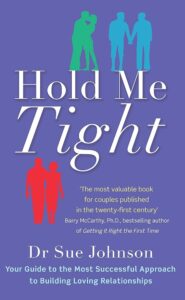
Hold Me Tight by Sue Johnson is the most accessible account of emotionally focused couples therapy and the fundamental human need to be known and responded to by one's primary attachment figure. Johnson's central argument — that the deepest relational injuries are not caused by disagreements about behaviour but by the felt absence of the other person's genuine attention and responsiveness to what matters most — maps precisely onto the identity-level misattunement this article documents. Her account of the specific attachment bids that partners make when they feel unknown — the pursuit and withdrawal cycles, the conflict escalation that is really a desperate attempt to produce genuine engagement — provides the relational mechanism that makes the dynamic legible from both sides. For any entrepreneur who recognises the feeling of being fundamentally alone in the most important thing they are doing, this book reaches the source of that experience more precisely than any other available treatment.
The Seven Principles for Making Marriage Work
Article #227
How your romantic relationship is your single most underestimated variable in business performance
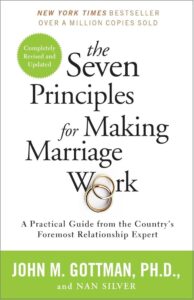
The Seven Principles for Making Marriage Work by John Gottman and Nan Silver is the most research-grounded popular account of what predicts relationship stability and satisfaction — directly applicable as the framework for understanding what makes a romantic relationship a performance asset. Gottman spent four decades studying couples in his Love Lab, measuring physiological responses during conflict conversations alongside the behavioural and communication patterns that predicted relationship trajectory. His account of the specific behaviours — turning toward rather than away, maintaining genuine interest, managing conflict without contempt — that determine whether a relationship provides the stable, supportive base the Ditzen research identifies as cortisol-buffering is the most directly applicable available prescription for any entrepreneur trying to deliberately maintain the relationship quality that their performance depends on.
The Paradox of Choice
Article #226
The paradox of choice in business — why offering 30 products sells less than offering 3
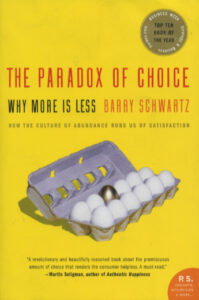
The Paradox of Choice by Barry Schwartz is the foundational popular synthesis of the choice overload research and the most complete available account of the three post-decision mechanisms — opportunity cost, regret, and expectation escalation — that make excessive options damaging beyond the initial conversion point. Schwartz writes as a social scientist rather than a business writer, and his account of how these mechanisms operate in daily life — in healthcare decisions, consumer choices, and career decisions as well as commercial transactions — makes the research feel as personally relevant as it is commercially applicable. For any entrepreneur designing a product range, pricing structure, or service offering, this book provides the psychological framework that makes the jam study findings generalisable to their own context rather than leaving them as a curiosity about condiment purchasing.

The Power of Moments
Article #225
The peak-end rule — why your customers remember the worst experience and the last experience, nothing else
The Power of Moments by Chip Heath and Dan Heath is the most accessible business-applied synthesis of the peak-end rule and the practical design of memorable experience moments. The Heath brothers ground the research in case studies across healthcare, education, retail, and service design — showing how organisations have deliberately engineered positive peaks and endings to produce customer and employee experiences that are remembered as significantly better than their average quality warrants. For any entrepreneur designing a customer journey and trying to allocate investment toward the moments that will determine how the experience is remembered, this is the book that translates the Kahneman and Redelmeier research into specific design decisions with enough case study detail to make the translation immediately actionable..
Self-Compassion: The Proven Power of Being Kind to Yourself
Article #224
The neuroscience of compassion fatigue — why caring about others can neurologically deplete your capacity to care about yourself
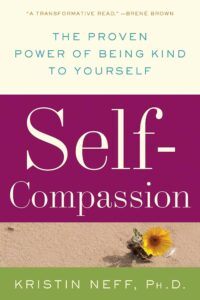
Self-Compassion: The Proven Power of Being Kind to Yourself by Kristin Neff is the most accessible synthesis of the self-compassion research and the most widely used applied resource for the specific antidote to compassion fatigue. Neff developed the three-component model — self-kindness, common humanity, mindfulness — from her own research programme, and her account of how self-compassion extends the caring orientation that compassionate people already possess toward themselves rather than requiring a different psychological posture entirely is the most direct available prescription for the compassion fatigue problem. For any entrepreneur who recognises the pattern of extending care to everyone around them while systematically neglecting their own needs, this book provides both the explanation and the specific practice that addresses the neurological mechanism Singer's research identified.

Attached
Article #223
How your relationship with rest was shaped by your childhood environment and the messages you received about 'doing nothing'
Attached by Amir Levine and Rachel Heller is the most accessible account of adult attachment theory and its developmental origins. Levine and Heller translated Bowlby's and Ainsworth's foundational research into a practically useful framework for understanding how early caregiving environments install lasting emotional response patterns — including the specific patterns of anxiety and avoidance that shape adult relationships to work, rest, and the need for approval. For any entrepreneur who recognises the attachment mechanism in their own rest anxiety — the sense that being productive is necessary for safety, that rest risks something relational — this book provides the most direct account of where that sense comes from and what attachment research suggests about its recalibration.
No books found matching your search.