Recommended Books
Every book on this page was recommended at the end of a courben.co article. Reading about a psychological concept is one thing — having a book that lets you live inside it is another. These recommendations exist because an article should leave you with something you can act on, not just something you can recall. The difference between forgettable and memorable is almost always what you do next.
This page contains affiliate links. If you purchase through our links we may earn a small commission at no extra cost to you. We only recommend books we genuinely believe extend the psychology explored in our articles.
Showing 18 of 506 books
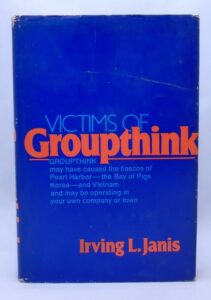
Victims of Groupthink
Article #294
Group decision-making — when collective decisions are better than solo ones and when they are systematically worse
Victims of Groupthink by Irving Janis is the foundational account of collective decision failure — the specific psychological mechanisms, the observable symptoms, and the case studies that make the failure pattern legible in real decision contexts. For the entrepreneurial team that has experienced the post-mortem feeling that everyone privately had doubts nobody voiced, Janis's analysis of how that silence was produced is the most precise available diagnosis. His account of the structural corrections Kennedy implemented after the Bay of Pigs provides the most historically documented case study of how groupthink is specifically addressed.
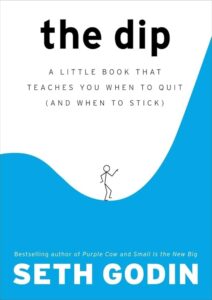
The Dip
Article #293
The sunk cost problem — the psychological mechanism that keeps entrepreneurs committed to failing positions
The Dip by Seth Godin. Godin's account of the strategic difference between the temporary setbacks that precede genuine success and the dead ends that warrant abandonment is the most practically focused available treatment of the sunk cost problem from the perspective of knowing which commitments to honour and which to exit. His specific account of the psychological conditions that make the dip and the dead end feel identical from inside them is directly relevant to the kill signal paradox that Ross and Staw's research documents. Misbehaving by Richard Thaler. Thaler's account of the behavioural economics research programme — including his own work on mental accounting, loss aversion, and the endowment effect — provides the most readable available treatment of the full family of psychological mechanisms through which prior investment distorts future decisions. His specific account of how the mental accounting of sunk costs operates across contexts — including the entrepreneurial ones — is the most accessible treatment of the prospect theory mechanism this article is built on.
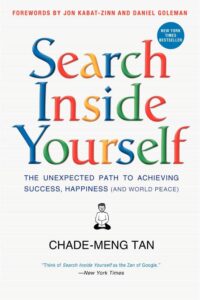
Search Inside Yourself
Article #292
Emotional hijacking in high-stakes decisions — when the amygdala overrides the prefrontal cortex
Search Inside Yourself by Chade-Meng Tan. The mindfulness-based emotional intelligence programme developed at Google is the most widely deployed applied framework for developing the cognitive reappraisal and physiological regulation capacities that reduce amygdala hijacking in professional contexts. Tan's specific account of how attention training improves the gap between emotional activation and response — widening the space where analytical processing can operate — provides the most practically applicable available programme for the emotional hijacking problem this article describes. The Chimp Paradox by Steve Peters. Peters's accessible account of the brain's competing systems — his "chimp" is the amygdala's threat and reward processing, his "human" is the prefrontal analytical system — is the most widely read popular treatment of the emotional hijacking mechanism in professional performance contexts. His practical management strategies are the most concretely applicable available complement to the neuroscience this article describes.
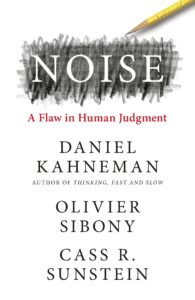
Noise: A Flaw in Human Judgment
Article #291
Time pressure and decision quality — what the research says about compressed timelines and cognitive performance
Noise: A Flaw in Human Judgment by Daniel Kahneman, Olivier Sibony and Cass Sunstein is the most directly applicable recent treatment of the conditions that degrade decision quality — covering not only bias but the variability in judgments that time pressure, fatigue, and emotional state produce in ways that are distinct from systematic bias. Their account of decision hygiene — the structural practices that reduce judgment variability — maps directly onto the time pressure management strategies this article describes, and their specific account of when identical decisions produce different outcomes depending on when they are made is the most rigorous available treatment of the timing dimension of decision quality.
Being Wrong
Article #290
How past success corrupts future decision-making — the cognitive rigidity that accumulates with experience
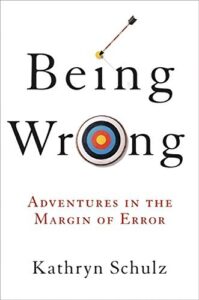
Being Wrong by Kathryn Schulz. Schulz's account of the phenomenology of error — specifically the finding that being wrong feels subjectively identical to being right up until the moment of correction — is the most emotionally precise available treatment of why cognitive entrenchment is invisible from inside. Her account of how the feeling of certainty is a property of the belief rather than of its accuracy maps directly onto the Einstellung and hedgehog mechanisms: the confident expert applying their schema to a situation where it no longer applies experiences the same certainty as the expert applying it correctly. Seeking Wisdom by Peter Bevelin. Bevelin's systematic account of the mental models that protect against cognitive entrenchment — covering the specific reasoning patterns of the most accurate long-term thinkers across multiple domains — provides the most comprehensive single-volume reference for the cross-domain thinking practices that Epstein's Range research predicts will maintain cognitive flexibility as expertise accumulates.

Gut Feelings: The Intelligence of the Unconscious
Article #289
Analysis paralysis — the neurological basis for why more information makes some decisions worse
Gut Feelings: The Intelligence of the Unconscious by Gerd Gigerenzer is the most accessible available account of the fast-and-frugal heuristics research — covering the specific conditions under which simple decision rules outperform complex analytical models, and the ecological rationality framework that explains why more information degrades decisions in uncertain environments. For the entrepreneur whose instinct is always to gather more data before deciding, Gigerenzer's account of the research is the most direct available challenge to that instinct. His specific account of how expert decision-makers in genuine uncertainty use one-attribute stopping rules rather than multi-attribute integration provides the most practically applicable model for how analysis paralysis is avoided by the decision-makers who avoid it most reliably.
Essentialism
Article #288
Decision fatigue — how cognitive resource depletion accumulates across a working day and when your worst calls happen
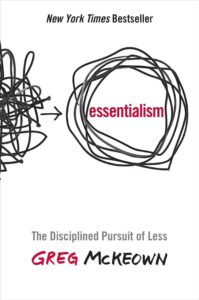
Essentialism by Greg McKeown. McKeown's account of the disciplined pursuit of less — specifically the elimination of non-essential decisions, commitments, and choices from the deliberation stack — is the most practically applicable popular treatment of the decision volume reduction principle. His framework for identifying which decisions warrant full deliberative attention and which should be converted to defaults or eliminated provides the most actionable complement to the research on decision fatigue timing. Four Thousand Weeks by Oliver Burkeman. Burkeman's account of time as a finite resource whose allocation is itself a decision subject to fatigue provides the most philosophically grounded available treatment of why the decision to protect decision-making time — and to structure the day around when cognitive capacity is highest — is itself one of the most consequential choices an entrepreneur can make. His specific account of the productivity trap — using efficiency gains to generate more decisions rather than to protect deliberative capacity — is directly relevant to the structural intervention this article describes.
The Black Swan
Article #287
The seven cognitive biases that corrupt entrepreneurial decision-making most consistently
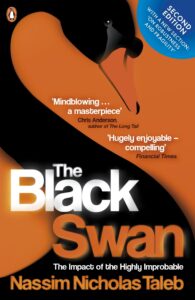
The Black Swan by Nassim Nicholas Taleb is the most important available treatment of the narrative fallacy and the limits of retrospective causal explanation — covering not only the seventh bias in this article's catalogue but the deeper problem of which kinds of events are structurally invisible to the cognitive systems that produce confident predictions. For the entrepreneur whose strategic confidence is substantially built on the causal story of past successes, Taleb's account of why that story is less informative than it feels is the most directly relevant available challenge to the overconfidence that narrative produces.
The Intelligence Trap
Article #286
How the brain processes decisions — the dual process system and why entrepreneurship systematically favours the wrong one
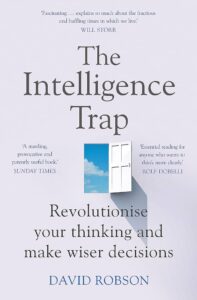
The Intelligence Trap by David Robson is the most directly applicable account of why intelligence and expertise do not protect against System 1 dominance — and why the expert entrepreneur may be more vulnerable, not less, to confident miscalibration precisely because their System 1 delivers its answers with the high-confidence signal that expertise produces. Robson's account of the specific failure modes of intelligent, experienced decision-makers in novel domains is the most practically useful available treatment of the entrepreneurial expert's paradox: the very experience that generates confidence is the experience that miscalibrates the intuition.
The Examined Life
Article #285
Fear as a founding force — when the business is built to escape something rather than create something
The Examined Life by Stephen Grosz. Grosz's collection of psychoanalytic case studies includes the most emotionally precise available accounts of what it looks and feels like from inside an avoidance-driven life — including the specific experience of having successfully escaped the feared state and discovering that the escape has produced emptiness rather than resolution. For the entrepreneur who recognises the escape-driven founding in their own history and wants the most honest account of what the transition involves, Grosz provides the human texture that the SDT and ACT research cannot. A New Earth by Eckhart Tolle. Tolle's account of the ego's role in maintaining the feared-state monitoring process — and of what becomes available when the ego's avoidance function is recognised rather than acted upon — is the most accessible philosophical treatment of why the escape-driven entrepreneur cannot escape through more building. His specific account of the difference between doing something to escape a negative state and doing something because it is intrinsically aligned with what you are is the popular-philosophical version of the SDT approach-avoidance distinction.

The Origins of Virtue
Article #284
How childhood environment shapes entrepreneurial drive — the psychological foundations laid before adulthood
The Origins of Virtue by Matt Ridley. Ridley's account of how human social nature develops through early environment — covering the interaction of genetic predisposition and environmental condition that produces adult character — provides the most readable available treatment of why childhood environment shapes adult psychology in the specific, lasting ways that imprinting theory predicts. His account of how early social experience calibrates the adult's relationship to trust, risk, and cooperation maps directly onto the entrepreneurial drive foundations this article describes. Grit by Angela Duckworth. Duckworth's account of the passion-and-perseverance combination that predicts sustained achievement — and of how this combination is developed through childhood experiences of interest, practice, purpose, and hope — provides the most directly applicable framework for understanding what childhood environments produce the drive architecture that entrepreneurship requires. Her specific account of how grit is built through graduated challenge, rather than being a fixed trait, is the developmental account of entrepreneurial drive that the imprinting and scaffolding research predicts.
Being Mortal
Article #284
The identity crisis of success — why achieving what you wanted leaves so many entrepreneurs feeling empty
Being Mortal by Atul Gawande. Gawande's account of what people discover about what genuinely mattered when the forward orientation of continued achievement is removed — through illness, ageing, or the approach of death — is the most emotionally precise available treatment of the distinction between extrinsic and intrinsic goals in terms of what they actually provide to lived experience. Reading it in the context of early success emptiness produces a recognition that the milestone's arrival has done something structurally similar to the recalibrations that Gawande documents: it has removed the forward-oriented story and exposed what the story was partly obscuring. The Power of Now by Eckhart Tolle. Tolle's account of the suffering produced by living exclusively in the future — in the story of what will be achieved and how it will feel — is the most accessible philosophical treatment of the arrival fallacy mechanism. His specific account of how the present moment is the only location where genuine experience of any kind actually occurs maps directly onto why the anticipated arrival always feels smaller than the anticipation: the anticipation was always the actual experience, and the arrival is simply the present moment, which was always all that was ever available.
High Output Management
Article #283
Why most entrepreneurs never make the psychological transition from builder to leader consciously
High Output Management by Andrew Grove. Grove's account of the Intel CEO's transition from technical expert to leverage-based leader is the most credible available first-person documentation of what the builder-to-leader transition actually involves — written by someone whose technical expertise was world-class and whose leadership transition was consequently most psychologically demanding. His specific account of the shift from individual output to team output as the primary performance measure is the most practically grounded available description of what leading rather than building actually requires. An Elegant Puzzle by Will Larson. Larson's account of engineering management — the specific transition that technical builders face when they move into leadership of technical teams — is the most practically applicable contemporary treatment of the competence trap. His account of how the technical expertise that makes builders credible also makes the leadership transition hardest is directly applicable to the mechanism this article describes, and his practical framework for what leadership actually involves in technical contexts is more specific and more actionable than most management texts.
The Wisdom of Crowds
Article #282
The reluctance to ask for help — the self-sufficiency trap and what it actually costs you
The Wisdom of Crowds by James Surowiecki is the most directly applicable account of why individual decision-making is systematically inferior to collective intelligence — covering the specific mechanisms through which diverse outside perspectives correct the overconfidence and confirmation bias that expert individual decision-makers consistently show. For the self-sufficient entrepreneur who believes their experience and expertise makes outside perspective redundant, Surowiecki's empirical case is the most direct available challenge to that belief. The book establishes not as a motivational argument but as an empirical finding that the conditions for good decision-making are structurally social, not individual.
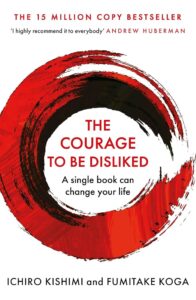
The Courage to Be Disliked
Article #281
The specific loneliness of leading — why being surrounded by people doesn't resolve entrepreneurial isolation
The Courage to Be Disliked by Ichiro Kishimi and Fumitake Koga. Kishimi and Koga's Adlerian psychology account of the separation of tasks — the recognition that what others think and feel about oneself is genuinely their task and not one's own — provides the most philosophically direct available treatment of the epistemic anxiety that hierarchical isolation produces. The leader who cannot trust the honesty of the feedback they receive is experiencing exactly the task confusion that Adlerian psychology addresses: attempting to manage others' inner experience rather than accepting the genuine impossibility of knowing it. An Unquiet Mind by Kay Redfield Jamison. Jamison's memoir of managing a significant psychological condition while maintaining a high-functioning professional life is the most emotionally precise available account of what it is to carry a private internal reality through public-facing professional contexts — the specific experience of the concealment requirement's personal cost that the leadership loneliness article is describing, rendered from the inside.
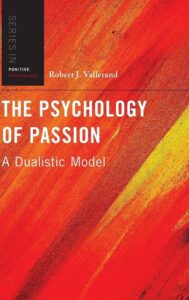
The Psychology of Passion
Article #280
The shift from passion to obligation — when building stops feeling like creation and starts feeling like duty
The Psychology of Passion by Robert Vallerand is the comprehensive synthesis of the dualistic passion model — the most complete available treatment of how harmonious and obsessive passion differ, how the conversion between them occurs, and what the research establishes about conditions that restore harmonious passion after the conversion. Vallerand's framework is the foundational science behind the distinction this article is built on, and reading the full synthesis provides the depth of understanding that the article can only sketch. For the entrepreneur who recognises the obligation conversion in their own experience and wants the most rigorous available account of what has happened and what can address it, this is the primary source.

Being Nobody, Going Nowhere
Article #279
How entrepreneurship fuses self and business at a psychological level most entrepreneurs never recognise
Being Nobody, Going Nowhere by Ayya Khema. Khema's Buddhist psychological account of the constructed nature of the self — and the suffering that identification with impermanent things produces — provides the most philosophically grounded available treatment of why identity fusion produces the specific vulnerability pattern this article describes. It is not a business book, and that is part of its value: it approaches the identity fusion problem from outside the entrepreneurial frame entirely, which produces the perspective that defusion requires. The Second Mountain by David Brooks. Brooks's account of identity construction beyond achievement — the shift from the résumé virtues of the first mountain to the eulogy virtues of the second — is the most readable popular treatment of what identity complexity beyond entrepreneurial success looks like and why building it produces the resilience that single-domain identity investment cannot.
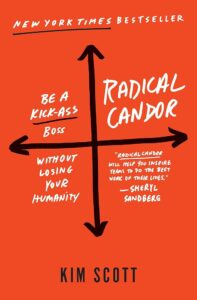
Radical Candor
Article #278
How the psychological need to shield your children from financial stress creates the same secrecy patterns that damage business transparency
Radical Candor by Kim Scott. Scott's account of business transparency as a leadership practice — the research and case evidence for why honest, direct communication about difficult realities produces better outcomes than managed disclosure or strategic minimisation — is the most widely read popular treatment of the business-context failure that the family secrecy habit produces. Reading it alongside Lieber creates the clearest available picture of the communication norm that the family financial environment trains and the business environment requires. Never Split the Difference by Chris Voss. Voss's negotiation and communication framework — built on the premise that honest, direct communication of difficult information produces better outcomes than concealment or strategic framing — provides the most practically applicable account of what transparent financial communication actually looks and sounds like in high-stakes professional contexts. His specific account of how withholding information damages trust more than the information itself would have is directly relevant to the investor and board transparency failures this article describes.
No books found matching your search.