Recommended Books
Every book on this page was recommended at the end of a courben.co article. Reading about a psychological concept is one thing — having a book that lets you live inside it is another. These recommendations exist because an article should leave you with something you can act on, not just something you can recall. The difference between forgettable and memorable is almost always what you do next.
This page contains affiliate links. If you purchase through our links we may earn a small commission at no extra cost to you. We only recommend books we genuinely believe extend the psychology explored in our articles.
Showing 18 of 506 books
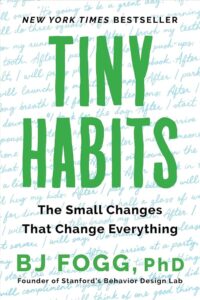
Tiny Habits
Article #349
The intention-action gap — why people don't do what they say they will and what closes that gap
Tiny Habits by BJ Fogg. Fogg's account of how making behaviours small enough to require minimal motivation, anchoring them to existing triggers, and celebrating immediately after performance combines the implementation intention mechanism with the motivation-ability-trigger framework in the most practically accessible available treatment. His specific account of how the intention-action gap closes when the new behaviour is designed to be trivially easy at the start is the most directly applicable available complement to the present bias research this article describes.
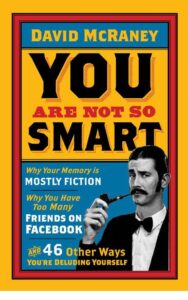
You Are Not So Smart
Article #348
Loss aversion in commercial contexts — designing products and communication around what people don't want to lose
You Are Not So Smart by David McRaney. McRaney's account of the self-deceptions and cognitive biases that govern everyday decision-making — including loss aversion, the status quo bias, and the anchoring effect — provides the most accessible available popular treatment of what these mechanisms look and feel like from inside the decisions they produce. His specific account of how loss aversion operates in commercial and everyday contexts without the decision-maker recognising it is the most practically relevant available treatment for the entrepreneur who wants to design for these mechanisms in their own products and communications.
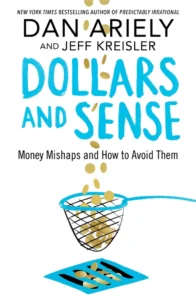
Dollars and Sense
Article #347
Mental accounting — how people categorise money in ways that defy rational economic theory
Dollars and Sense by Dan Ariely and Jeff Kreisler is the most directly applicable available account of how mental accounting shapes everyday financial decisions — covering the specific mechanisms through which money is categorised, valued differently depending on source and context, and spent in ways that rational models do not predict. For the entrepreneur who wants the most accessible available popular treatment of what mental accounting means for pricing design, customer spending behaviour, and their own financial decision-making, Ariely and Kreisler provide the most practically concrete available source.
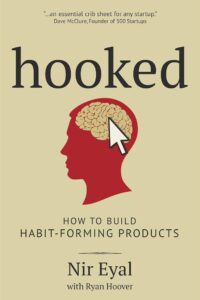
Hooked
Article #346
Default effects — why the option presented as the default is chosen the majority of the time
Hooked by Nir Eyal. Eyal's account of how products build habits through trigger-action-reward-investment cycles provides the most commercially structured available complement to the default effect research — covering the specific mechanisms through which products make their usage automatic over time, which is the sustained version of the default effect: not just the initial default selection but the habitual continuation that reduces the probability of cancellation or switching. His specific account of how internal triggers replace external defaults as usage becomes habitual maps directly onto the status quo bias and inertia mechanisms this article describes.
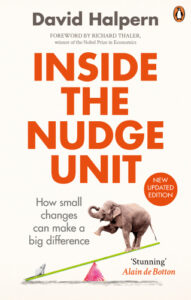
Inside the Nudge Unit
Article #345
Nudge theory — how small environmental changes produce large behavioural shifts without requiring conscious choice
Inside the Nudge Unit by David Halpern is the most directly applicable available account of what nudge interventions actually produce in real-world deployment — covering the BIT's specific interventions, their effect sizes, the failure modes that laboratory findings miss, and the practical design principles that the most effective interventions share. For the entrepreneur who wants to understand what nudge theory looks like when applied at scale across commercial and policy contexts, Halpern's account is the most practically grounded available complement to the Thaler and Sunstein research.
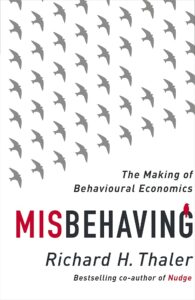
Misbehaving: The Making of Behavioural Economics
Article #343
The foundational insight: humans are not rational actors and the implications for every business decision
Misbehaving: The Making of Behavioural Economics by Richard Thaler is the most accessible available first-person account of how the behavioural economics field developed and the specific discoveries that dismantled the rational actor model — written by the researcher who received the Nobel Prize for contributions to behavioural economics. For the entrepreneur who wants the most readable available introduction to why the foundational insight matters and what it changed about how human behaviour should be understood in business contexts, Thaler's account provides the most engaging available entry point.

Four Thousand Weeks
Article #342
Prevention architecture — building the psychological infrastructure for sustained output without the collapse cycle
Four Thousand Weeks by Oliver Burkeman. Burkeman's account of the psychological relationship with time — specifically the attempt to be maximally productive that produces the relentless demand structure that burnout architecture is designed to address — provides the most philosophically grounded available treatment of why the prevention architecture requires a genuine reconsideration of what the working life is for, rather than simply a more efficient version of the same maximisation logic. His specific account of why finitude acceptance is the foundation of sustainable engagement, rather than an obstacle to achievement, is the most practically relevant available popular treatment of the mindset that makes prevention architecture psychologically sustainable rather than merely technically correct.

When the Body Says No
Article #341
When to seek help and why entrepreneurs don't — the psychological barriers specific to entrepreneurial identity
When the Body Says No by Gabor Maté. Maté's account of how the self-suppression of need — the pattern of not asking for help, of managing everything internally, of maintaining the composed and capable exterior through chronic physiological cost — produces the physical and psychological conditions that eventually force the recognition that external support was needed all along. His specific account of the character patterns that make high-achieving individuals specifically vulnerable to this dynamic maps directly onto the entrepreneurial identity barriers this article describes.
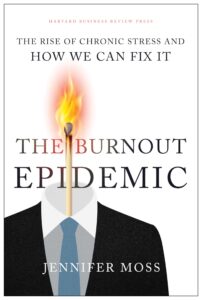
The Burnout Epidemic
Article #340
What actually works in burnout recovery versus what entrepreneurs typically do which makes it worse
The Burnout Epidemic by Jennifer Moss is the most directly applicable available account of what genuine burnout recovery requires from both the individual and the organisational perspective — covering the specific research-supported interventions, the common recovery errors, and the environmental conditions that must change for recovery to be durable rather than temporary. For the entrepreneur who wants the most practically structured available account of what to actually do in the recovery period, and what to change in the working environment to prevent relapse, Moss provides the most operationally specific available complement to the Sonnentag and Ahola research.
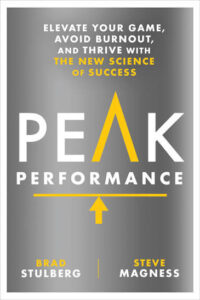
Peak Performance
Article #339
The psychology of pushing through — when resilience crosses into self-harm
Peak Performance by Brad Stulberg and Steve Magness is the most directly applicable available account of the stress-recovery cycle as the actual mechanism through which performance develops — covering the specific physiological and psychological requirements for growth rather than deterioration under sustained demand. Their specific account of how elite performers in every domain structure recovery as deliberately as they structure effort, and why the recovery is not the interruption of development but the mechanism of it, provides the most practically structured available complement to the research framework this article describes.
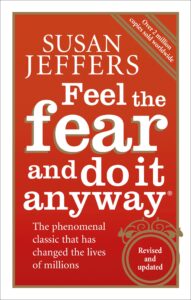
Feel the Fear and Do It Anyway
Article #338
Anxiety and avoidance — how fear produces inaction that looks like considered restraint
Feel the Fear and Do It Anyway by Susan Jeffers is the most widely read available popular account of the specific psychological shift from waiting for anxiety to resolve before acting to acting despite anxiety as the means through which anxiety eventually resolves. Jeffers's specific account of why anxiety does not precede action but follows it — and why the entrepreneurial instinct to wait until confident before proceeding is the mechanism that perpetuates the lack of confidence — is the most accessible available popular treatment of the experiential avoidance mechanism and its alternative.

The Telomere Effect
Article #337
The physical dimension — what chronic stress does to the body that the mind doesn't accurately report
The Telomere Effect by Elizabeth Blackburn and Elissa Epel is the most directly applicable available account of how chronic psychological stress accelerates biological ageing at the cellular level — written by the Nobel laureate who identified the telomere mechanism and the researcher who documented its relationship to psychological stress. For the entrepreneur who wants the most research-grounded available account of the physical consequences of chronic stress at the level of molecular biology, Blackburn and Epel's synthesis is the most authoritative and accessible available source.
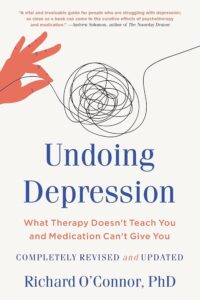
Undoing Depression
Article #336
How burnout differs from depression and why misidentifying which you're experiencing leads to the wrong recovery
Undoing Depression by Richard O'Connor is the most accessible available clinical account of how depression operates and what recovery actually requires — covering the neurobiological substrate, the cognitive and behavioural patterns that maintain depressive episodes, and the specific interventions that address the condition rather than its symptoms. For the entrepreneur who is uncertain whether what they are experiencing is burnout, depression, or both, O'Connor's specific account of the phenomenology of genuine depressive episodes provides the most practically useful available comparison point.
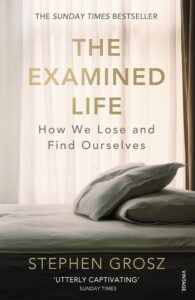
The Examined Life
Article #335
The specific burnout triggers unique to entrepreneurship that don't appear in standard workplace research
The Examined Life by Stephen Grosz. Grosz's account of the unconscious patterns that sustain professional and personal suffering — including the specific ways that high-achieving individuals fail to recognise their own distress because it is disguised by the productivity and commitment that produce it — provides the most emotionally precise available complement to the research framework this article describes. His specific account of how the patterns that create burnout are frequently the same patterns that produced the success preceding it is the most practically relevant available treatment of why entrepreneurial burnout is so difficult to see from inside it.

Scattered Minds
Article #334
What burnout actually is neurologically and why it is categorically different from tiredness or stress
Scattered Minds by Gabor Maté. Maté's account of the relationship between early stress responses, chronic nervous system dysregulation, and the specific vulnerability patterns that produce burnout in high-achieving individuals provides the most emotionally precise available complement to the neurological research. His specific account of how the biological stress mechanisms documented in the burnout research interact with the identity patterns and self-worth structures that make entrepreneurs particularly susceptible to chronic overactivation is the most integrated available treatment of the neurological and psychological dimensions of the burnout syndrome.

Powerful
Article #333
How to build culture deliberately rather than inherit the one that forms by default
Powerful by Patty McCord is the most directly applicable available account of deliberate culture-building from the perspective of someone who built one of the most studied corporate cultures in recent history. McCord's specific account of how the Netflix culture was constructed — not through values workshops but through the deliberate design of hiring practices, performance management, and the honest articulation of what the organisation actually expected and valued — provides the most practically concrete available complement to the research framework this article describes.
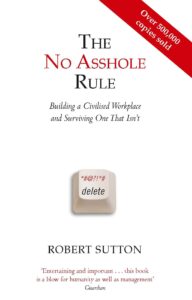
The No Asshole Rule
Article #332
Toxic culture — what the research identifies as the specific conditions that produce dysfunction
The No Asshole Rule by Robert Sutton. Sutton's account of the specific behaviours that constitute workplace toxicity, the documented consequences for those subjected to them, and the organisational conditions that allow them to persist provides the most directly applicable available research-based treatment of what toxic culture looks like at the individual level and what sustains it at the organisational level. His specific account of the "total cost of assholes" — covering the productivity, wellbeing, and talent costs that toxic individuals impose on the organisations that tolerate them — is the most practically grounded available complement to the biological and social mechanisms this article describes.
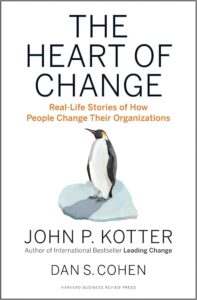
The Heart of Change
Article #331
Why culture change fails — the psychological resistance to behavioural norm shifts and what overcomes it
The Heart of Change by John Kotter and Dan Cohen. Kotter and Cohen's follow-up to the original Leading Change research — addressing the specific emotional and behavioural mechanisms required at each stage of organisational transformation rather than the structural stages alone — provides the most practically detailed available account of what it actually looks like to navigate the eight failure modes this article identifies. Their specific treatment of how to build the guiding coalition, sustain urgency through the middle of a change initiative, and anchor new behaviours before declaring victory is the most directly applicable available complement to the research framework.
No books found matching your search.