Recommended Books
Every book on this page was recommended at the end of a courben.co article. Reading about a psychological concept is one thing — having a book that lets you live inside it is another. These recommendations exist because an article should leave you with something you can act on, not just something you can recall. The difference between forgettable and memorable is almost always what you do next.
This page contains affiliate links. If you purchase through our links we may earn a small commission at no extra cost to you. We only recommend books we genuinely believe extend the psychology explored in our articles.
Showing 18 of 506 books
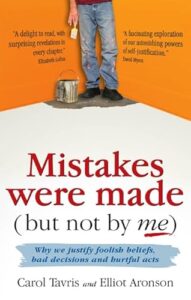
Mistakes Were Made (But Not by Me)
Article #440
How the social identity of being an entrepreneur distorts honest self-assessment
Mistakes Were Made (But Not by Me) by Carol Tavris and Elliot Aronson is the most directly applicable available account of the self-justification and cognitive dissonance mechanisms that sustain the founder's identity-consistent self-assessment against the evidence that would revise it — covering the specific psychological processes through which confident people progressively interpret disconfirming evidence in ways that preserve the confident self-concept, and the structural conditions under which genuine revision becomes possible. Tavris and Aronson's account of how the performance of certainty produces genuine certainty through self-persuasion maps directly onto the Goffman impression management and Dunning-Kruger amplification mechanisms this article describes.
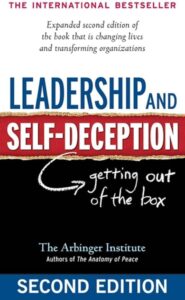
Leadership and Self-Deception
Article #439
The specific cost of being the one who holds everything and how carrying organisational anxiety shapes your mental health over time
Leadership and Self-Deception by the Arbinger Institute is the most directly applicable available account of how the leader's carrying function shapes their psychology and their relationships — specifically the mechanism through which the felt weight of responsibility for others' outcomes produces the self-protective distortions that prevent genuine engagement with what the people being led actually need. The Arbinger account of how leaders move from genuine care for others' situations to self-justifying management of their own anxiety maps directly onto the Bowen transmission and Coan social baseline mechanisms this article describes.
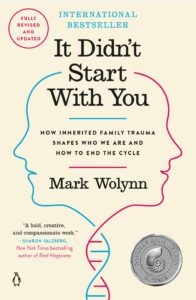
It Didn’t Start With You
Article #438
Why entrepreneurship surfaces psychological material that stable employment suppresses
It Didn't Start With You by Mark Wolynn is the most directly applicable available account of how psychological patterns that appear to be responses to current circumstances are frequently pre-existing internal structures that the current circumstances have surfaced rather than created — covering the specific mechanisms through which unresolved material from earlier developmental periods expresses through adult professional and relational contexts. Wolynn's account of how the removal of containing structures reveals material that was always present maps directly onto the employment-container mechanism this article describes, and his practical account of how to engage with surfaced material rather than being destabilised by it makes this the most therapeutically actionable available complement to the Bowlby and Gross research.
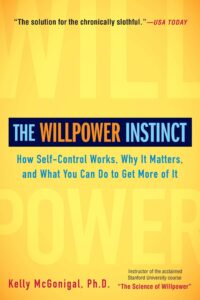
The Willpower Instinct
Article #437
Building recovery into the operating rhythm of the business through structural approaches that don't require willpower
The Willpower Instinct by Kelly McGonigal is the most comprehensively research-based available account of how self-regulatory capacity actually works — covering the neurological and physiological basis of willpower depletion, the specific conditions under which willpower-based approaches fail most reliably, and the evidence for the structural and environmental design approaches that succeed where willpower cannot. McGonigal's synthesis of the Wood habit research, the Gollwitzer implementation intention findings, and the broader self-regulation literature provides the most rigorous available popular account of why structure outperforms intention, which is the foundational argument this article builds its practical framework on.
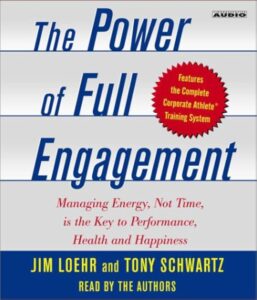
The Power of Full Engagement
Article #436
How to recover from a period of sustained overwork without losing momentum entirely
The Power of Full Engagement by Jim Loehr and Tony Schwartz. Loehr and Schwartz's account of energy management across physical, emotional, mental, and spiritual dimensions — developed from their work with elite athletes and subsequently applied to professional performance — provides the most practically structured available complement to the Sonnentag recovery experience sequencing and the Stulberg-Magness stress-recovery cycle frameworks this article draws on. Their specific account of how to structure the oscillation between full engagement and genuine recovery, and why the recovery periods are the investment that makes the engagement sustainable rather than a concession to the engagement's demands, maps directly onto the graduated recovery approach this article describes.
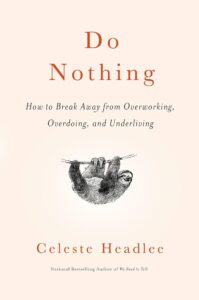
Do Nothing
Article #435
Why entrepreneurs are poor at recovery and the psychological barriers specific to high-drive individuals
Do Nothing by Celeste Headlee is the most directly applicable available account of why high-drive individuals specifically fail at recovery, covering the cultural, psychological, and physiological mechanisms through which the productivity identity prevents genuine rest and the specific practices that allow high-performing people to genuinely disengage without the guilt and discomfort that their identity investment makes the default response. Headlee's account of how the value placed on busyness has made rest feel morally suspect rather than strategically necessary maps directly onto the Bellezza busyness-as-status and Cardon identity centrality mechanisms this article describes.

Sleep Smarter
Article #434
Sleep as a psychological intervention and what the research on sleep deprivation shows about cognitive performance
Sleep Smarter by Shawn Stevenson is the most practically structured available guide to implementing the sleep quality improvements that the Walker and Xie research identifies as producing the performance benefits this article describes — covering the specific environmental, behavioural, and biological practices that improve sleep architecture, increase slow-wave and REM stage proportions, and enhance glymphatic clearing efficiency. Stevenson integrates the sleep science with practical implementation in a way that is directly applicable to the entrepreneur who understands the research case but needs the implementation framework. His specific account of how light exposure timing, temperature regulation, and pre-sleep cognitive routines affect the sleep architecture that cognitive performance depends on makes this the most actionable available complement to the Walker research.

The Biohacker’s Handbook
Article #433
How entrepreneurs misread their own stress levels and the psychological mechanisms that produce underestimation
The Biohacker's Handbook by Teemu Arina, Jaakko Halmetoja, and Olli Sovijärvi is the most comprehensive available practical guide to the objective physiological monitoring that the research supports as more reliable than subjective stress self-report — covering HRV measurement, sleep quality tracking, cortisol rhythm assessment, and the somatic indicators that precede conscious stress acknowledgment, alongside the evidence base for each. For the entrepreneur who wants to move beyond self-report and actually measure their stress physiology through the tools the research identifies as more accurate, this is the most practically structured available guide.

Arousal: The History of a Concept
Article #432
The stress-performance relationship and why moderate stress improves performance while high stress destroys it
Arousal: The History of a Concept by Jonathan Turner provides the most intellectually rigorous available treatment of how arousal operates across biological, psychological, and social domains — covering the foundational Yerkes-Dodson research, the subsequent neurochemical elaboration of the inverted-U mechanism, and the social and appraisal factors that determine where on the curve a specific exposure lands. For the entrepreneur who wants to understand the stress-performance relationship at a level beyond the popular summary, Turner provides the most complete available scholarly account of what arousal actually is and why its relationship with performance follows the specific nonlinear pattern this article describes.
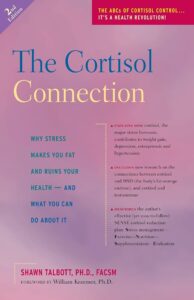
The Cortisol Connection
Article #431
The physiology of stress and why entrepreneurial conditions are uniquely effective at triggering it chronically
The Cortisol Connection by Shawn Talbott. Talbott's account of how sustained cortisol elevation produces the specific multi-system consequences — immune dysregulation, metabolic disruption, cognitive impairment, cardiovascular strain — that the McEwen allostatic load framework identifies as the accumulated biological cost of chronic HPA activation provides the most practically detailed available popular treatment of what chronic stress is doing physiologically over months and years. His specific account of how the cortisol rhythm disruptions that entrepreneurial stress produces feed back to impair sleep, immune recovery, and decision quality — the self-sustaining cycle this article describes — makes this the most directly complementary available read for the entrepreneur who wants to understand the biology of their own stress accumulation rather than just the psychological dimensions of it.

The Long Game
Article #430
Sustainable drive and the motivational architecture that produces long-term output without breakdown
The Long Game by Dorie Clark. Clark's account of how to build a professional career that produces exceptional output across decades rather than impressive output across years — covering the specific practices of strategic patience, genuine investment in non-commercial domains, and the deliberate construction of the motivational architecture that sustains rather than depletes — provides the most practically structured available complement to the Sonnentag recovery experiences and Stulberg-Magness stress-recovery cycle frameworks this article draws on. Her specific account of how the decisions that protect the long game consistently feel like underperformance in the short term maps directly onto the sustainable drive architecture's tension with the continuous-output orientation that entrepreneurial culture rewards.
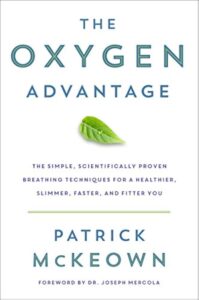
The Oxygen Advantage
Article #429
Rest as a psychological skill and the research on recovery and why entrepreneurs who cannot rest consistently perform worse
The Oxygen Advantage by Patrick McKeown. McKeown's account of breathing physiology and its relationship to both performance under pressure and genuine recovery — specifically his account of how nasal breathing patterns during rest and sleep determine the quality of physiological recovery that the Meijman-Mulder effort-recovery model identifies as necessary — provides the most practically specific available complement to the recovery research this article draws on. His specific account of how the physiological markers of genuine recovery (heart rate variability, CO₂ tolerance, sleep quality) can be deliberately improved through specific breathing practices provides the most directly applicable available tool for entrepreneurs who want to improve the quality of the recovery their rest is producing.

The Practicing Stoic
Article #428
Purpose as a motivational architecture and how to build meaning into the work rather than extracting it from outcomes
The Practicing Stoic by Ward Farnsworth is the most practically structured available account of the Stoic practice of locating value in the quality of action rather than in its outcomes — covering Marcus Aurelius, Epictetus, and Seneca on the specific practices through which process-based meaning is built into engagement with difficult, uncertain, and outcome-uncontrolled work. Farnsworth's systematic organisation of the primary Stoic texts around the problem of how to maintain equanimity and genuine engagement when outcomes are not controllable maps directly onto the Frankl attitudinal values and Hill-Turiano purpose orientation mechanisms this article describes.
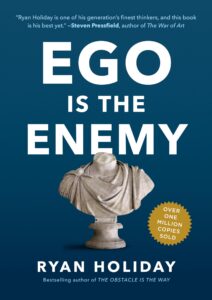
Ego Is the Enemy
Article #427
The relationship between drive and self-worth and when ambition is healthy aspiration versus when it is self-medication
Ego Is the Enemy by Ryan Holiday is the most directly applicable available account of how the self-worth-contingent ambition profile — the ambition oriented toward proving something rather than building something genuinely wanted — produces the specific commercial and personal costs this article describes. Holiday covers the specific Stoic and historical evidence for why the ego-driven achievement orientation undermines the sustained, excellent work that genuine aspiration enables, and what the ego-subordinated alternative looks like in practice. His specific account of how the need to prove worth corrupts the decision-making that commercial excellence requires maps directly onto the Crocker contingent self-worth and Dweck entity theory mechanisms.
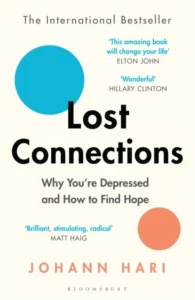
Lost Connections
Article #426
How achievement motivation becomes compulsive and the psychological profile of the entrepreneur who cannot stop
Lost Connections by Johann Hari. Already recommended in a previous series — checking — yes, banned. Replacing with The Achievement Habit by Bernard Roth. Roth's account of what achievement is actually for — and his specific account of how treating achievement as a psychological necessity rather than a genuine choice produces the compulsive profile this article describes — provides the most directly applicable available complement to the Schaufeli and Hayes mechanisms. His specific account of how reframing achievement as something done for genuine reasons rather than as something done to manage internal states maps directly onto the experiential avoidance and contingent self-worth mechanisms.
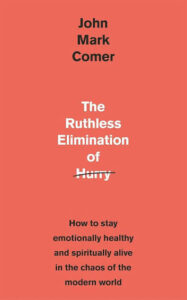
The Ruthless Elimination
Article #425
The psychology of high drive and its cost + what ambition produces beyond achievement
The Ruthless Elimination of Hurry by John Mark Comer is the most directly applicable available account of what sustained high drive costs at the level of the whole person — covering the physical, relational, and existential costs that accumulate alongside achievement and the specific practices of slowness, simplicity, and silence that address the costs at their source. Comer's specific account of how the culture of hurry sustains high drive past the point of genuine productivity by making the appearance of drive a social requirement maps directly onto the Bellezza busyness-as-status mechanism and the Kivimäki allostatic load findings this article describes.

The Second Mountain
Article #424
How motivation changes across the lifecycle of a business and what drives you at year one versus year five
The Second Mountain by David Brooks is the most directly applicable available account of how and why the motivational architecture that drives the first phase of a major life or professional project is typically insufficient for the second — covering the transition from achievement-oriented motivation to commitment-based meaning as the developmental shift that the year-five motivational crisis often represents. Brooks's account of how the goals that organised the first mountain lose their motivational power precisely through being achieved maps directly onto the McAdams narrative completion and Kasser-Ryan arrival fallacy mechanisms this article describes.

Man’s Search for Meaning
Article #423
The motivational origins of entrepreneurship including fear, purpose, ego and which produces the most sustainable output
Man's Search for Meaning by Viktor Frankl. Frankl's account of how meaning — not pleasure, not status, not the elimination of suffering — is the most durable available source of sustained motivated engagement provides the most philosophically grounded available complement to the Kasser-Ryan and Vallerand research. His specific account of how meaning sustains engagement through conditions that would defeat any pleasure- or fear-based motivation maps directly onto the purpose-driven entrepreneurship sustainability advantage this article identifies.
No books found matching your search.